
Alberta wildfire containment strengthens as crews establish perimeter and patrol hotspots
Alberta wildfire containment advances as crews secure a perimeter; ground teams reinforce dozer guards and patrol hotspots while communities remain alert.
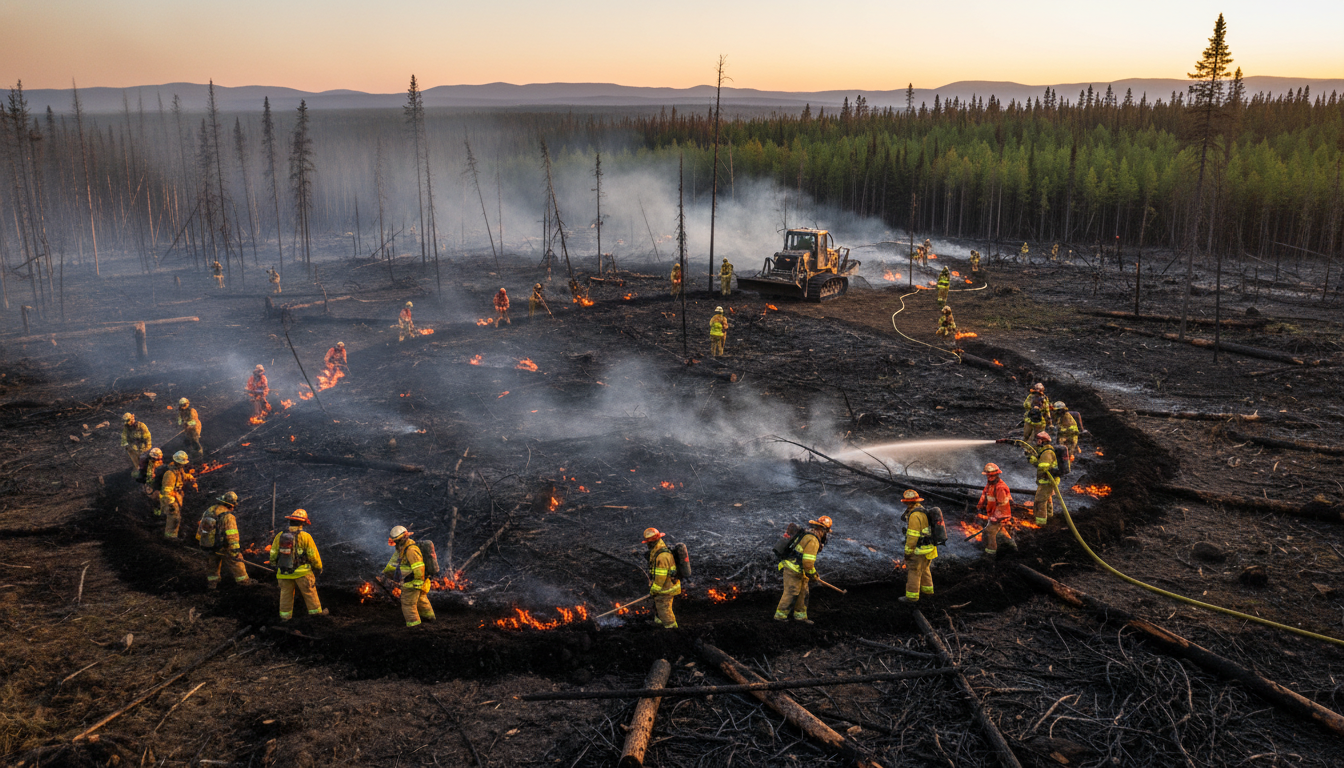
Alberta Wildfire crews and assisting agencies reported strong progress after establishing a containment perimeter around the fire, saying operations over the last 24 hours have markedly reduced its immediate spread. Alberta wildfire containment remains the primary objective as ground crews continue to reinforce dozer guard and fire lines. Officials said patrols will persist to locate and extinguish remaining hotspots.
Containment Perimeter Confirmed
A notice from response authorities stated crews successfully established a containment perimeter around the affected area, signaling a major operational milestone. The perimeter is intended to halt forward movement of the main fire and create secure zones for suppression work. Confirmation of a secure line allows resources to shift from wide-area suppression to targeted mop-up and monitoring.
Establishing containment does not mean the incident is over, the notice cautioned, and crews will maintain a visible presence along the lines. Fire personnel will continue to evaluate the integrity of the perimeter as conditions evolve. That evaluation guides the deployment of heavy equipment and hand crews for reinforcement.
Ground Crews Reinforce Dozer Guards and Lines
Ground crews have focused on strengthening dozer guards and constructing fire lines to increase the barrier’s resilience against flare-ups. Heavy machinery and hand teams work in tandem to widen and compact lines, remove combustible material, and build buffer zones. Those measures are central to converting a control line into a durable containment line.
Crews also undertake mop-up tasks inside the perimeter to extinguish smoldering roots and isolated patches of heat that could reignite. Reinforcement efforts are prioritized where fuel loads and terrain make the line most vulnerable. Continuous maintenance reduces the likelihood of the fire breaching containment during changing weather or wind shifts.
Hotspot Patrols and Ongoing Suppression
Patrol teams are conducting systematic sweeps of the perimeter and interior pockets to locate hotspots and extinguish them before they expand. The notice emphasized that patrols and hotspot mitigation will continue as long as residual heat persists. Rapid identification and suppression of hotspots are crucial to preventing new ember-driven starts outside the established line.
Specialized crews use infrared detection, hose lines, and targeted water drops where safe and necessary to douse persistent heat sources. These operations are coordinated with heavy equipment movements to ensure both safety and efficiency. Maintaining active patrols complements the structural work of dozer guards and fire lines.
Local Alerts and Community Precautions
Authorities have urged residents in nearby areas to remain vigilant and follow any local advisories or evacuation notices issued by municipal or provincial emergency services. Even as Alberta wildfire containment improves, smoke, reduced visibility, and changing fire behavior can still affect communities downwind. Public safety messaging highlights the importance of keeping routes clear for emergency vehicles and heeding official instructions.
Support agencies remain on standby to assist with sheltering or logistical needs if conditions change and further protective actions are required. Community liaisons and information officers are tasked with keeping the public informed through official channels. Clear communication aims to prevent confusion and ensure residents have access to timely guidance.
Weather, Risk Assessment and Next Steps
Fire behaviour assessment will continue to guide operational choices, with teams monitoring weather, fuel conditions and topography for signs of potential escalation. Cooler temperatures, higher humidity or precipitation can aid containment, while gusty winds or dry spells may increase risk. Incident management will adjust tactics based on these variables to protect the perimeter and adjacent communities.
Looking ahead, response leaders plan to consolidate gains by extending mop-up operations, maintaining patrols and ensuring that dozer guards remain intact. Demobilization of some resources may occur as conditions stabilize, but a measured approach will keep crews in place until spot fires and heat sources are fully addressed. Coordination with local authorities will determine when restrictions or alerts can be safely lifted.
The notice made clear that while containment marks progress, firefighting work remains active and patient vigilance is required. Crews will continue reinforcing lines and patrolling hotspots until officials declare the situation fully under control. Communities are advised to stay informed through official channels and follow any instructions from emergency services.
