
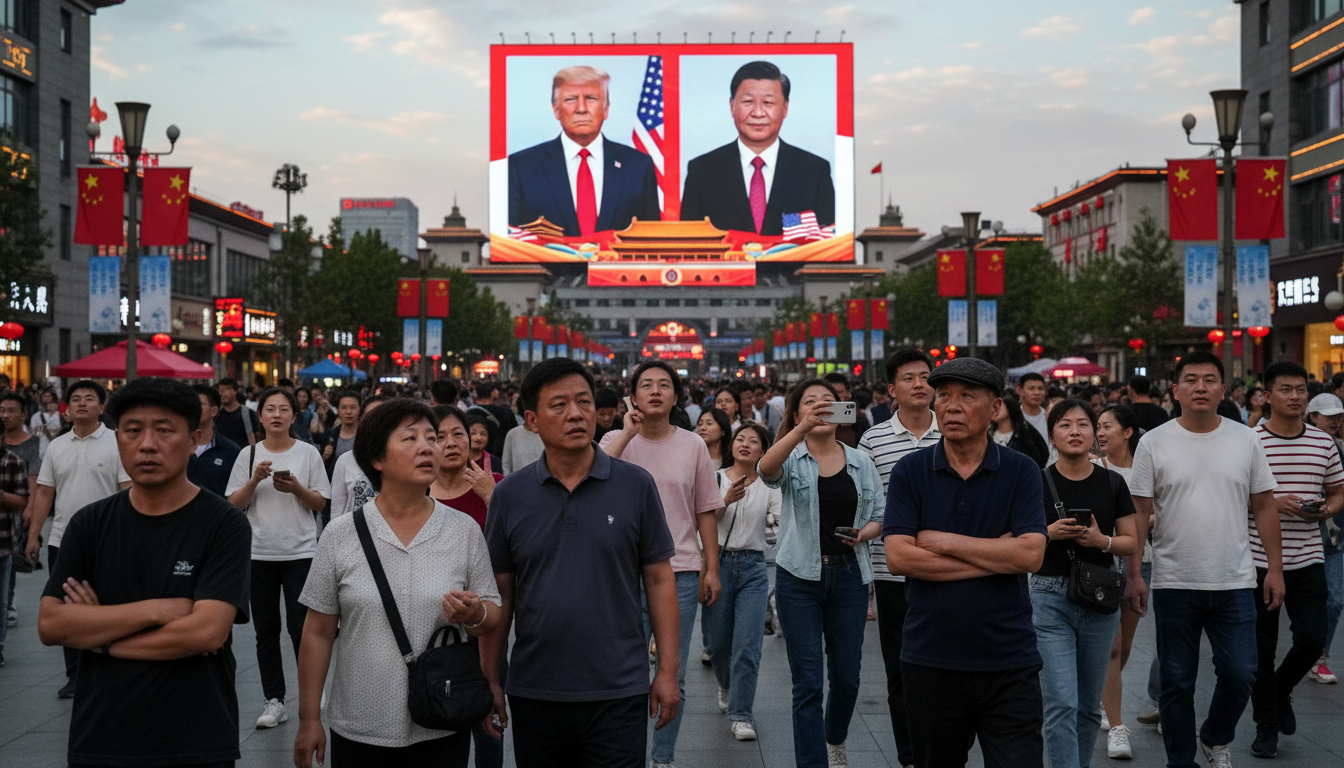
Mixed Reactions in Beijing as Trump-Xi Summit Opens During State Visit
Beijing residents voice mixed feelings as the Trump-Xi summit opens on May 13, 2026, balancing hopes for trade with concerns about rights and rivalry.
City prepares for high-profile visit
Beijing’s streets took on an orderly, anticipatory air as the city readied itself for President Trump’s state visit and the Trump-Xi summit. Flags, banners and increased ceremonial activity were visible in central districts where official events are scheduled.
Security measures and traffic adjustments have been noticeable to residents and commuters, who said the preparations were both impressive and inconvenient. For many, the visible staging underscored the ceremonial importance Beijing’s leadership places on the meeting.
Businesses see opportunity amid uncertainty
Shopkeepers and hotel operators near diplomatic quarters said they expect a short-term uptick in customers tied to the visit’s profile. Small and medium-sized businesses expressed guarded optimism that renewed dialogue at the Trump-Xi summit could ease frictions that have affected trade and supply chains.
At the same time, owners noted that long-term recovery depends on outcomes that are hard to predict, from tariff decisions to regulatory shifts. Some said they had stocked additional goods and adjusted staff schedules in case of tourist flows, while others remained cautious about overstretching inventories.
Public sentiment split between pride and pragmatism
Residents interviewed in public spaces described a mixture of national pride and pragmatic concern about everyday issues. Older Beijing residents tended to voice a sense of national standing restored by hosting a major state visit, while younger people spoke more about jobs, housing and technology competition.
Many expressed that the Trump-Xi summit represented a symbolic moment, but said daily pressures — such as living costs and employment prospects — ultimately shape their outlook. That practical focus tempered enthusiasm among those who feel diplomacy may not translate quickly into personal benefits.
Security posture and official messaging shape mood
The increased presence of uniformed personnel and tighter controls in certain areas have contributed to a contained atmosphere in the capital. Officials have emphasized orderly conduct and hospitality, and local media coverage has highlighted themes of stability and cooperation in advance of the summit.
Some residents said they felt reassured by the visible security measures, while others described an undercurrent of unease around restricted movements and heightened surveillance. The balance between ensuring public safety and maintaining everyday life has been a recurring theme in conversations across the city.
Economic and geopolitical stakes framed local expectations
For many in Beijing, the Trump-Xi summit is as much about signaling as specific policy shifts. Residents and business leaders alike said they wanted clear commitments on trade and investment that could ease market uncertainty and support long-term economic planning.
At the same time, broader geopolitical concerns — including technology competition and regional security — figured into how locals assessed the summit’s potential impact. The meeting was widely viewed as an opportunity to reset lines of communication, even if major breakthroughs were seen as unlikely in the short term.
Community reactions vary by neighborhood and generation
Neighborhoods closer to diplomatic venues displayed more overt preparation and excitement, while suburban and industrial districts reported a quieter response. Generational differences were apparent: older residents often emphasized national pride and international stature, while younger residents prioritized practical outcomes like job prospects and access to global markets.
Civic groups, small-business networks and local online forums reflected this mosaic of perspectives, conveying cautious hope alongside skepticism. For many, the Trump-Xi summit is a tense moment of watchful waiting rather than an event that will immediately change daily life.
Observers in Beijing said that even modest progress at the summit could have meaningful effects on investor confidence and bilateral ties. Yet residents repeatedly returned to personal concerns, underscoring that diplomatic theatre and everyday priorities do not always align neatly.
The city’s mixed response to the Trump-Xi summit highlights the complexities Beijing faces as it hosts a major diplomatic encounter: ceremonial pride and strategic signaling coexist with practical worries about the economy, governance and the pace of change.
