
Edmonton dog attack trial hears testimony about Cane Corsos that killed 11-year-old
Edmonton dog attack trial hears testimony that two Cane Corsos with a history of aggression killed 11-year-old Kache Grist; owner faces criminal negligence charges.
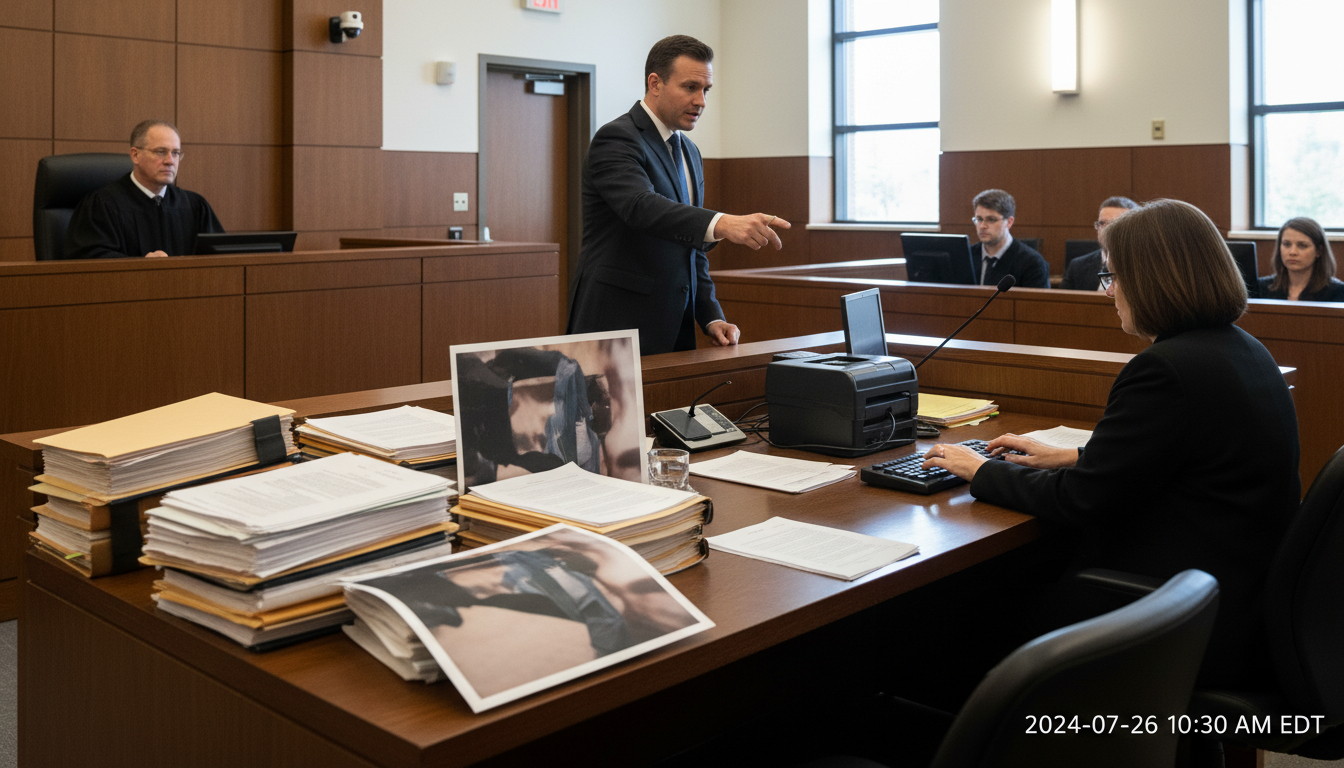
A trial in Edmonton opened Tuesday with witnesses describing violent behaviour by two Cane Corsos that prosecutors say should have put their owner on notice before an attack that killed 11-year-old Kache Grist.
The Edmonton dog attack trial began with testimony that the dogs had a documented pattern of aggression in the months leading up to the fatal incident.
Courtroom testimony on the first day included descriptions of prior attacks on pets and people that the Crown says are central to its case.
Witness Describes Small Dog Seized and Killed
Shawn Hesse told the court he once owned a Pomeranian that escaped and ran toward the two Cane Corsos at their home in 2023.
He testified the larger dogs grabbed his small dog from opposite sides and attempted to tear it apart, an incident Hesse said ended with the Pomeranian later dying despite veterinary care.
Hesse’s account was presented early in the trial to illustrate a pattern of aggressive behaviour the Crown says was known to the defendant and others in the household.
Recorded Incidents and Injuries Before Fatal Attack
Prosecutors outlined a string of incidents over the nine months before the April 2024 death, saying the dogs had harmed animals and people on multiple occasions.
Court was told one tenant suffered a leg injury requiring stitches after a bite, and that the same tenant’s cat was killed in a separate episode involving the dogs.
Evidence also alleges the animals inflicted injuries on their owner severe enough to require medical attention, underlining the Crown’s contention that the dogs posed an ongoing threat.
Names, Breeds and Charges in the Case
The two Cane Corsos have been identified in court as Chaos and Cairo, and their owner is charged in connection with the death of the child.
Prosecutors say the dogs, unneutered and weighing roughly 50 kg (110 lb) and 57 kg (125 lb), were kept at a south Edmonton house in the Summerside neighbourhood.
The owner, Crystal Jean McDonald, faces a criminal negligence causing death charge after the April 1, 2024 attack that left Kache Grist fatally injured.
Account of the Fatal April 1, 2024 Incident
The fatal attack occurred while Kache was visiting his father, a tenant in the same residence as the dogs’ owner, during spring break in April 2024.
Court heard that at least one of the large-breed dogs bit the boy in the neck, causing injuries from which he later died.
The Crown says the circumstances of the attack, combined with the dogs’ prior conduct, support an allegation that the owner ought to have known the animals were dangerous.
Crown’s Strategy and Trial Schedule
The Crown opened by trying to establish notice of dangerousness through prior reports and witness testimony describing past attacks.
Prosecutors told the court they would call roughly a dozen witnesses through the first week, and the trial is scheduled to continue through the following Tuesday.
The testimony on opening day focused on incidents that Crown counsel says demonstrate a foreseeability of harm.
Defence Posture and Legal Issues to Be Resolved
While the Crown seeks to prove criminal negligence, the defence has yet to present its full plan in public filings and initial court exchanges focused on witness accounts.
Key legal questions include what the owner knew about the Dogs’ behaviour, whether reasonable steps were taken to prevent harm, and how responsibility is shared in a home with tenants.
Those points are likely to shape testimony and evidence in the coming days as both sides assemble the factual record the judge will consider.
Impact on Tenants and Neighbours Detailed in Court
Testimony has painted a picture of a shared living arrangement in which tenants and landlord lived under the same roof, complicating lines of responsibility.
A tenant who was bitten badly enough to need stitches will be among those whose accounts the Crown expects to rely on to show recurring risk.
Neighbours and others in the home’s vicinity are expected to provide context about complaints or calls to authorities, which could be relevant to establish prior knowledge.
Pet Owners’ Reports and Veterinary Evidence
The court heard that after the 2023 incident the Pomeranian owner rushed his dog to a veterinarian, but the animal later succumbed to its injuries.
Veterinary records and possible testimony about the animals’ wounds and treatment may be introduced to corroborate witness accounts of violence.
Medical documentation of other victims — including the injured tenant and the owner who sought treatment — is likely to be central to the Crown’s effort to demonstrate seriousness and recurrence.
Public Safety and Animal-Control Questions Raised
The case has highlighted questions about animal control, reporting procedures and the responsibilities of owners in multi-occupant homes.
Provincial and municipal regulations governing dangerous animals and owner obligations may be referenced during proceedings or in material presented by the Crown.
Legal experts following the matter note that prosecutions of this nature hinge on proving a level of negligence that rises to criminal liability rather than civil responsibility alone.
Timeline of Evidence and Witness List
Prosecutors indicated on opening day they plan to call approximately a dozen witnesses within the short trial window set for this stage.
Witnesses are expected to include neighbours, tenants, veterinary professionals and possibly first responders or animal-control officers who dealt with earlier incidents.
The pace of evidence presentation suggests the Crown is attempting to build a compact narrative tying prior incidents to the fatal outcome.
Family Response and Community Reaction
The family of the victim, and members of the local community, have expressed grief and concern since April 2024, a sentiment reflected in media reports and public remembrances.
Court documents and a companion video package have highlighted the emotional toll on relatives and the community’s search for answers about what could have prevented the tragedy.
Officials and community leaders often point to such incidents as prompts for reviewing local safety protocols and animal-ownership rules.
Legal Standards the Court Will Consider
At trial, the judge will be required to assess whether the defendant’s conduct met the criminal threshold of negligence causing death, which involves a marked departure from the standard of care a reasonable person would exercise.
The Crown must show that the accused’s actions or omissions created a substantial and unjustifiable risk that the accused was aware of or ought reasonably to have been aware of.
Defence counsel may challenge the sufficiency of evidence around knowledge or argue that steps taken were reasonable under the circumstances.
Possible Sentencing Considerations if Convicted
Should the court find the owner criminally negligent, sentencing would take into account the severity of the harm, the owner’s level of responsibility, and any prior relevant conduct.
Sentencing in cases involving animals and human fatalities can include jail terms, fines, probation and orders concerning the ownership and disposition of animals.
The judge also may consider mitigating factors such as expressions of remorse, steps taken after incidents, and the accused’s personal circumstances.
Broader Legal and Policy Implications
The case has potential implications for how communities balance pet ownership rights with public safety, especially regarding large-breed dogs in densely occupied housing.
Debate often centers on enforcement of existing animal-control laws, clarity of landlord and tenant obligations, and mechanisms to more promptly address repeated aggressive behaviour.
Advocates for stricter rules note that clear enforcement pathways may reduce the risk of repeat incidents, while defenders of pet owners emphasize responsible ownership and education.
What Witnesses Will Be Asked to Prove
Witness testimony will aim to establish a pattern: prior attacks, knowledge of those attacks by the owner, and the absence of sufficient preventive measures before the fatal event.
The Crown will try to show a chain of incidents that together made the eventual tragedy foreseeable and preventable by reasonable action.
Defence strategy will likely probe the details of those accounts, the timing and reporting of incidents, and whether third parties shared responsibility for the dogs’ welfare.
Role of Expert Evidence and Forensic Material
Experts — such as veterinarians or animal-behaviour specialists — may be called to explain the nature of dog bites, signs of aggression and the potential for preventive interventions.
Forensic documentation, including medical reports from the fatal attack and other injuries, can provide objective corroboration of witness statements.
How the court weighs expert testimony against lay accounts will influence the judge’s conclusions about foreseeability and negligence.
Potential Outcomes and Next Steps in the Case
The immediate outcome of the week-long trial segment will depend on the judge’s assessment of the Crown’s evidence and whether procedural or evidentiary challenges arise.
If the Crown proves criminal negligence, the court will proceed to sentencing considerations; if not, the accused could be acquitted of the charge.
Either result would likely spur renewed discussion among policymakers, animal-control officials and community stakeholders about prevention and response.
Context: Fatal Dog Attacks and Criminal Law in Canada
Fatal dog attacks are relatively rare but when they occur they prompt legal scrutiny and public debate over owner accountability and animal control frameworks.
Criminal prosecutions in such cases require a higher threshold than civil liability; prosecutors must show conduct that constitutes a marked departure from reasonable care.
These cases also often lead to local policy reviews aimed at reducing the chances of recurrence through clearer regulations or enforcement.
The trial in Edmonton proceeds as witnesses continue to paint a picture of repeated aggressive incidents at the home where Chaos and Cairo were kept, with the Crown asserting that the pattern of behaviour should have put the owner on sufficient notice to prevent the fatal attack on Kache Grist.
Evidence, testimony and legal argument will determine whether that assertion meets the criminal standard of proof required under Canadian law.
