
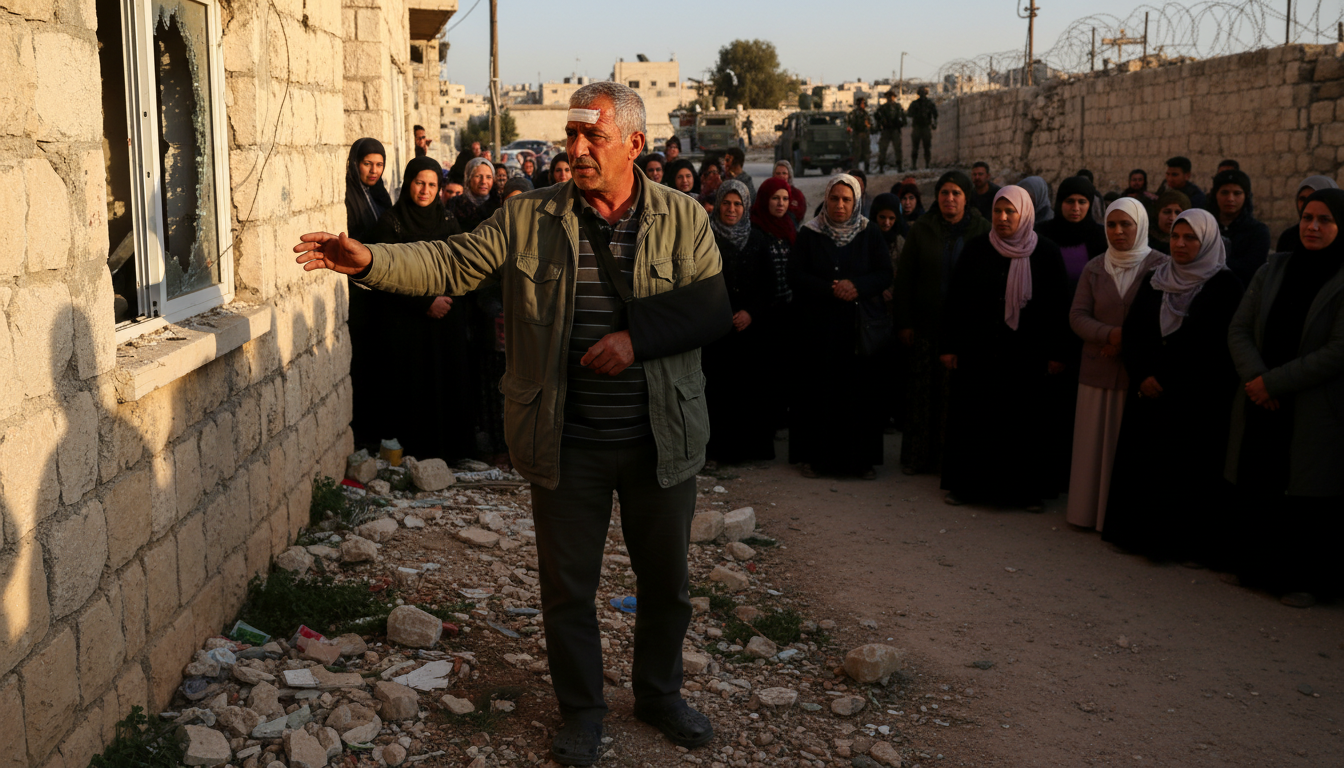
Amir Othman Breaks Silence After Being Shot Near Nablus at 16
Amir Othman, shot at 16 near Nablus, breaks his vow and tells Al Jazeera his account of the shooting, recovery and its impact on family and community.
Amir Othman has broken a long-held promise to himself by speaking publicly about being shot by Israeli soldiers on a hill near Nablus when he was 16, telling his account to Al Jazeera on 12 May 2026. The former teenager, who for years had vowed never to return to the site of the shooting, described the incident, his recovery and the consequences for his family and community. His decision to speak has drawn renewed attention to the experiences of civilians and youth in the occupied West Bank. The interview arrives amid continuing international scrutiny of military encounters and civilian harm in the area.
Details of the Incident Near Nablus
Amir Othman said he was shot while on a hill outside Nablus, a city in the occupied West Bank, at age 16. He recounted the moment in measured terms, describing the sequence of events that led to his injury and the immediate aftermath.
Medical response and evacuation, he said, were chaotic and slow, complicating his recovery and leaving long-term physical and psychological scars. His testimony provides a first-hand account of an encounter that has been emblematic for many families in the area.
Recovery and Long-Term Health Effects
Othman described intensive medical treatment following the shooting and ongoing rehabilitation efforts that persisted into adulthood. He spoke about chronic pain, mobility challenges, and the emotional toll that followed the physical wounds.
Family members who assisted in his care told neighbours and health workers that recovery was uneven, with setbacks during the first years and periodic medical crises thereafter. The narrative highlights the broader strains on medical services in occupied areas and the burdens placed on families.
Family Reaction and Community Support
According to Othman, his family initially urged him to remain silent and avoid returning to the site, concerned for his safety and well-being. Neighbours and local activists later became involved in documenting his recovery and advocating for access to care.
Community leaders described the shooting as one of several incidents that have altered daily life in the region, contributing to heightened anxiety among parents and young people. Support networks, they said, played a crucial role in helping Othman and his family navigate legal and medical obstacles.
Why Othman Chose to Speak Now
In his conversation with Al Jazeera, Othman said his return to public testimony was driven by a desire to correct the record and to give voice to others who have suffered similar harms. He explained that years of silence had felt like complicity and that speaking out was a way to seek accountability.
Observers note that Othman’s decision to recount his experience comes amid broader public debates about civilian harm and military conduct in the West Bank. His account adds a personal dimension to ongoing discussions at local and international levels.
Responses from Authorities and Humanitarian Groups
There has been no immediate, detailed public response from Israeli military authorities in relation to Othman’s specific account, though such incidents are routinely subject to official statements and internal reviews. Humanitarian organizations that operate in the West Bank emphasized the need for transparent investigations and improved protection for civilians.
Legal advocates and rights groups renewed calls for access to impartial inquiries and for measures to reduce civilian exposure to violence. They pointed to structural barriers that often impede timely medical care and independent documentation in occupied territories.
Broader Context in the Occupied West Bank
Incidents involving civilian injuries near population centres like Nablus have been reported repeatedly over recent years, affecting mobility, schooling and local economies. Analysts say that youth are disproportionately impacted, with long-term social and psychological consequences for communities.
Othman’s testimony is one among many personal narratives that human rights groups and media outlets have collected, each underscoring the daily realities faced by residents in contested areas. These accounts frequently feed into calls for policy shifts and renewed efforts to protect civilians.
Othman’s choice to speak publicly after years of silence has drawn attention to the human consequences of military encounters in the occupied West Bank and the ongoing challenges faced by those who survive them. His testimony, as relayed to international media on 12 May 2026, may spur calls for further investigation and bolster demands from families and advocacy groups for greater transparency and protection.
