
72-hour truce ends as Russia and Ukraine resume air and drone attacks, killing one in Dnipropetrovsk
US-brokered 72-hour truce ends as Russia and Ukraine resume air and drone attacks; one killed in Dnipropetrovsk and dozens of outages reported.
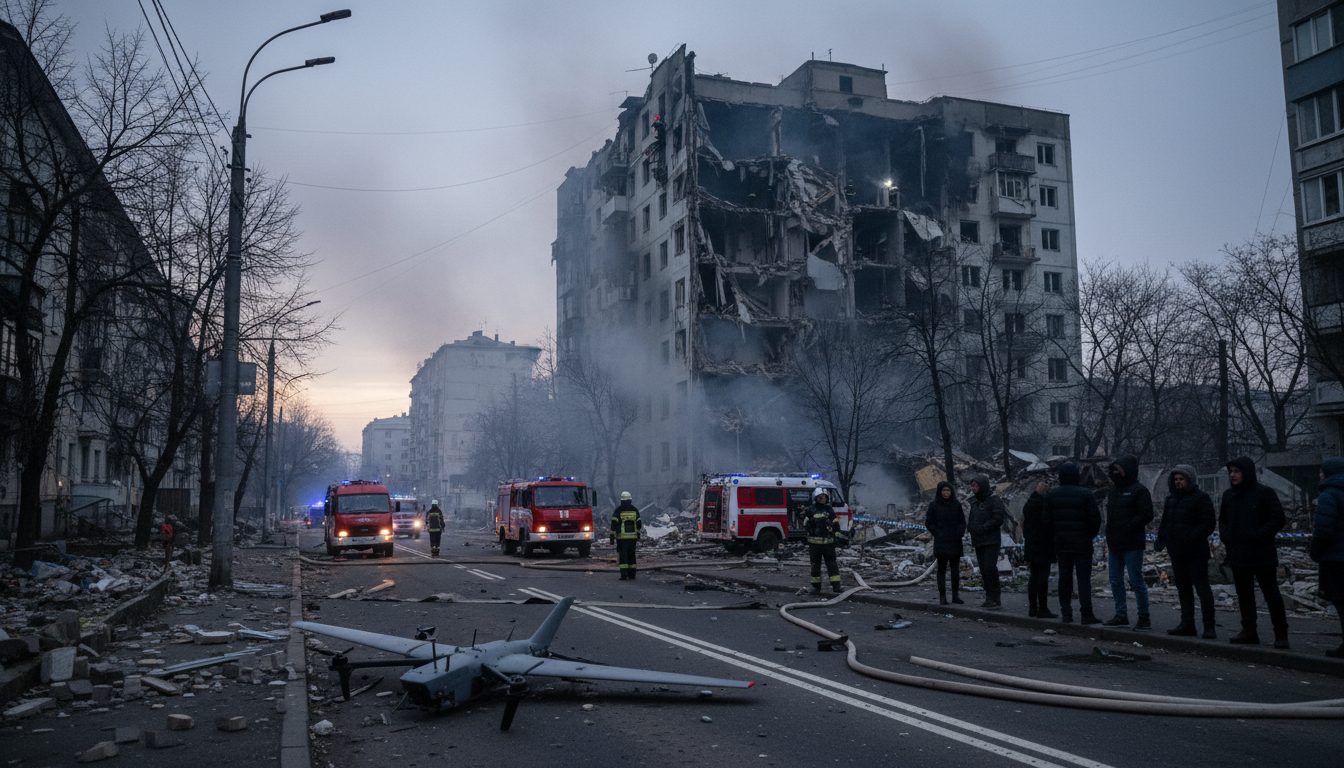
Russia and Ukraine resumed aerial and drone strikes after a US-brokered 72-hour truce expired, with Ukrainian officials reporting more than 200 drones used in overnight assaults and regional authorities confirming at least one death in Dnipropetrovsk.
Attacks Resume After 72-Hour Truce
The temporary ceasefire brokered by the United States came to an end on Tuesday, and both sides reported renewed operations almost immediately. Kyiv said Russian forces launched a widespread air and drone campaign, while Moscow reported it had intercepted dozens of incoming craft in border regions.
The resumption followed a three-day pause that coincided with Russia’s Victory Day commemorations, and came amid conflicting accusations from each capital that the other had violated the agreement before it fully expired.
Dnipropetrovsk Casualty and Local Damage
Regional administration head Oleksandr Ganzha reported one fatality and four wounded after strikes hit populated areas of Dnipropetrovsk region on Tuesday morning. Local authorities said residential buildings bore damage and emergency services were dispatched to assist civilians and secure affected sites.
Officials also described attacks on essential infrastructure, raising concerns about shorter-term access to utilities and the safety of communities near the frontline.
Zelenskyy Describes Large-Scale Drone Wave
President Volodymyr Zelenskyy said Ukrainian forces faced a wave of more than 200 long-range drones during the overnight attacks, characterizing the surge as a deliberate end to the brief period of relative calm. He posted on social media that the scale of the strikes marked a clear decision by Russia to discontinue the partial silence.
Kyiv’s leadership emphasized that, despite the temporary lull in large-scale operations, frontline areas had seen little true cessation of hostilities and that civilian areas remained at risk.
Russian Forces Report Shootdowns and Accusations
Moscow’s Defence Ministry said its air defenses had brought down 27 Ukrainian drones over Russian regions including Belgorod, Voronezh and Rostov. The ministry also accused Ukrainian forces of committing more than 1,000 ceasefire violations during the truce window, including strikes on civilian targets inside Russia.
Russian officials said their military had “responded in kind” to what they described as repeated provocations, framing their actions as defensive steps to protect border communities and military positions.
Impact on Kyiv Region, Mykolaiv and Other Areas
Local authorities reported strikes on residential buildings and a kindergarten in the Kyiv region, while Russia’s drone attacks targeted energy infrastructure in Mykolaiv, leading to power outages for households and businesses. Additional regional authorities said attacks were recorded in Kharkiv, Zhytomyr, Sumy and Chernihiv.
The damage to power and public facilities intensified concerns about civilian hardship and the capacity of repair crews to restore services while security risks remain high.
Diplomatic Context and Pause’s Fragility
The temporary pause in fighting had been announced by US President Donald Trump, who framed the 72-hour truce as a potential step toward broader negotiations to end the nearly four-year war. That initiative raised hopes among some observers that diplomatic momentum could resume, but the rapid return to strikes underscored the fragility of short-term arms suspensions.
Russian President Vladimir Putin earlier suggested the conflict might be “coming to an end” and indicated willingness to meet his Ukrainian counterpart once a formal agreement is in place, comments that have been welcomed cautiously by international mediators. However, the overlapping crises in the Middle East and persistent mistrust between Moscow and Kyiv have complicated prospects for sustained talks.
Renewed operations also highlight the difficulty of translating a limited, externally brokered pause into durable local ceasefires, especially when both sides accuse one another of violations and reprisals.
The immediate military exchange following the truce’s expiry has deepened concern among Western governments and humanitarian agencies about the protection of civilians, the resilience of energy and medical services, and the prospects for any near-term diplomatic breakthrough.
