
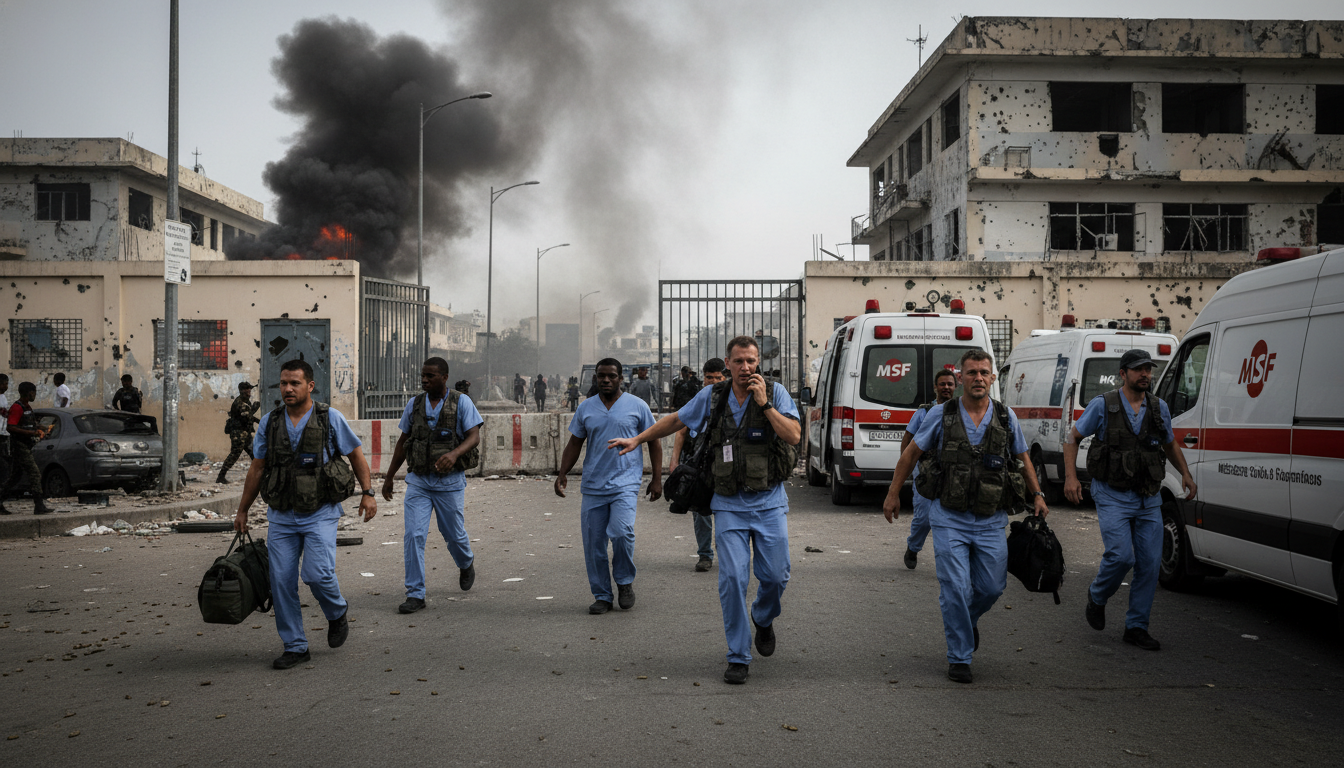
MSF Suspends Hospital Operations in Port-au-Prince as Gang Fighting Forces Evacuations
MSF suspends hospital operations in Port-au-Prince after gunfire and security threats in Cite Soleil leave dozens wounded and hundreds displaced, officials say.
A new surge of gang violence in Port-au-Prince has forced Medecins Sans Frontieres (MSF) to suspend hospital operations in the densely populated Cite Soleil neighbourhood, the aid group said on May 11, 2026. MSF warned that ongoing gunfire and direct threats made it impossible to guarantee the safety of staff and patients, prompting an immediate halt to regular services and emergency care at the compound.
MSF suspends hospital operations in Cite Soleil
MSF said the decision came after sustained clashes between armed groups that have carved out control of large parts of the capital since 2021. The organisation reported that security conditions deteriorated rapidly, leaving staff unable to move safely within and around the hospital grounds.
The suspension affects outpatient services, surgical procedures and routine admissions, MSF added, while emphasising that the need for medical care remains acute among residents caught in the fighting. A security guard at the hospital was struck by a stray bullet, underscoring the direct danger to personnel and non-combatants.
Hundreds sheltered inside the hospital compound
Before operations were paused, about 800 civilians sought refuge inside the MSF facility as gun battles raged in surrounding streets, the organisation said. Many arrived with injuries sustained in the clashes, while others fled homes that had been threatened or set alight by gunmen.
Staff worked through the night to stabilise patients and provide essential care, treating people transferred from nearby facilities and those who arrived with wounds or pregnancy-related complications. MSF said the compound’s role as both a treatment site and temporary shelter intensified the complexity of its operations under fire.
Neonatal evacuations and emergency transfers
Officials at another local facility, Hopital Fontaine, reported evacuating newborns from the intensive care unit as fighting intensified near the hospital. MSF and other medical teams assisted in transferring some of those infants to safer locations and continued to care for high-risk mothers and babies when possible.
MSF confirmed it treated several patients who had been moved from Hopital Fontaine, including pregnant women who gave birth overnight in the MSF compound. Health workers stressed that the interruption of neonatal and maternal services threatens long-term outcomes for the most vulnerable.
Security incidents highlight operational limits
MSF said the decision to suspend services reflected an inability to ensure safe access for staff, patients and ambulances while stray bullets and active confrontations persisted. The organisation noted that, in the current environment, remaining open would risk further casualties among medical personnel and those seeking care.
Humanitarian agencies and local hospitals have repeatedly faced the dilemma of continuing lifesaving operations amid chronic insecurity. MSF and partners have described scenes of staff sheltering in place, diminished supply routes and growing reluctance among personnel to enter the most affected neighbourhoods.
International troops arrive but impact limited
A contingent of foreign troops arrived in Haiti in April under a United Nations-linked initiative aimed at restoring order, but aid groups and residents say the deployment has yet to reverse the sharp rise in violence. Security analysts note that previous interventions have had limited success in addressing entrenched gang control and deep-rooted criminal networks.
Authorities and international partners face logistical and political challenges that complicate efforts to dislodge armed groups, while residents continue to bear the immediate human cost. MSF and other organisations have urged clearer guarantees for medical neutrality and unimpeded access to care.
Civilians displaced and sheltering near the airport
Residents described frantic attempts to flee neighbourhoods where buildings were set alight and gunmen roamed the streets. “I am now sleeping in the street,” a 56-year-old woman told reporters after witnessing arson in her area and feeling unable to return home.
Many displaced people gathered along the road to Toussaint Louverture international airport, seeking relative shelter and transportation routes out of the capital. Humanitarian agencies warned that the concentration of displaced families along transit corridors increases vulnerability and stretches already limited aid resources.
The suspension of MSF services in Cite Soleil adds to a growing humanitarian emergency in Haiti’s capital, where fragile health infrastructure and persistent insecurity have repeatedly undermined care for the wounded, expectant mothers and newborns. Continued fighting, blocked access and the displacement of families threaten a broader public health crisis unless safe corridors for medical evacuation and aid delivery are established.
