
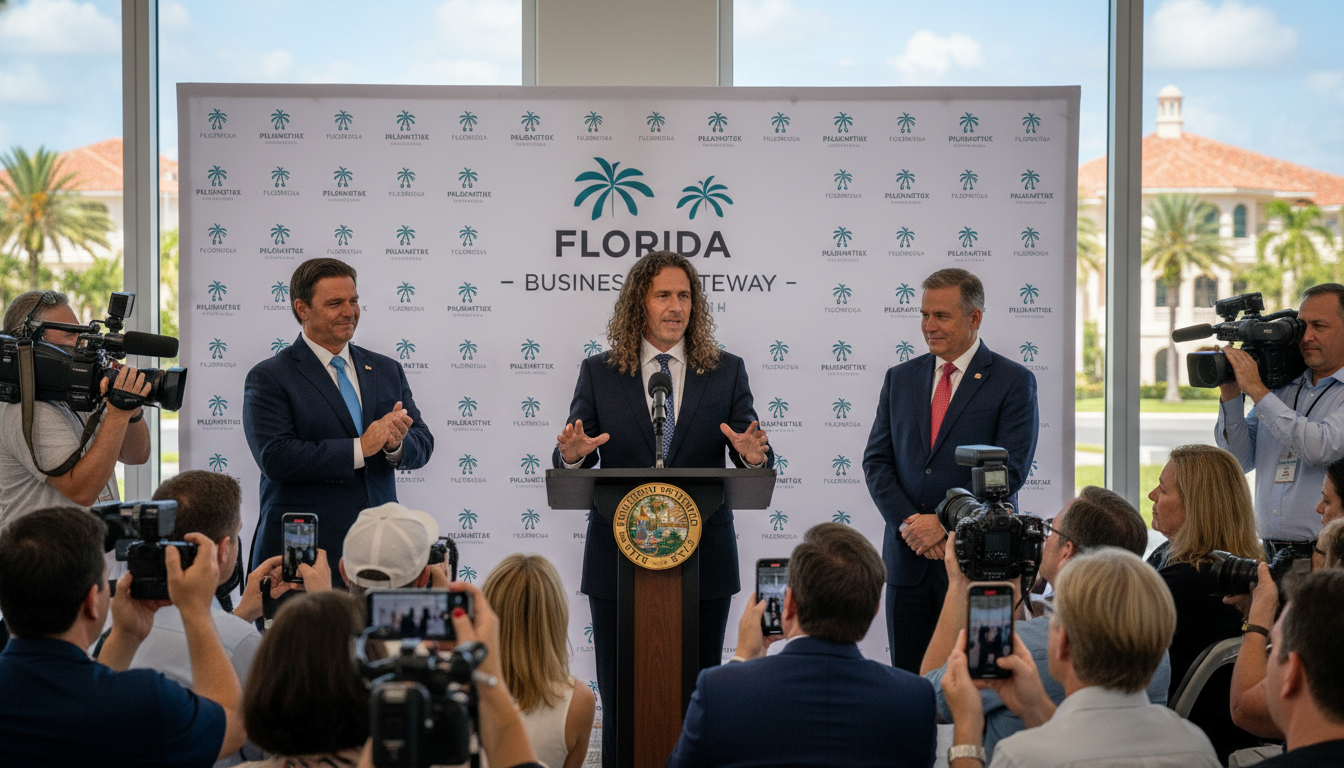
Palantir Moves to Florida, Citing Business-Friendly Climate
Palantir’s move to Florida marks a strategic relocation the company says was driven by the state’s business-friendly policies and regulatory environment. The Palantir Florida decision also reflected the residential ties of senior executives and, according to company circles, proximity to Mar‑a‑Lago and the U.S. government.
Company Cites Florida’s Business Climate
Palantir has publicly pointed to Florida’s economic framework as a central reason for choosing the state, saying the regulatory and tax environment better supports its operations. Company statements emphasized long‑term planning and the desire to align corporate structure with locations that offer competitive conditions.
Analysts note that firms often weigh tax incentives, regulatory oversight, and cost structures when deciding headquarters or major regional hubs. For Palantir, officials framed the decision as part of broader corporate strategy rather than a response to any single local incentive.
Senior Executives Maintain Residences in Florida
Several top managers at Palantir already own homes in Florida, a detail the company has acknowledged as relevant to its decision. Among those identified are CEO Alex Karp and board chair Peter Thiel, both of whom have established residential ties to the state.
Executives’ personal locations frequently influence corporate moves when combined with favorable business climates. Palantir’s announcement underlined that leadership proximity can simplify executive travel and continuity of management.
Proximity to Mar‑a‑Lago and Washington Ties Mentioned
People close to the company say proximity to Mar‑a‑Lago, the Florida residence used by President Donald Trump, factored into the choice. Sources described this as part of a broader calculation about access to policymakers and weekend presidential activities in Palm Beach.
Observers cautioned that physical closeness to a presidential residence does not, by itself, equal securing government business, but acknowledged it can alter political and social connectivity. Palantir has historically balanced commercial objectives with extensive government contracting, making locations near centers of political gravity relevant to strategic planning.
Market and Contracting Implications
Palantir’s relocation raises questions about how the move might affect its government and commercial contracts. The company’s client base includes national security and civilian agencies, and shifts in geography can influence staffing, contracting logistics, and relationship management.
Investors and industry watchers will monitor whether the Florida presence alters procurement dynamics or affects the company’s ability to recruit cleared personnel. For now, Palantir maintains that operational continuity and client commitments will remain intact during and after the transition.
Political and Ethical Scrutiny Expected
Moves that bring high‑profile tech firms closer to prominent political figures often invite scrutiny from watchdogs and lawmakers. Critics may examine whether proximity influences contracting decisions or creates perceived conflicts of interest, particularly given Palantir’s role in government analytics and defense projects.
Regulatory bodies and ethics monitors typically review ties between private firms and government officials when such concerns arise. Palantir has emphasized adherence to procurement rules and internal compliance controls in response to those expectations.
Strategic Positioning and Talent Considerations
Beyond politics, the relocation reflects strategic considerations about talent pools and regional operations. Florida’s growing tech corridors and comparatively lower cost of living are appealing to some companies seeking expansion outside traditional tech hubs.
Palantir will likely pursue recruitment and local partnerships to support engineering, sales, and government affairs functions. The company’s ability to attract cleared personnel and maintain technical capabilities will be central to assessing the long‑term success of the move.
Company Statements and Next Steps
Palantir representatives framed the decision as aligning corporate structure with leadership and market realities, while reiterating commitments to existing clients. The company did not release a detailed timeline for operational changes, instead indicating that transitions would be phased to avoid disruption.
Stakeholders now await further detail on office locations, staffing plans, and how Palantir will balance its presence between Florida and other established centers. Both the business community and political observers will be watching subsequent filings and announcements for clarity.
Palantir’s relocation to Florida reflects a convergence of economic incentives, executive residency, and strategic calculations about proximity to centers of political influence, and it will likely prompt ongoing analysis from investors, regulators, and industry peers.
