
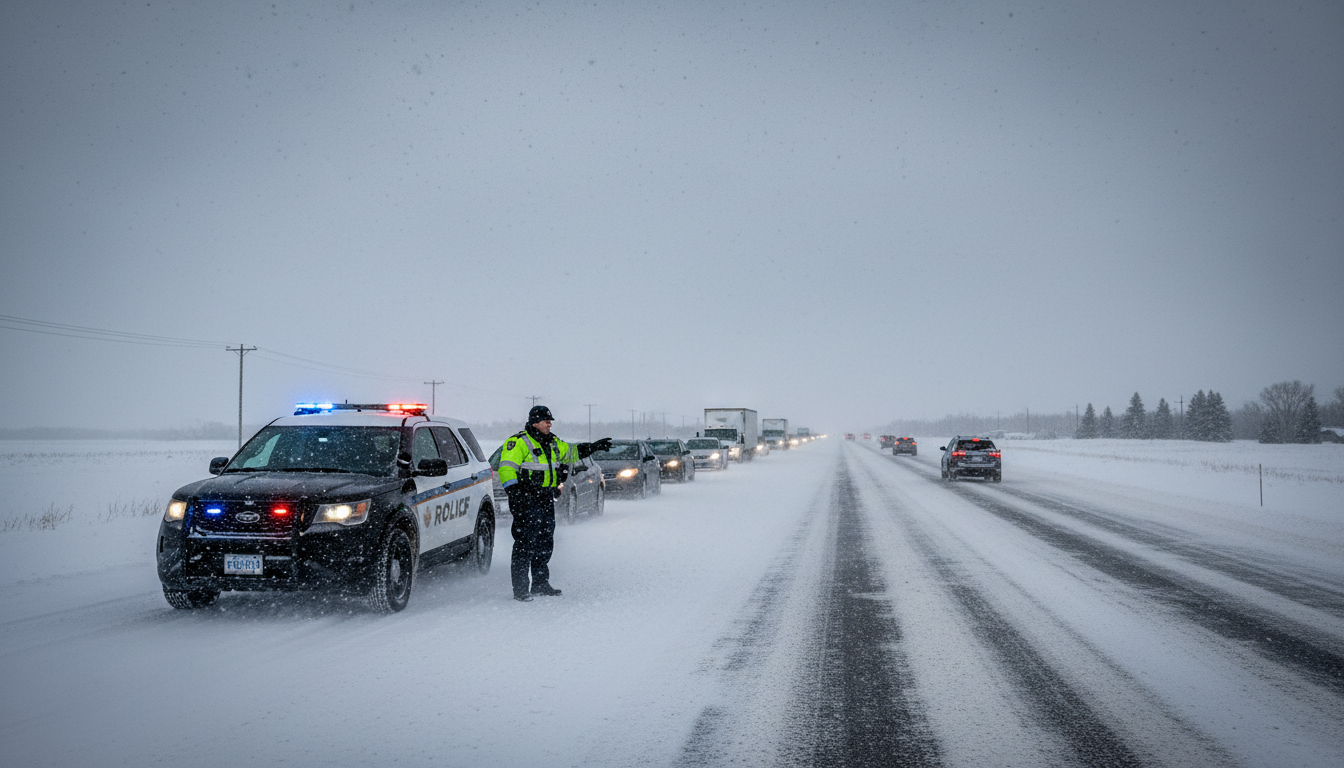
RCMP travel advisory issued for highways east of Calgary after multiple collisions
RCMP travel advisory urges drivers to avoid highways east of Calgary after high winds, blowing snow, ice and multiple collisions made conditions treacherous on Friday, April 24, 2026.
A Friday travel advisory from the Royal Canadian Mounted Police warned motorists to avoid many highways east of Calgary after high winds and blowing snow created icy, low-visibility conditions that led to multiple collisions. The RCMP described driving conditions on several routes as “extremely poor” and “treacherous,” and officers urged travellers to postpone non-essential journeys.
RCMP details and timeline
The Mounties reported responding to a series of incidents on Friday, with calls accelerating as weather deteriorated through the afternoon and evening. Officers said collisions were spread across a number of rural stretches rather than concentrated at a single crash site.
RCMP communications identified the worst-affected corridors and repeatedly emphasized that poor visibility and ice were the primary hazards. While no comprehensive casualty numbers were released in the initial advisory, police confirmed crews were attending multiple scenes simultaneously.
Highways 897, 41, 45 and 16 hardest hit
Provincial highways 897, 41, 45 and the Trans-Canada corridor near Highway 16 were singled out by RCMP as experiencing some of the most dangerous conditions. Plow and tow crews faced delays reaching several locations because of ongoing drifting snow and crosswinds.
Traffic slowed to a crawl in many sections, and emergency responders advised that some stretches required caution even for local traffic. Commercial truckers and motorists with trailers reported difficulty maintaining control on slick surfaces and in sudden whiteout conditions.
Weather factors that worsened driving
High winds combined with recent snowfall produced blowing snow that reduced visibility to near-zero in places, RCMP said. Surface ice compounded the danger, creating a mix that can turn a routine commute into a high-risk passage.
Meteorological conditions that produce drifting and freezing on road surfaces typically make crashes more likely and clear-up operations slower. That combination appeared to underpin the pattern of collisions officials described on Friday.
Emergency response and resource deployment
Police and provincial road-maintenance teams coordinated to prioritize the most serious incidents and to clear blocked lanes as quickly as possible. Tow operators, ambulance crews and maintenance vehicles were dispatched to multiple sites, stretching regional response resources during peak hours.
RCMP asked drivers to give emergency crews room to operate and to avoid entering areas where accidents had occurred until routes were confirmed safe. Where feasible, crews redirected traffic and established temporary closures to protect responders and the travelling public.
Public travel guidance and safety measures
In issuing the RCMP travel advisory, officials urged drivers to delay non-essential travel, reduce speed dramatically, and maintain large following distances if travel could not be avoided. Motorists were also reminded that high-profile or heavy vehicles are particularly vulnerable to crosswinds and drifting.
Drivers who must travel were advised to carry winter emergency kits, ensure phones are charged, and inform someone of their planned route and expected arrival time. Simple precautions, such as checking vehicle tires and fuel levels before departure, were highlighted as ways to reduce the risk of becoming stranded.
Local impacts and wider transportation effects
The advisory and the incidents had ripple effects on local communities that depend on these highways for school runs, deliveries and commuter travel. Delays and temporary closures disrupted freight movements and added pressure on alternate routes and local services.
Businesses and residents in affected areas reported longer travel times and interruptions to scheduled services. Emergency and municipal officials said they would review the response and road-management priorities once conditions stabilized.
Road and weather conditions remained the immediate concern for authorities working to restore normal traffic flow. RCMP reiterated that while crews were making progress, road users should treat the advisory seriously and expect intermittent restrictions until surfaces and visibility improve.
As crews continued clearing collisions and assessing road safety, police advised the public to monitor official channels for updates and to avoid travel if possible.
