
Mark Wiseman apologizes for English-only invitation to MPs
Mark Wiseman apologizes after sending an English-only invitation to MPs for a May 12 Washington reception; Ottawa says invitation was reissued bilingually.
Ambassador apologizes for English-only invitation
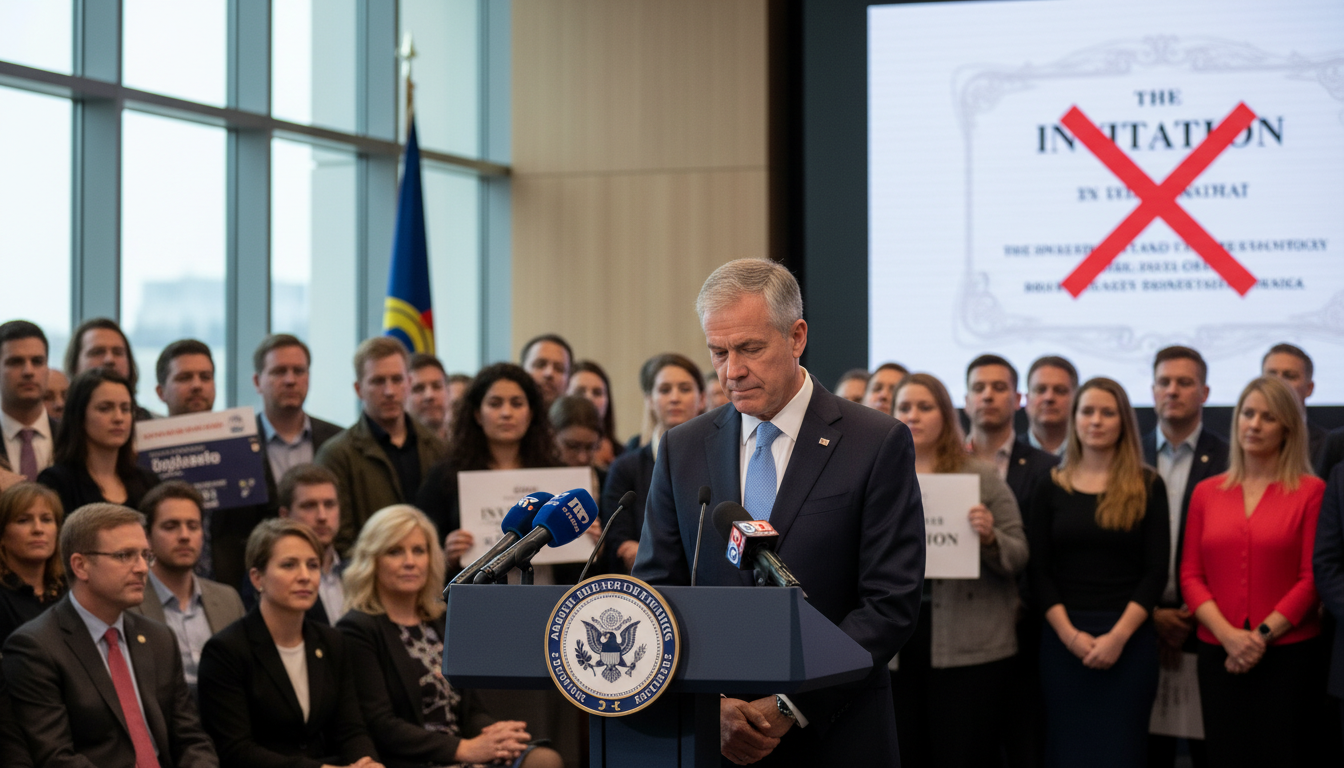
The Canadian ambassador to the United States, Mark Wiseman, publicly apologised after an English-only invitation was sent to members of the House of Commons’ Standing Committee on Foreign Affairs and International Trade. The invitation, for a reception in Washington scheduled for May 12, 2026, was initially distributed in English only, prompting immediate criticism from parliamentarians and the public.
Wiseman addressed the committee in Ottawa and acknowledged the mistake, saying the invitation should have been bilingual. He read a few sentences in French during his opening remarks but issued his formal apology in English, and officials later confirmed the invitation was reissued in both official languages.
Committee testimony and immediate reaction
During testimony before the standing committee, members pressed Wiseman on how an embassy communication could overlook Canada’s bilingual obligations. Several MPs described the omission as a serious lapse given the ambassador’s role in representing Canadian interests abroad and in engaging with francophone stakeholders.
Committee members also sought assurances that the embassy’s communications would adhere to the Official Languages Act. Wiseman reiterated his personal commitment to promoting bilingualism while acknowledging procedural failures in the drafting and review process for the invitation.
Prime Minister condemns error but defends Wiseman’s appointment
Prime Minister Mark Carney publicly called the original English-only invitation "not acceptable" and said the oversight was wrong, describing it as an instance that needed correction. At the same time, Carney defended Wiseman’s qualifications for the diplomatic post, pointing to his experience and contacts in Washington as reasons he was chosen for the role.
The prime minister drew a distinction between the operational lapse and Wiseman’s broader mandate, saying the ambassador is expected to pursue Canada’s interests diplomatically rather than negotiate trade agreements. Ottawa’s response emphasised that remedial steps had been taken quickly once the omission was identified.
Opposition parties and Quebec leaders demand answers
Opposition MPs from the Bloc Québécois and the Conservative Party reacted strongly, framing the omission as a sign of insensitivity toward francophone Canadians and Quebec. Conservative figures argued Wiseman’s actions cast doubt on the government’s stated commitment to protecting francophone interests when dealing with international partners.
Bloc leader Yves‑François Blanchet called for a meeting with the ambassador to discuss Quebec’s particular concerns and to ensure future engagement reflects the province’s distinct cultural and linguistic realities. Several opposition MPs said they expected clearer institutional safeguards to prevent similar incidents.
Background on Wiseman’s nomination and prior controversies
Wiseman, who began his mandate in February 2026, was appointed amid debate last December about his positions on agricultural supply management and his association with public policy initiatives. His nomination drew scrutiny from some stakeholders who questioned whether his prior statements aligned with broader government priorities on trade and domestic policy.
Government officials have said those nomination debates are separate from the current language lapse, but the episode has reopened conversation about vetting and orientation for senior diplomatic posts. MPs pressed for confirmation that embassy teams receive explicit direction on official-language requirements for public communications.
Global Affairs response and corrective measures
Global Affairs Canada said reminders about official languages are routinely circulated to missions abroad and that the Washington embassy was directed to reissue the invitation in both English and French. The department also indicated it would review internal checks to reduce the risk of similar errors at diplomatic missions.
Officials committed to follow-up training and tighter internal sign-off procedures for public-facing materials. The government’s undertaking aims to reassure MPs and francophone communities that bilingual obligations will be respected in Ottawa’s external communications.
A final note: the incident has underscored sensitivities around bilingual representation at the diplomatic level and put an early spotlight on Ambassador Wiseman’s tenure in Washington as he prepares to engage with U.S. officials and Canadian stakeholders in the weeks ahead.
