
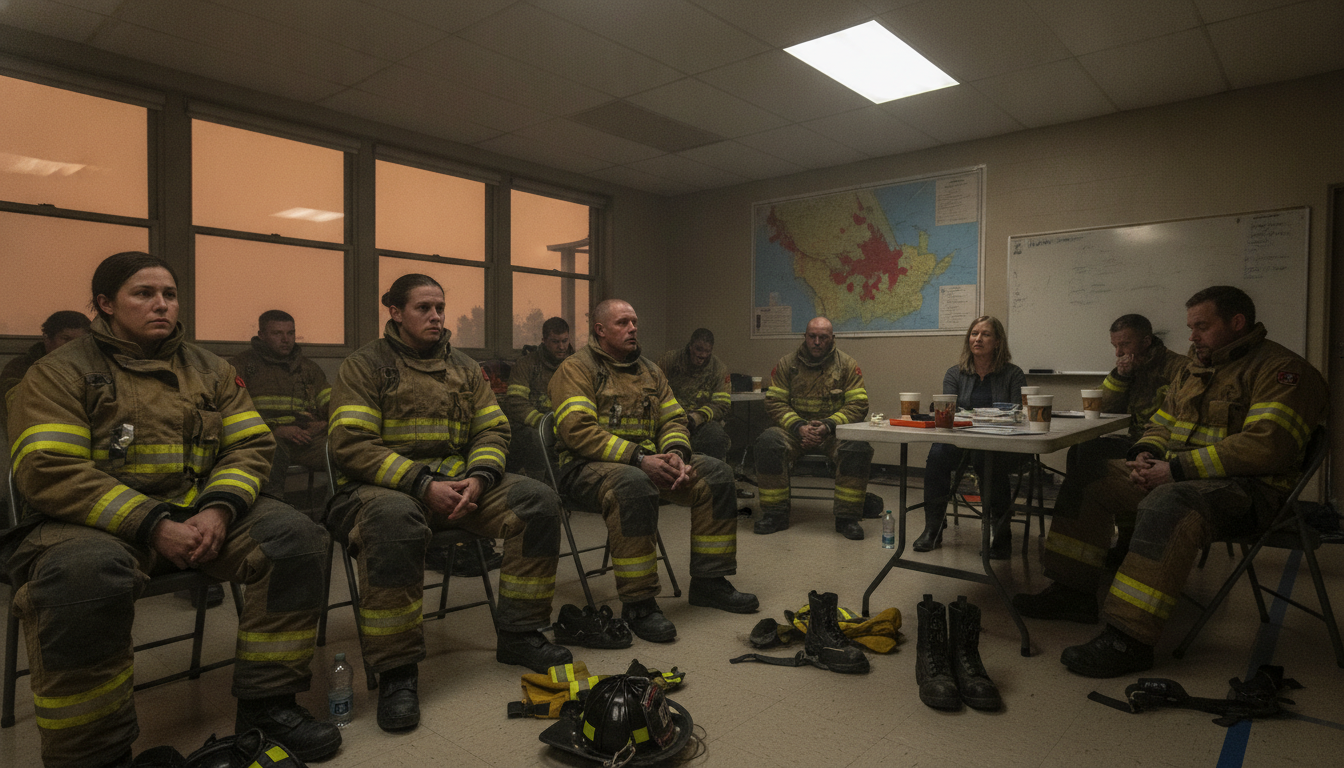
Wildfire firefighters’ mental health strained after intense B.C. fire seasons
BC Wildfire appoints a mental-health adviser as wildfire firefighters report PTSD, exhaustion and family strain after intense 2025 season; training gaps probed
BC Wildfire has engaged a mental-health adviser to support crews after an exceptionally intense 2025 fire season, raising questions about wildfire firefighters mental health and long-term care needs. The adviser, a former wildland firefighter who now runs an anonymous support line, says many crews carry psychological injuries that emerge once the season ends. Officials and mental-health organizations are urging earlier, proactive training and expanded services for firefighters who live in the very communities they protect. The move follows a year of unprecedented night operations and sustained high-intensity deployments.
BC Wildfire hires mental-health adviser
Anna Richards, a former forest firefighter, now operates a confidential phone service contracted by BC Wildfire to help crews process traumatic experiences. Richards described the work as immersive and consuming, a lifestyle that blurs the boundaries between on-shift duties and personal life. She says callers commonly report exhaustion, irritability and difficulties reconnecting with family after weeks or months on the front lines. The province’s decision to bring in a specialist reflects growing recognition of occupational mental-health risks in wildland firefighting.
High-intensity 2025 season and operational strain
BC Wildfire teams carried out 260 helicopter night missions in 2025, an indicator of the scale and round-the-clock nature of recent responses. That tempo amplifies exposure to dangerous conditions and forces firefighters to operate for extended stretches without typical recovery periods. On-scene adrenaline and sustained intensity can mask cumulative stress until the season winds down, Richards explains. When the immediate threat recedes, many workers begin to feel the psychological cost of back-to-back high-pressure deployments.
Local residents doubled as responders
A distinct challenge in British Columbia is that many wildfire firefighters are also residents of affected communities, forcing some to evacuate their own homes while fighting fires nearby. That dual role creates compounded stress: responders must manage their operational responsibilities while coping with personal loss or displacement. The overlap between professional and private impacts reduces opportunities for emotional detachment and safe recovery. Community-level disruption therefore becomes both a public-safety and a workforce-wellness concern.
Evidence of elevated mental-health needs
Research and sector leaders point to notably high rates of mental-health problems among first responders. A 2017 study in the Canadian Journal of Psychiatry found roughly 45 percent of Canadian first responders experience a mental-health disorder, a rate significantly higher than the general population. Conditions cited by clinicians and firefighters include post-traumatic stress disorder and major depressive disorder, often linked to repeated exposure to life-threatening events and chronic sleep disruption. Mental-health advocates say current treatment and prevention efforts remain uneven across agencies and regions.
Training gaps and resilience programs
The Canadian Mental Health Association’s British Columbia division runs a resilience program introduced a decade ago to equip first responders with tools for coping with trauma. Officials say programs like Objective Resilience can reduce stigma and teach practical strategies, but uptake and timing are critical. Richards argues that seasonal hiring and rapid onboarding leave little room for comprehensive mental-health training before crews are deployed. Stakeholders propose offering resilience training and peer-support skills as part of pre-season preparation rather than as after-the-fact interventions.
Calls for proactive support and policy change
Johnny Morris, director of the CMHA’s B.C. division, says emergency services are increasingly focused on delivering mental-health care but that a shift to proactive measures is needed. Recommendations from clinicians and sector representatives include mandatory pre-season resilience training, routine mental-health screening, and accessible confidential counselling for seasonal and full-time staff. Union and employer leaders are also examining whether shift patterns, rest protocols and post-season debriefing procedures need revision to lower long-term risk.
The adviser contracted by BC Wildfire and mental-health organizations emphasize that addressing wildfire firefighters mental health will require sustained funding and cross-agency coordination. Fire seasons are lengthening and intensifying in many parts of the province, increasing the likelihood that firefighters will face repeated high-stress years. Officials say combining early training, peer support lines, and expanded clinical services offers the most promising path to protect both the mental welfare of crews and the resilience of the communities they serve.
