
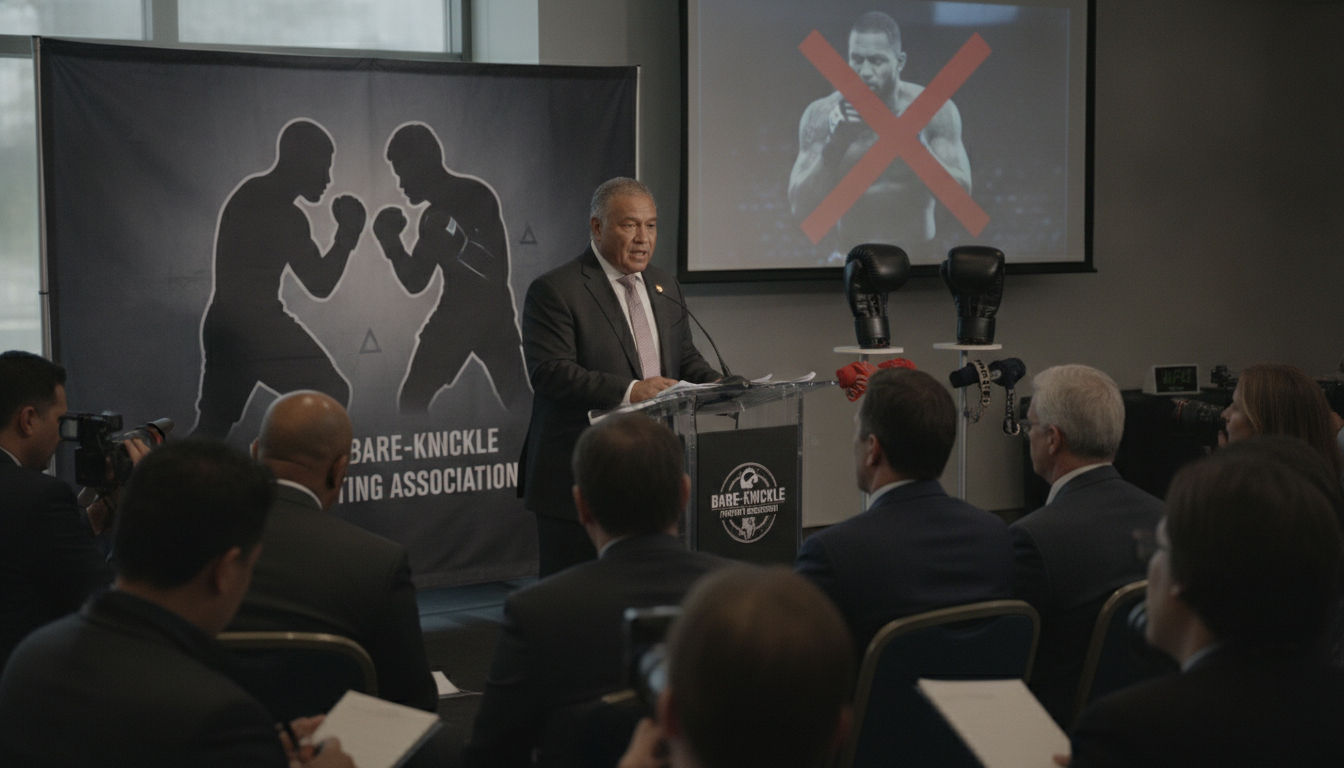
Bare-knuckle boxing safety debate rekindled after Nama compares impacts to gloved boxing and MMA
A veteran observer’s comments have reignited discussion about bare-knuckle boxing safety, with Nama arguing that bare-knuckle fights are less damaging than conventional boxing and that mixed martial arts often feature more dangerous strikes. The remarks specifically contrasted the frequency and force of blows in professional boxing with those in bare-knuckle contests, and criticized late strikes in MMA bouts while invoking a “hockey mentality” for immediate stoppages.
Nama’s description of strikes and injuries
Nama told reporters he sees a clear difference in how often and how hard fighters land blows across disciplines. He said conventional boxing produces more frequent, powerful impacts that increase cumulative trauma, while bare-knuckle fights, though visually bloody, tend to feature fewer heavy blows that require only minor medical attention like stitches. Nama also expressed concern about strikes to downed opponents in MMA, arguing those moments are unnecessarily brutal and should be curtailed.
Comparing force and frequency across sports
Combat sports vary both in equipment and rules, which changes how fighters strike and defend. Padded gloves in boxing allow competitors to throw with less fear of hand injury, often increasing punch volume and sustained exchanges. By contrast, bare-knuckle rules can encourage more measured striking and caution to protect the hands, which can reduce repetitive heavy impacts but increase superficial cuts.
How referee intervention differs in practice
Nama used the phrase “hockey mentality” to describe an approach that stops action when a competitor is hurt, and he contrasted that with what he sees in some MMA contests. Referee training and rule sets determine when fights are paused for safety, and different commissions and promotions prioritize stoppage thresholds unevenly. Observers say consistent enforcement of stoppage rules is a key factor in preventing unnecessary harm, regardless of whether bouts are gloved, bare-knuckle, or mixed-discipline.
Medical concerns: lacerations versus brain trauma
Medical specialists stress the distinction between visible injuries like cuts and the less obvious but more serious risk of brain trauma. Bare-knuckle bouts can produce prominent facial lacerations that require stitches, but some clinicians worry that repetitive concussive force—more common in high-volume boxing exchanges—poses a greater long-term hazard. The debate centers on weighing acute, treatable wounds against cumulative neurological effects, and experts call for more data comparing outcomes across sports.
Regulatory landscape and oversight challenges
Regulators face pressure to balance athlete safety with market demand for varied combat formats, including bare-knuckle events. Licensing bodies set rules on hand wraps, medical checks, and permitted strikes, but standards can differ widely between jurisdictions. Critics argue that harmonized safety protocols and transparent medical reporting are needed to better assess the relative dangers of bare-knuckle boxing, traditional boxing, and MMA.
Public appetite and the growth of bare-knuckle promotions
Audience interest in alternative combat formats has helped bare-knuckle events expand beyond niche circuits into larger arenas. Promoters tout the sport’s perceived authenticity and raw spectacle, while opponents warn that commercial pressures can outpace safety reforms. Fighters and trainers often weigh career incentives against health risks, and the sport’s commercial trajectory will likely shape how quickly regulators and medical authorities respond.
Voices from inside the ring
Trainers, referees and fighters express a range of views on which format is safest or most sustainable. Some emphasize technique, conditioning and rule consistency as the best means to protect athletes, rather than focusing only on gloves or the absence of them. Others urge clearer enforcement around strikes to downed opponents and quicker medical intervention when a fighter shows signs of severe trauma.
The exchange of perspectives sparked by Nama’s comments underscores a larger debate in combat sports: whether visible blood and cuts or repeated high-force impacts present the greater threat to fighters’ long-term health. With growing public interest and unequal regulatory regimes, stakeholders say more comprehensive research and consistent safety standards will be essential to protect competitors across bare-knuckle boxing, traditional boxing and mixed martial arts.
