
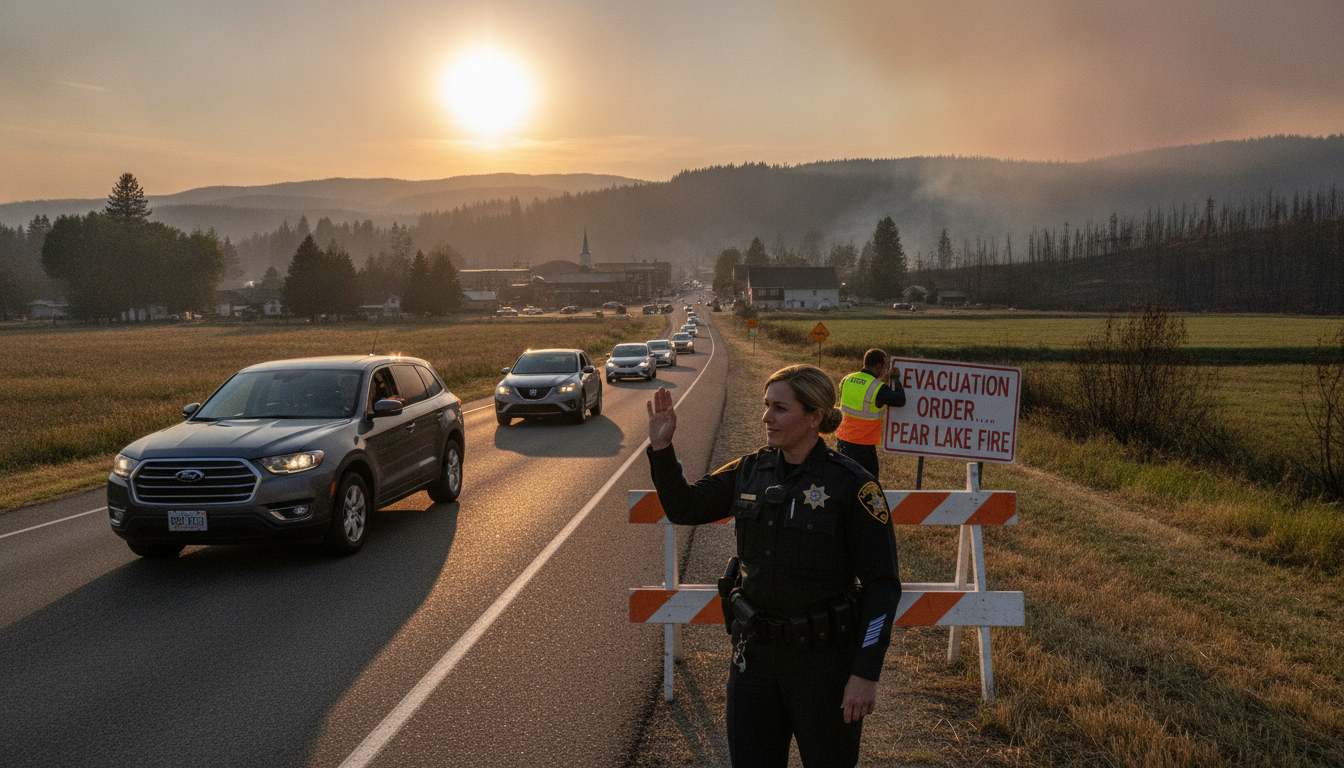
Pear Lake fire: evacuation order for Clinton lifted; return under alert as firefighting continues
Residents of Clinton allowed to return under evacuation alert after July 24 order, while BC Wildfire fights smouldering hotspots in the Pear Lake fire. Structures and power infrastructure remain damaged and containment is incomplete.
The Village of Clinton lifted the evacuation order issued on July 24 and replaced it with an evacuation alert, allowing residents to return home as of 8 a.m. Saturday local time. Officials cautioned that returning households must be ready to leave again if conditions deteriorate, and that services and living conditions may still be significantly impacted by the Pear Lake fire.
Evacuation order replaced with alert for Clinton
Residents were told they may re-enter the community but must stay prepared to evacuate on short notice. The Village’s statement stressed that the return will mean different challenges for each household depending on damage and access to services.
Local authorities warned that some neighbourhoods remain unsafe and that utility and municipal services will be limited as recovery and assessment proceed. The alert is intended to balance the community’s need to return with ongoing safety concerns.
Scale of the Pear Lake fire and infrastructure damage
The Pear Lake fire has burned an estimated 1,574 square kilometres, roughly three times the area of Montreal Island, and remains uncontained. BC Hydro reported that numerous pieces of electrical infrastructure, including power poles, were compromised by the blaze.
Damage assessments are ongoing and officials expect that roads, private properties and public infrastructure will show varying degrees of fire-related harm. Residents should assume that power, communications and municipal services may not be restored immediately on their return.
Firefighting operations and targeted tactics
BC Wildfire crews say suppression and patrols along the fire edge in the southern area around Clinton have been completed, while operations continue in the northern sectors. Fire teams are carrying out careful mop-up work where fuels are burning deeply in the soil, a condition driven by prolonged dry weather.
Planned ignitions covering about 370 hectares were scheduled along the southern flank to draw the fire back onto terrain where crews can work more safely. Helicopters have been deployed to drop water on active sections, while ground crews extinguish hotspots and monitor the perimeter.
Localised actions: sprinklers, aerial support and patrols
In the northwest near Canoe Lake, sprinklers were installed to protect structures and vegetation, while crews focus on extinguishing smouldering areas between Meadow Lake Road and Canoe Lake. The combination of aerial water drops and ground-based tactics is intended to cool active zones and prevent re-ignition.
Patrols continue around buildings and key access routes to identify residual heat and newly emerging hotspots. Authorities are emphasizing that smouldering fuels can produce smoke and surface heat for days, requiring repeated checks before areas are declared fully secure.
Who can return now and who remains evacuated
Besides Clinton, officials said residents in some neighbouring communities, including Big Bar Lake and Chasm, have also been permitted to return under alert conditions. However, people living in areas where the fire still poses an immediate threat — such as properties along Jesmond Road — remain under an active evacuation order.
The staggered approach is intended to allow safe re-entry where risk has been mitigated while maintaining protection for communities still in danger. Emergency personnel continue to coordinate movement restrictions and access to ensure public safety.
What returning residents should expect and do first
Officials advise returning residents to exercise caution: check structures for damage before re-entering, avoid downed power lines, and heed directions from on-site emergency crews. Clean-up and restoration tasks will be significant in many places, and residents should bring personal protective equipment such as N95 masks, gloves and sturdy footwear.
People relying on power or municipal water should verify service status with BC Hydro and local authorities before depending on those systems. Those who require assistance or temporary accommodations can contact local emergency social services for support.
The community faces a long recovery phase as cleanup, infrastructure repairs and detailed damage assessments proceed, and residents are being urged to document damage for insurance and recovery purposes.
Officials continue to monitor weather, fuel conditions and fire behaviour as they plan next steps to increase containment and protect remaining at-risk communities.
