
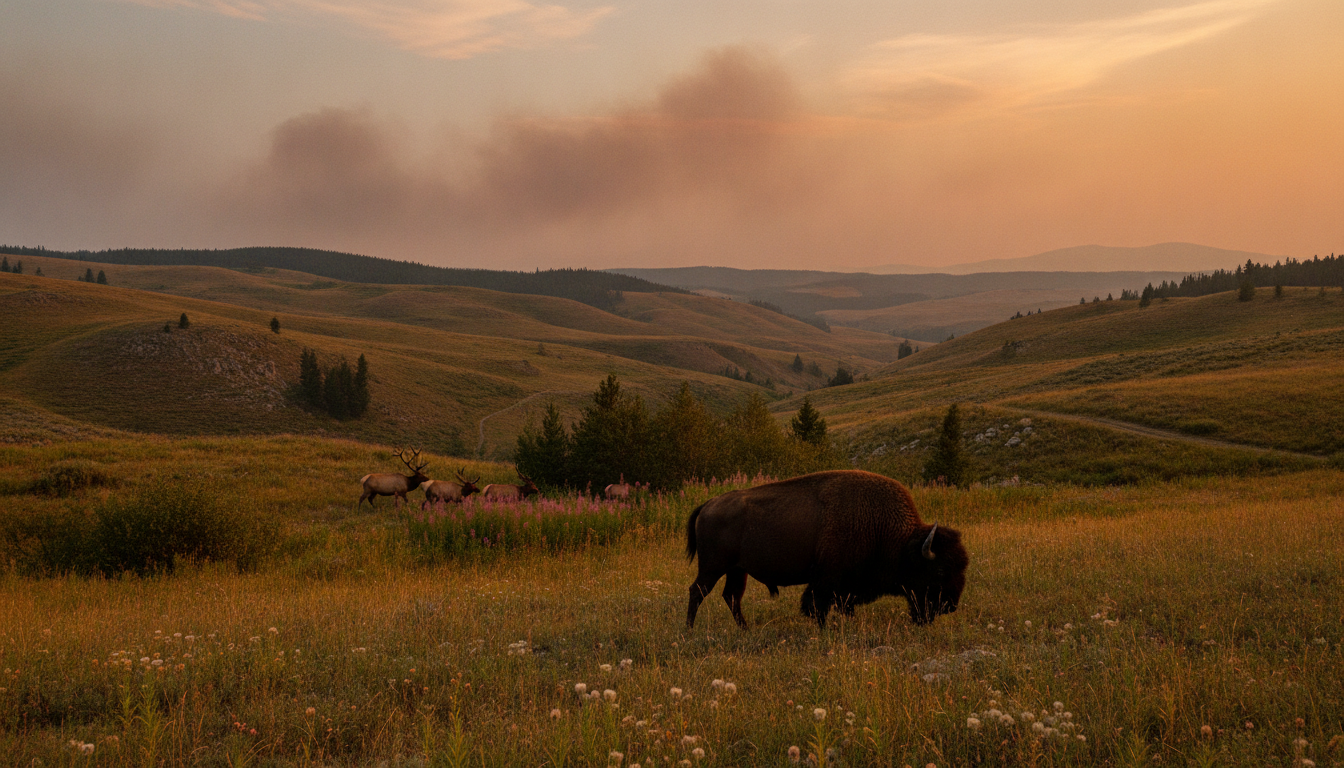
Smoke, mist and rain transform Diamond Valley foothills in late-summer light
Smoke, mist and rain bathe the Diamond Valley foothills on Aug. 11–12, 2026, revealing late‑summer colours, wildlife sightings and fading bluebird plumage.
Soft, smoky light over the foothills
The Diamond Valley foothills were shrouded in a mixture of smoke, mist and drizzle on Aug. 11 and 12, producing unusually soft, diffuse light across meadows and forests. Photographer Mike Drew captured images of the scene showing rain-slick leaves, low mist over beaver ponds and saturated wildflowers that popped against a muted sky. The conditions limited visibility at times but intensified late‑summer hues, from deep larkspur blues to the first hints of orange in geranium leaves.
Bluebirds showing the toll of summer
Mountain bluebirds that arrived in spring appeared markedly faded by mid‑August, with males showing duller backs and worn chests after months of nesting and territorial disputes. The birds were still present in loose flocks among willows and fencelines, but many adults displayed the frayed plumage of a hard season raising young. Juveniles remained bright and active, underscoring the contrast between fresh recruits and adults nearer the end of the breeding cycle.
Wetlands hosting young waterfowl
Beaver ponds along Pine Creek hosted concentrations of young waterbirds, including ring‑necked ducks, teal and flotillas of grayish juvenile coots. Observers noted that many pond‑nesting species had already fledged, while some smaller marsh residents — a lone pie‑billed grebe and calling soras — remained tucked among cattails. The ponds provided important feeding grounds for growing birds, despite the damp, smoky air that drifted across open water on those August days.
A great grey owl appears in the rain
A chance sighting of a great grey owl highlighted the day’s unpredictability when the bird shook raindrops from its plumage beneath an aspen canopy. The owl, briefly visible to a passerby, demonstrated the species’ camouflage and patient hunting behaviour as it scanned wet grass for small mammals. Moments like that — an otherwise hidden predator revealed by a spray of rain — emphasized how fleeting wildlife encounters can be in marginal weather.
Elk herds and the first signs of seasonal change
Open grassy flats showed groups of female elk, some accompanied by calves, grazing through the mist and smoke; their condition looked robust as they moved across the landscape. Forest floors and shady hollows still held deep greens, but several understory plants were already turning: geranium leaves showed early red edges and cow parsnip leaves bore the burn marks of damage. Fireweed remained in bloom in many places, while bright red baneberries on the forest floor served as a stark reminder to admire but not touch.
Wildflowers, pollinators and foraging notes
Late‑season wildflowers provided vibrant splashes of colour amid the haze, with tall larkspur, blue asters and yellow hawkweed attracting bumblebees even in cool, wet patches. Raspberries were found ripe in a few sheltered spots, though some stands sat next to roads treated with dust suppressant and were left uneaten. Observers also recorded abundant sparrows, siskins and chickadees, reinforcing the foothills’ role as a mosaic of habitats that support a diversity of species through the late summer.
Roads, visibility and photographic chances
The stretch of road near Diamond Valley that winds through aspen, poplar and spruce offered both hazards and opportunities on the rainy days; slick surfaces and smoky haze reduced visibility but the still air allowed photographers to capture intimate wildlife moments. Slow driving along the roughly 10‑kilometre dead‑end route revealed a range of habitats, from willow‑choked bogs to open grassland, enabling a compact survey of foothills biodiversity on Aug. 11–12, 2026. The combination of calm conditions and soft light made it easier to frame close, low‑contrast images that emphasized texture and colour.
Summer’s persistence and the coming season
The scenes observed over those two August days underscored that while summer is advancing, it is not yet over; fledglings and late bloomers remain abundant even as adults show the wear of months of breeding. For residents and visitors to the Diamond Valley foothills, the period offers a last window to enjoy late‑summer wildlife activity and floral displays before the landscape begins its autumn transition. The images and notes from Aug. 11–12, 2026, serve as a small record of a fleeting moment when smoke, mist and rain combined to reveal the foothills in a quietly dramatic light.
