
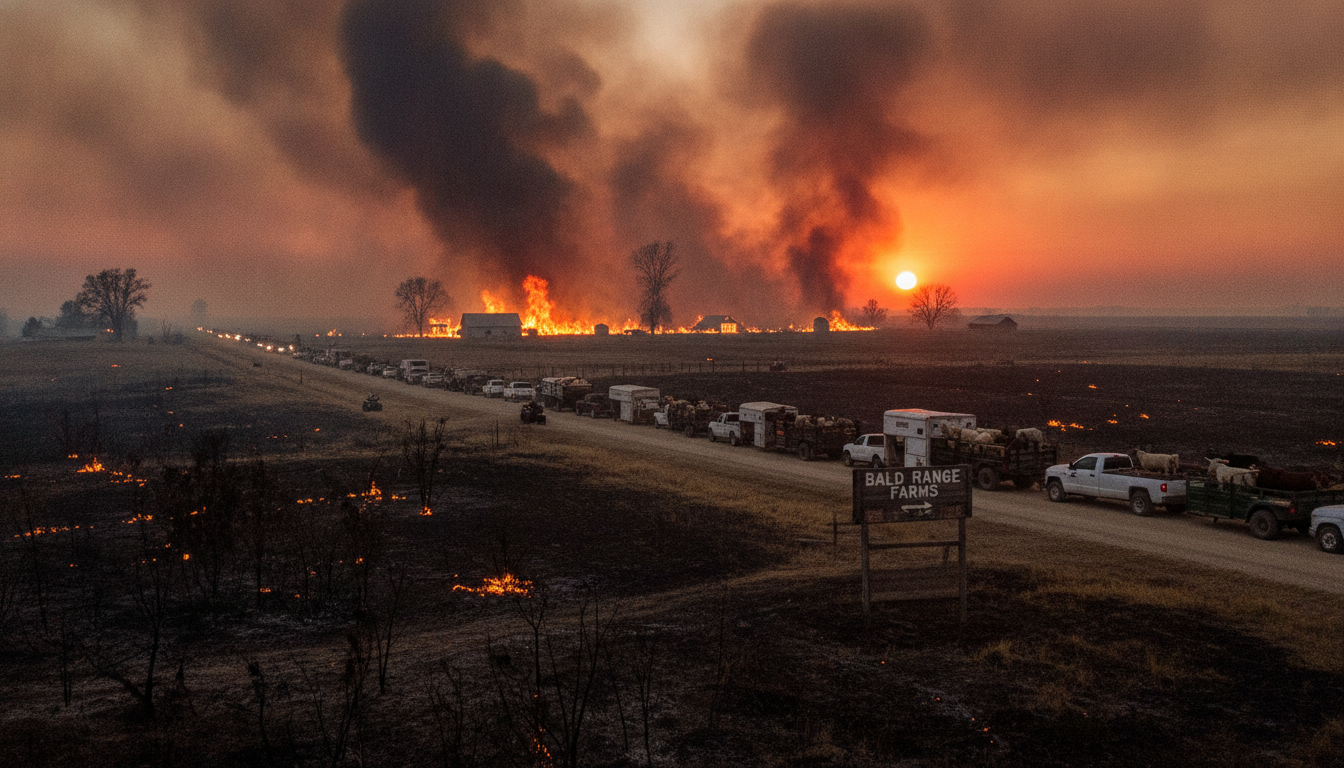
Bald Range wildfire displaces thousands in Okanagan as farmers scramble to protect livestock
Bald Range wildfire displaces thousands in the Okanagan; farmers face livestock losses while provincial teams and volunteers work to care for roughly 50,000 affected animals.
A fast-moving Bald Range wildfire in the Okanagan has forced widespread evacuations and left farmers scrambling to locate and care for their animals, provincial officials said, as roughly 50,000 creatures are now believed to be affected. The wildfire prompted evacuation orders that include more than a hundred agricultural operations, and relief teams are coordinating with local emergency centres to deliver on-the-ground assistance. Residents in Summerland and surrounding communities remain displaced, and authorities continue to restrict access to the hardest-hit areas for safety reasons.
Scale of evacuations and agricultural impact
Provincial authorities report that 146 farms are currently under evacuation orders, with an additional 123 operations placed on alert as the Bald Range wildfire threatens the region’s agricultural heartland. More than 20,000 people across British Columbia remained under evacuation orders Tuesday night, including about 12,000 residents of Summerland, officials said. The numbers underline a broad disruption to rural life and the local food supply chain as growers and livestock owners are cut off from their properties.
Local governments and emergency managers have described the agricultural impacts as urgent, noting not only immediate threats to animals but also losses of stored feed, fencing and water infrastructure. Many orchards and field crops are reporting heat and smoke damage, and growers face mounting uncertainty about harvest prospects in the weeks ahead. Recovery for farmers will hinge on access to properties and on coordinated support for animal welfare and equipment replacement.
Livestock losses and animal welfare concerns
Provincial officials acknowledged that livestock deaths have been reported but cautioned that the full extent of losses remains difficult to quantify while evacuation orders are in place. The agriculture minister said roughly 50,000 animals are affected across the region, a figure that includes cattle, sheep, goats, horses and other farmed species. For many producers the immediate priorities are accounting for animals, ensuring access to feed and water, and preventing further losses while hazards persist.
Stories from individual farms illustrate the human dimension of the crisis: one Summerland operator evacuated over the weekend and left 14 alpacas behind as flames approached, later finding the animals alive but without feed, shelter or functioning water systems. Such accounts underscore the mixture of relief and new needs that owners face once they are allowed to return to their properties.
Provincial response and agricultural coordinators
The provincial Ministry of Agriculture has dispatched agricultural coordinators to local emergency operations centres to liaise with producers and regional staff, aiming to streamline animal care, movement and information-sharing. Those coordinators are working with on-the-ground liaison officers responsible for reaching producers caught behind evacuation lines and for helping prioritize requests for assistance. The ministry also highlighted existing programs designed to support agricultural evacuations, which are being scaled up in response to the current crisis.
Officials stressed that regional districts have limited authority to issue temporary passes in certain circumstances, allowing farmers to briefly return behind fire lines to check on animals or provide feed and water under controlled conditions. These passes are being granted selectively and only when conditions allow safe entry.
Volunteer animal response and ALERT deployment
Volunteer groups specializing in animal rescue have been mobilized to support evacuated communities, with a regional animal response organization reporting hundreds of requests to enter restricted zones and care for animals. The Animal Lifeline Emergency Response Team (ALERT) has fielded nearly 300 calls for help to tend to animals left behind, and volunteers deploy only after receiving clearance from emergency officials. Their work includes feeding, watering and relocating smaller animals until their owners can return.
The province also pointed to a program known as “range riders,” in operation since 2021, which provides personnel who can be sent into affected areas to move livestock to safer pastures during emergencies. That program has been activated to help manage large-scale livestock movements where road access and safety conditions permit.
Access rules, temporary passes and public warnings
Regional authorities emphasized that they will not lift evacuation orders until it is safe to do so, and they urged residents and visitors not to travel to the Okanagan while operations continue. Officials explained that temporary access passes are being issued on a case-by-case basis for urgent animal checks, but stressed that safety assessments and coordination with fire and public safety teams are prerequisites. Tourists and non-essential travelers were explicitly asked to avoid the region to reduce pressure on emergency resources and to allow crews to operate without interference.
Emergency managers also warned of the ongoing risk of new fire starts, citing lightning and the persistently hot, dry weather conditions in the Interior and Okanagan regions. Those weather-driven risks complicate both firefighting strategies and plans for phased re-entry by residents and agricultural workers.
Current wildfire conditions and next steps
Firefighting authorities reported persistent hot, dry conditions that elevate the probability of new ignitions and make containment more complex in the near term. Crews continue to focus on protecting communities, critical infrastructure and high-risk agricultural properties while conducting assessments that will inform when and how evacuations can be safely lifted. Provincial and regional incident updates will determine the timing for broader access and for targeted relief to reach displaced farmers.
The coming days will be critical for livestock owners and growers seeking to assess losses and begin recovery, as coordinated support from provincial agencies and volunteer organizations continues to mobilize. Emergency officials said farmers should register their needs with local emergency operation centres to ensure requests for animal care and property access are prioritized as conditions allow.
