
Edmonton’s ‘Stacked Mall’ Redefines Downtown Life with Year-Round Indoor Links
Edmonton’s ‘stacked mall’ offers year-round indoor access to transit, arenas, shops and the university, reshaping how residents move in winter every day.
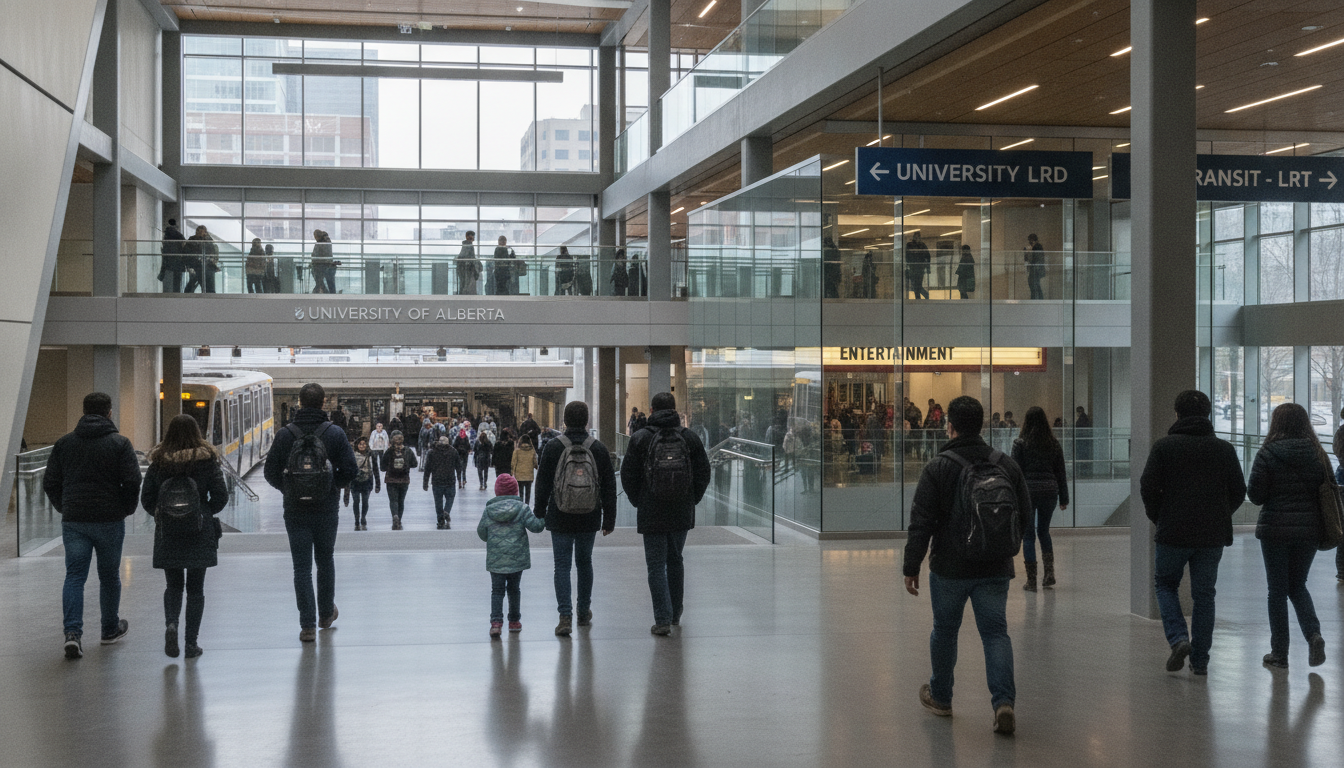
A new downtown complex is creating uninterrupted indoor connections between offices, retail, transit and entertainment, changing the way people use the city in cold months. Residents and visitors can reach workplaces, services and leisure venues without stepping outside, a built response to Edmonton’s severe winter climate. Proponents say the arrangement—vertical retail and linked walkways—creates an urban environment more commonly found in tropical or subtropical cities.
Design connects office towers, transit and amenities
Developers conceived the project as a layered urban environment that stacks retail, services and offices to maximize connectivity. Multiple towers are linked by interior concourses, ground-level shops and elevator access points that reach transit platforms below. The result is a continuous internal network that brings everyday destinations—stores, workplaces and cultural venues—into a single sheltered envelope.
The layout concentrates essential services within short indoor walks of residences and workplaces, which planners argue improves convenience and increases daytime foot traffic for businesses. By integrating elevators directly to rapid transit, the design reduces barriers between downtown functions and the regional transportation network. That spatial logic aims to keep activity concentrated in the core, supporting both retailers and office occupancy.
Year-round access avoids braving extreme cold
Residents describe the system as a practical adaptation to severe winter weather, enabling routine travel without exposure to subzero temperatures. Instead of stepping into blustery streets, people can leave their buildings and move through climate-controlled corridors to reach groceries, pharmacies and entertainment. For those who work and study downtown, the elimination of outdoor walks for many errands is a marked quality-of-life change.
City officials and business owners highlight the public-health and safety benefits of minimizing outdoor exposure during storms, while accessibility advocates note the advantages for people with mobility challenges. At the same time, designers caution that fully enclosed networks require careful attention to ventilation, lighting and wayfinding to remain comfortable and welcoming year-round.
Transit integration shortens commutes to the university
A key feature of the complex is direct vertical access to light rail platforms, allowing riders to transfer from building elevator banks to trains without stepping outdoors. Officials say the linkage shortens transit travel times to the nearby university and other destinations, making transit a more attractive option for students and employees. The seamless connection is pitched as an efficiency gain that may encourage shifts away from car dependence for short downtown trips.
Planners point out that quick, weather-protected transfers help maintain consistent ridership through the winter months, when adverse conditions might otherwise deter transit use. This kind of integration also makes mixed-use development more viable by linking housing, workplaces and education nodes with rapid transit.
Retail, entertainment and events clustered indoors
The indoor network brings an array of commercial and cultural amenities into one condensed footprint, from pharmacies and grocery outlets to theatres and sports venues. Event-goers can move from office towers to arenas and restaurants under cover, which proponents say supports higher attendance at performances and games. For downtown businesses, the concentrated flow of people during both workdays and evenings offers renewed commerce opportunities.
Anchors such as major arena events and university activity help sustain demand for nearby retail and services, and the proximity of offices creates steady daytime spending. Developers emphasize the mix of uses as a strength, arguing that diversified foot traffic stabilizes revenue for small and large businesses alike.
Comparisons, opportunities and concerns for other cities
Local advocates note the model is more typical of large, climate-controlled developments in cities like Singapore, and they suggest that cold-climate cities can adapt similar strategies. The project is being framed as an example for municipalities looking to bolster downtown vitality without relying solely on street-level activity during winter. Municipal planners elsewhere are watching the development for lessons in design, zoning and transit coordination.
Critics caution that extensive indoor networks can shift activity away from traditional sidewalks and streetfronts, potentially hollowing out outdoor public life and disadvantaging businesses that depend on casual street exposure. There are also questions about long-term retail turnover, maintenance costs and equitable access for all residents.
Operational and social challenges ahead
Managing a large indoor urban network requires ongoing investment in security, cleaning, heating and signage to keep spaces safe and navigable. Stakeholders warn that without careful stewardship, interior corridors can become confusing or feel exclusionary to some groups. Equitable programming and clear public access policies will be important to ensure the system serves both private tenants and the wider public.
Economic resilience remains an open question as retailers adapt to changing consumer habits and as office occupancy fluctuates. Officials emphasize that mixed-use planning, coordinated transit schedules and consistent municipal oversight will be necessary to sustain the district’s benefits over time.
As the downtown stacked mall opens to more users, city leaders and community groups will assess how well the model balances convenience with inclusive public life. Many see the indoor links as a pragmatic response to extreme winter weather and a potential template for revitalizing cold-climate downtowns, while remaining attentive to the trade-offs that come with concentrated, indoor urbanism.
