
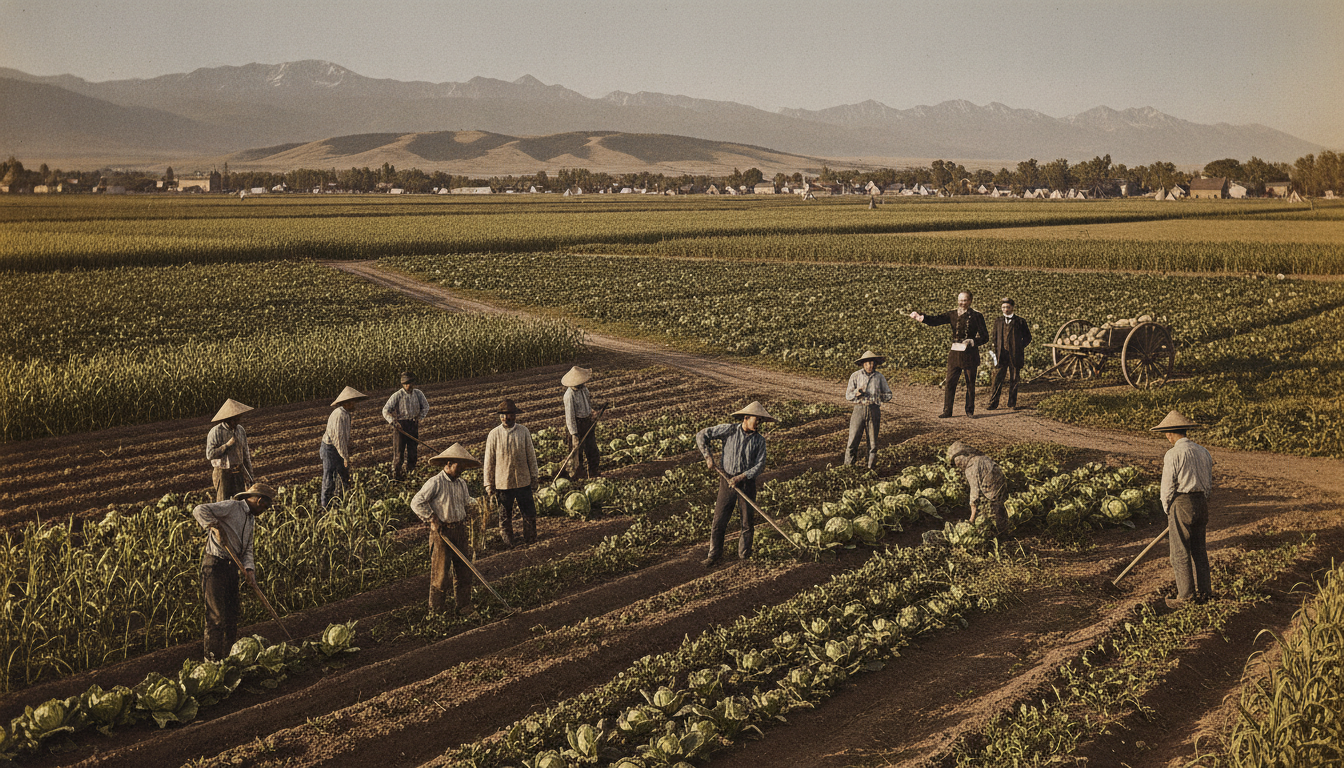
Calgary Chinese-Canadian gardens: five-acre plots on Walker’s Bow River land supplied the city
Chinese-Canadian gardeners leased five-acre plots on Col. Walker’s Bow River land, supplying Calgary with produce and bedding plants for more than two decades.
For more than 20 years, Chinese-Canadian families operated gardens on five-acre parcels owned by Colonel Walker on the west bank of the Bow River.
These Calgary Chinese-Canadian gardens supplied fresh vegetables and bedding plants to local markets and households, forming a quietly important thread in the city’s early food network.
The land later became a federal migratory bird sanctuary, but the gardens remain a notable chapter in Calgary’s agricultural and social history.
Historic Gardens Flourished on Walker’s Land
Local records and community memory indicate Colonel Walker, one of Calgary’s early founders, farmed and managed large tracts along the Bow River.
He also ran the city’s first sawmill and, for a sustained period, leased five-acre plots to Chinese-Canadian families who cultivated vegetables and ornamental plants.
Those leased plots were worked intensively and produced a steady supply of goods for the growing settlement.
The gardens’ proximity to the river and to early Calgary markets made them particularly valuable for growers and buyers alike.
Role in Calgary’s Food Supply
The Chinese-Canadian gardens contributed staples and seasonal produce at a time when local supply chains were limited.
Growers raised vegetables, herbs and thousands of bedding plants that found their way into homes, shops and public plantings.
Beyond direct sales, the gardens helped stabilize local availability of fresh food during growing seasons.
Their output complemented other small farms and domestic plots and eased pressure on longer, more expensive supply routes.
Lease Arrangements with Colonel Walker
The leases were structured around five-acre parcels, a size that allowed families to combine subsistence needs with commercial sales.
Leasing provided access to otherwise unavailable land and allowed growers to establish long-term operations without outright ownership.
This arrangement also reflected wider land-use patterns in early Calgary, where private owners often controlled river-adjacent tracts.
For the Chinese-Canadian tenants, leasing enabled entrepreneurship and the transmission of horticultural knowledge across generations.
Transition from Gardens to Federal Sanctuary
Over time the land on the west banks of the Bow River was designated a federal migratory bird sanctuary, shifting the site’s primary purpose.
That change transformed an active agricultural footprint into protected habitat, altering both access and uses for the former garden plots.
The conversion highlights a recurring tension between urban development, conservation priorities and acknowledgement of earlier uses.
Where once rows of crops and bedding plants signaled human stewardship, the area now serves as a refuge for migratory species and public enjoyment.
Contributions of Chinese-Canadian Growers to City Life
The families who tended the Calgary Chinese-Canadian gardens brought skills, labor and enterprise that shaped neighbourhood economies.
Their work supplied food and ornamental plants while creating small-scale commercial pathways for immigrant households.
Gardening also served as a cultural anchor, allowing growers to maintain plant choices and cultivation methods from their communities.
Those practices enriched Calgary’s horticultural diversity and provided social and economic support during periods of settlement and change.
Legacy and Calls for Documentation
Community historians and descendants stress the importance of documenting the gardens’ history as part of Calgary’s broader story.
Preserving lease records, oral histories and photographs would help recover a fuller picture of how these plots fit into the city’s development.
Recognition of the gardens also supports wider efforts to acknowledge the contributions of Chinese-Canadian families who faced legal and social barriers in the city’s past.
Recording their role in local food production and urban life can inform contemporary conversations about heritage, land use and reconciliation.
The story of the Calgary Chinese-Canadian gardens on Colonel Walker’s Bow River parcels is a reminder that small-scale cultivation shaped the daily life and resilience of the early city.
Understanding that history invites renewed attention to preservation, research and community memory as Calgary continues to define the uses and meanings of its riverfront lands.
