
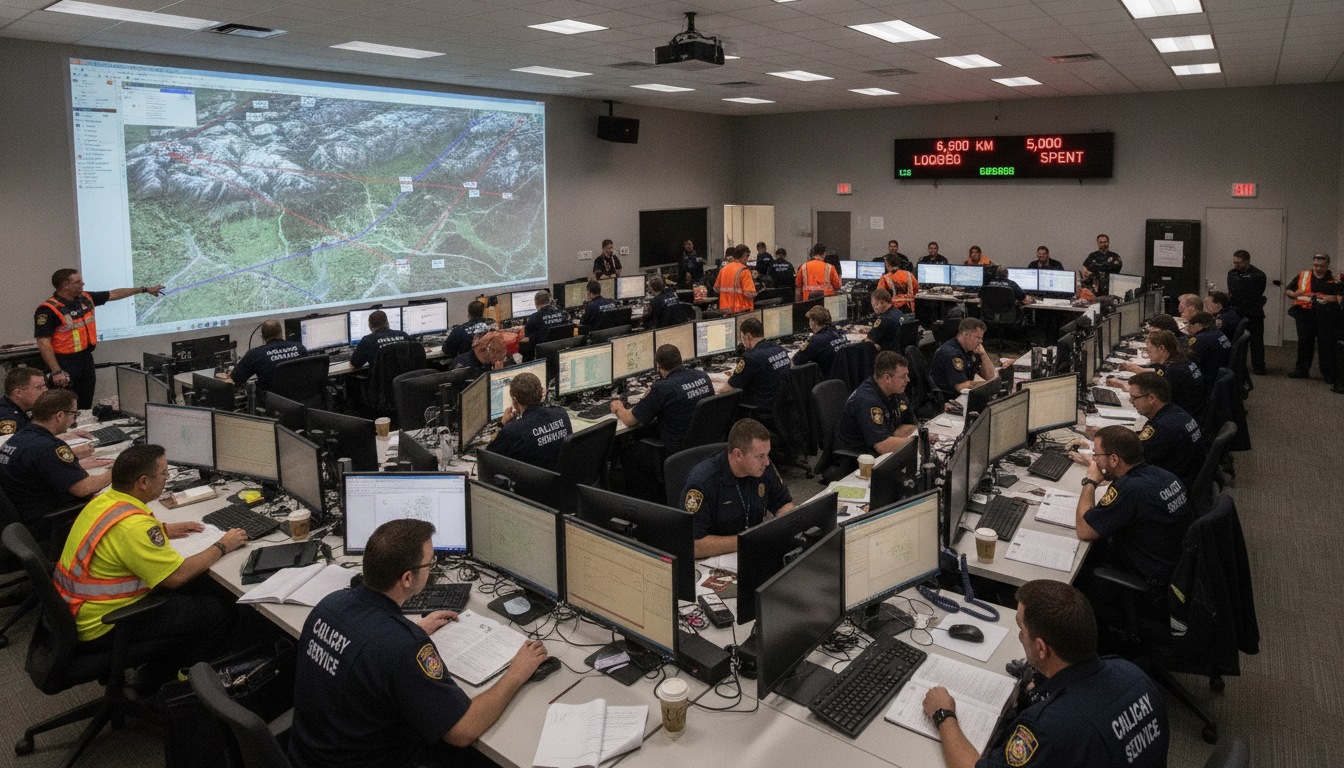
Calgary search operation covers more than 6,500 kilometres as multi-agency effort intensifies
Calgary search operation sees more than 6,500 km covered and 5,000 search hours, with river, rail and ground teams deployed across the region in a coordinated response.
A large-scale Calgary search operation has expanded over multiple days, with teams logging more than 6,500 kilometres of coverage and roughly 5,000 total search hours by Monday. Authorities say the effort has included aerial support, extensive river work led by the Calgary Fire Department, and targeted sweeps along rail corridors by Canadian Pacific Kansas City. Officials describe the operation as a coordinated, multi-agency response using specialized equipment and diverse patrol methods.
Search effort by the numbers
By Monday, search crews had traversed a cumulative distance exceeding 6,500 kilometres, a span comparable to the drive from Calgary to Dublin, Ireland. That mileage reflects ground patrols, mounted units, bicycle teams and vehicle movements across a wide operational footprint.
Teams reported roughly 5,000 search hours invested in field operations so far, and several hundred homes and businesses have been visually inspected as part of systematic door-to-door and property searches. Commanders said those figures underscore both the scale and sustained tempo of the Calgary search operation.
Calgary Fire Department conducts river and underwater searches
The Calgary Fire Department has led an extensive series of river searches, deploying surface teams and specialized underwater camera systems. Fire crews conducted repeated sweeps of riverbanks and channels to ensure no areas were overlooked in waterborne zones.
Officials emphasized the role of underwater cameras for inspecting deeper or turbid sections of the waterway that are difficult or hazardous for divers to search. Those assets allowed teams to examine submerged structures and riverbed contours without placing additional personnel at risk.
CPKC completes targeted rail corridor sweeps
Canadian Pacific Kansas City (CPKC) reported carrying out thorough inspections along its rail tracks and surrounding property as part of the broader search. Railway personnel used trackside patrols, on-foot inspections and perimeter checks to identify any relevant clues near rail infrastructure.
Rail corridor searches were coordinated with on-site investigators and local authorities to ensure safety and avoid disruption to essential rail operations. CPKC spokespeople said their teams prioritized both the integrity of the search and the continuity of freight movement in the region.
Specialized teams and tactics deployed across terrain
Search planners mobilized a mix of canine units, aerial surveillance, mountain bike patrols and mounted units to cover diverse terrain efficiently. Canine teams focused on scent work and building searches, while mountain bike crews provided rapid access along trails and narrower corridors.
Mounted patrols extended search reach in rough or open landscapes, where horses offer mobility and line-of-sight advantages. Aerial support supplied overhead situational awareness and helped guide ground teams to prioritized search areas based on observed terrain and patterns.
Properties searched and community areas covered
Investigators conducted visual inspections of several hundred homes and businesses, concentrating on locations identified through leads, witness reports or proximity to key search corridors. Officials said the door-to-door checks were carefully managed to respect residents’ privacy while ensuring thoroughness.
Public notifications and community liaisons were used to inform residents about search activity and to request cooperation where needed. Authorities also urged the public to report any information that could assist the Calgary search operation and to heed safety advisories issued for waterways and rail-adjacent areas.
Command coordination and resource management
A centralized command structure coordinated contributions from municipal fire services, rail company teams and volunteer or contracted search units to maximize coverage without duplicating effort. That approach allowed incident commanders to allocate resources such as underwater cameras, canine teams and aerial assets based on evolving priorities.
Logistics teams tracked mileage, personnel hours and equipment status to sustain an operation that has required continuous shifts and rotating crews. Officials noted that careful resource management was critical to maintaining search intensity over consecutive days.
Searchers will continue to follow leads and refine search areas as new information becomes available, with each tactic chosen to suit the specific terrain or operational need. Authorities reiterated that the multi-pronged approach — including river, rail and ground components — is designed to be comprehensive and adaptive.
The Calgary search operation remains active as agencies press ahead with coordinated searches across waterways, rail corridors and residential areas. Authorities encourage anyone with relevant information to contact local law enforcement so investigators can evaluate tips and adjust search priorities accordingly.
