
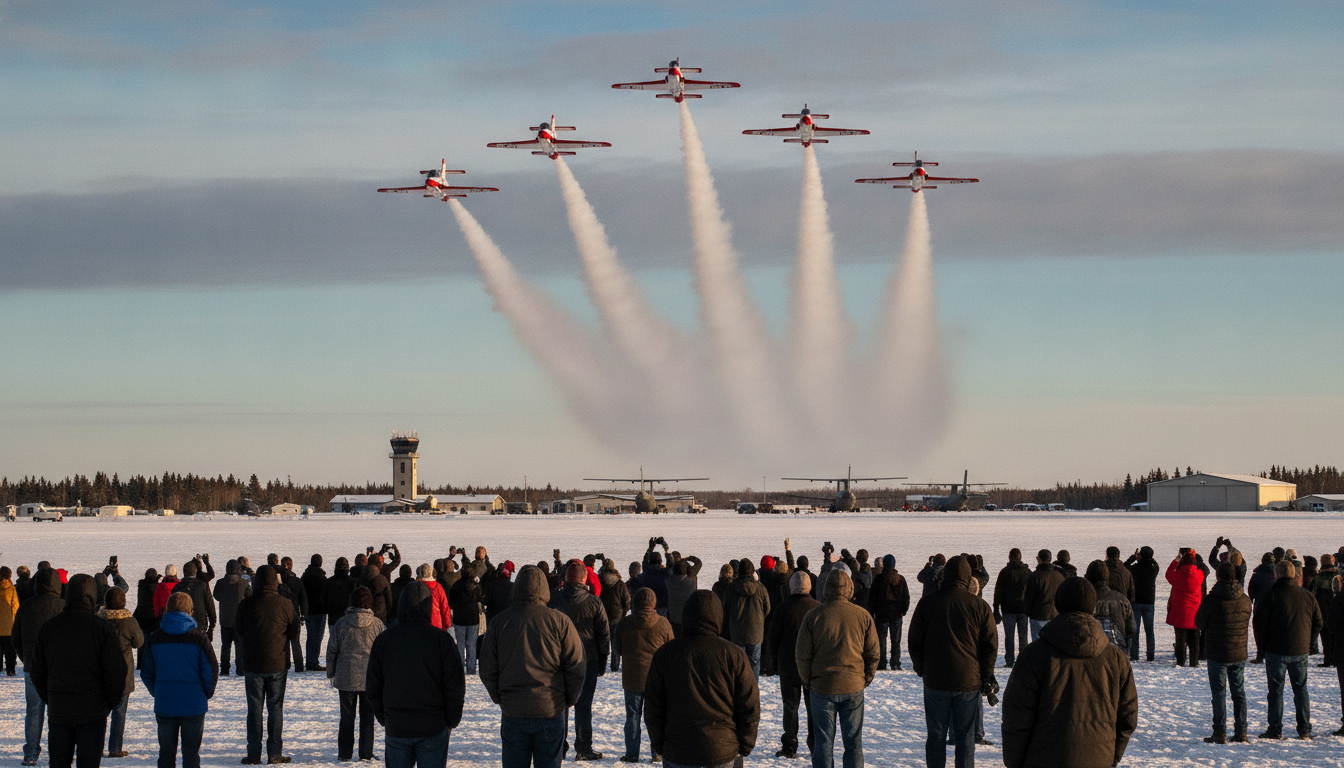
Snowbirds mark final Cold Lake performances as 55-year-old Tutor jets head to retirement
Snowbirds make final flights in 55-year-old Tutor jets at 4 Wing Cold Lake, drawing more than 40,000 as crews and mechanics mark their retirement this year.
The Royal Canadian Air Force Snowbirds have begun the last series of public displays for their 55-year-old Canadair Tutor training jets, with a high-profile appearance at 4 Wing Cold Lake that is drawing crowds and attention across Alberta. The Snowbirds’ retirement of the Tutor fleet this season has been framed by crews and technicians as a ceremonial farewell to an aircraft that has been a national symbol for generations. Organizers say more than 40,000 spectators are expected over the weekend as pilots perform one of the final public sequences in the Tutor jets.
Snowbirds stage final Tutor flights at 4 Wing Cold Lake
The Snowbirds arrived at 4 Wing Cold Lake for weekend performances that include low passes and full aerobatic routines across the base and surrounding communities. Organizers allowed the squadron to fly low over Lloydminster and Edmonton en route to Cold Lake, prompting spontaneous crowds to gather and watch the formation overhead. The Cold Lake shows are being billed as among the last public displays of the Tutor before the federal decision takes the jets out of service at the end of the 2026 air show season.
Attendance figures and advance ticketing indicate a noticeable spike in interest compared with previous years, with local officials and military representatives preparing for larger-than-normal ground crowds. The presence of the Snowbirds, alongside vintage warbirds and civilian performers, has been credited with driving increased turnout at this year’s event.
Major Steven Timm describes the “last ride” with the Tutors
Major Steven Timm, a Snowbird pilot from Surrey, B.C., said being part of the final Tutor flights carries strong personal and symbolic meaning. He grew up watching the Snowbirds at shows in Abbotsford and spent years flying out of Cold Lake before joining the demonstration team, and he described the current series as an opportunity to represent decades of service and public connection. Timm said performing formations such as the line-abreast “LA combo” is both the most demanding and the most rewarding part of his role during these farewell shows.
The team has declined to comment publicly on the government’s policy decision to retire the Tutors, emphasizing instead the ceremonial and ambassadorial aspects of the performances. Crews are presenting their work as a tribute to the aircraft’s long association with Canadian public events and pilot training, and are focused on delivering safe, precise displays for audiences across the country.
Maintenance crews scramble to sustain ageing aircraft
A travelling mechanical support team accompanies the Snowbirds in an 18-wheeler supply rig that functions much like a professional racing outfit on the road. Mechanic Aaron Martin described persistent challenges sourcing parts for the aging Tutors and said the crew routinely improvises with old-stock components and long repair sessions to keep the fleet airworthy. Technicians report extended late nights and meticulous inspections between flights to ensure pilots can perform safely.
Despite the logistic strain, mechanics emphasize pride in their work and in ensuring the jets complete their planned appearances. The combination of technical ingenuity and deep institutional knowledge has kept the Tutors operational for a final season of shows, according to maintenance staff.
Vintage aircraft and community response at Cold Lake
Nearby on the Cold Lake ramp, private owners and historic-aircraft pilots joined the program, with a 1952 Harvard trainer among the static displays and flying entries. Local pilot Jim Hrymack, who brings his Harvard to airshows across Alberta, said the Snowbirds’ appearances help revive public interest in aviation heritage and spur community pride. Hrymack voiced hope the government will reconsider or extend the Tutors’ service life after recent investments in upgraded avionics and navigation systems.
Organizers and military spokespeople say the shows also reinforce ties between the Royal Canadian Air Force and local communities, especially in regions with a high proportion of military families and personnel. The presence of both demonstration teams and legacy trainers created a palpable sense of nostalgia and civic engagement among attendees.
Federal spending, fleet modernisation and political sensitivities
The federal government has already invested in upgrades for the Tutor fleet, including more than $29 million over the previous five years to modernize navigation systems, according to aircraft supporters and sources familiar with the program. Nonetheless, Ottawa decided the Tutors must be retired after the 2026 air show season, with plans at the Department of National Defence to eventually field new demonstration aircraft in the 2030s. Snowbird crews were instructed not to respond to politically charged questions about that policy while engaged in public displays.
The retirement decision has prompted calls from pilots, veterans and aviation fans for a review of the timing and the potential to extend the Tutors’ operational life. Officials argue that the Tutors have reached a point where airworthiness, parts availability and long-term fleet plans point to replacement rather than continued extension.
Legacy of the Tutor and the future of the Snowbirds
For 55 years the Canadair Tutor has served as a primary trainer and as the platform for the Snowbirds’ aerobatic showcases, helping to train generations of Canadian pilots. The current series of farewell flights seeks to celebrate that legacy while providing a public bridge to whatever demonstration aircraft will follow. Many team members framed their role as temporary custodians of a national symbol, focused on representing the Royal Canadian Air Force and the Canadian Armed Forces with professionalism and care.
The Snowbirds’ final Tutor displays across the country will conclude the aircraft’s operational chapter while technicians and planners prepare for a long-term transition. The team and its support staff say they will continue to prioritize safety and public engagement through the remainder of this season.
The weekend at Cold Lake is being treated as both a send-off and a showcase, as Snowbirds pilots, maintenance crews and supporters mark the end of an era for the Canadair Tutor while looking ahead to a future in which the team will one day return in new aircraft.
