
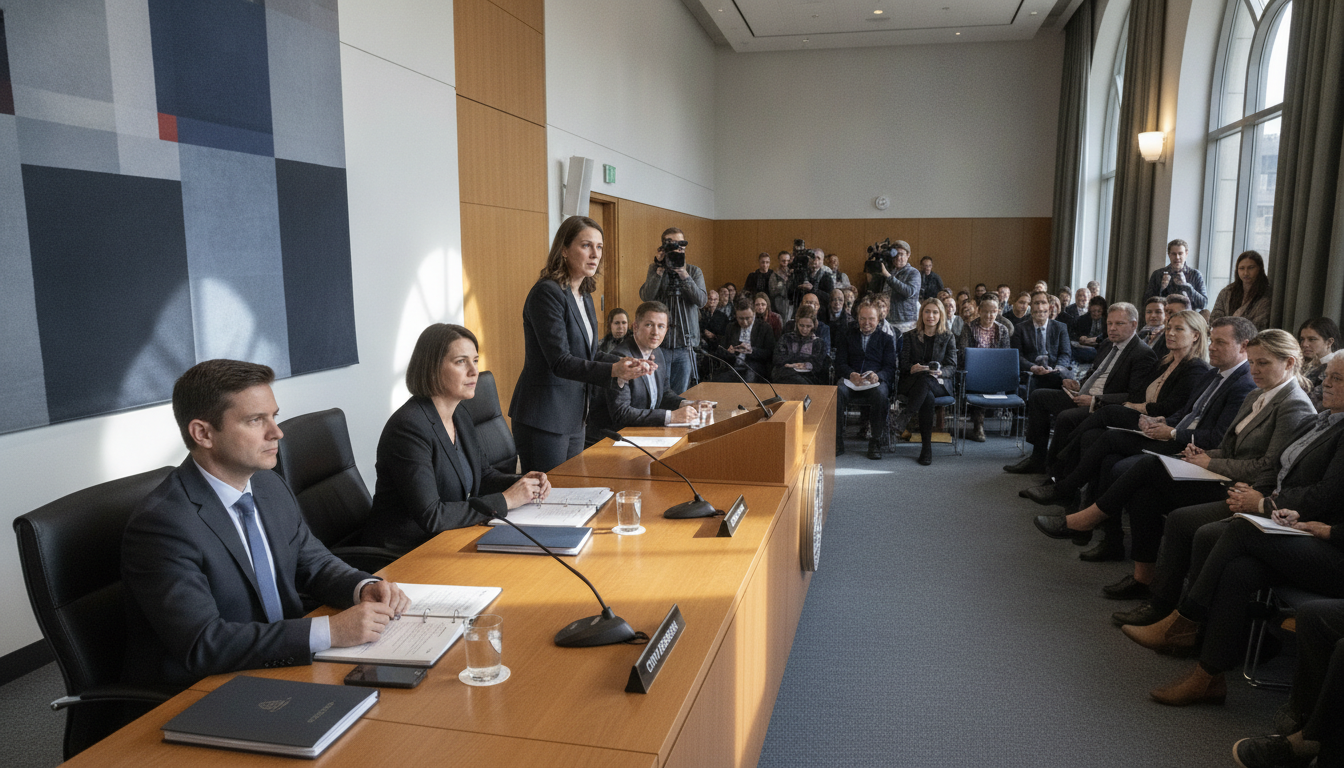
Edmonton meetings to bar debate on Middle East conflicts, commission says
City commission says Middle East conflicts fall outside mandate; speakers who launch personal attacks will have speaking time cut short at Edmonton meetings.
The commission that oversees public meetings in Edmonton has announced that discussion of conflicts in the Middle East will be treated as outside its mandate, and that speakers who resort to personal attacks will have their allotted speaking time terminated. The move, officials said, aims to keep Edmonton meetings focused on local issues and to prevent sessions from becoming platforms for divisive international debates. The announcement underscored a renewed emphasis on enforcing conduct rules at civic gatherings.
Commission reiterates mandate limits
The commission emphasized its role is to manage local civic business and community matters, not to adjudicate international disputes. Officials said topics directly tied to conflicts abroad fall beyond the scope of what the body can reasonably address during city-run sessions. The decision follows several public meetings in which off-topic arguments shifted attention away from municipal priorities.
Commission representatives framed the policy as an administrative boundary rather than a judgment on the underlying issues. They noted the intent is to preserve meeting time for matters that affect Edmonton residents directly, such as transit, housing, and local services. The statement made clear the commission will intervene when discussions stray into protracted debates about foreign conflicts.
Rules to curb personal attacks at public sessions
Alongside the mandate clarification, the commission announced stricter enforcement of decorum rules for speakers. Officials warned that anyone who launches personal attacks or seeks to provoke attendees will have their speaking slot ended immediately. The measure will be applied consistently, the commission said, to maintain a civil environment and protect participants from harassment.
Staff and chairpersons at meetings will have the authority to cut speakers off if they breach the behaviour guidelines. The commission indicated that routine reminders of meeting rules will be issued at the start of sessions and that staff will be trained to respond quickly when tensions rise. The policy includes a focus on preventing meetings from becoming staging grounds for inflammatory rhetoric.
Community reaction and civic groups respond
Reactions from community members and local groups have been mixed since the announcement. Some residents expressed relief that Edmonton meetings will remain centered on municipal concerns and described the move as necessary to ensure productive public engagement. Those supporters said reducing off-topic disputes can help councils address pressing local needs without distraction.
Other individuals and civil-society advocates raised concerns that curtailing discussion of international issues could silence community members whose lived experiences connect local policymaking to global events. Critics warned that enforcement could inadvertently stifle legitimate expression if guidelines are applied too broadly. Several organizations have called for clear, transparent rules and a public explanation of how determinations will be made.
Legal and free-expression considerations
Legal experts and policy observers say municipal bodies can set rules for public meetings but must balance those rules with freedom of expression rights. Limitations on speech at civic sessions are commonly upheld when they serve to protect order and allow the assembly to function, however the scope and application of rules are often scrutinized. Observers advised that precise, narrow language is important to avoid arbitrary enforcement.
The commission’s approach will likely be watched by charter-conscious groups and municipal legal counsel, who may look for how the policy is operationalized. Officials acknowledged the need for consistent application and for a process to address complaints about enforcement decisions. Transparency in enforcement, observers said, will reduce the risk of perceptions that the policy is being used selectively.
Guidance for participants and organizers
The commission urged attendees and speakers to review meeting guidelines before participating and to focus remarks on local implications and municipal policy. Organizers will provide reminders about acceptable conduct and the scope of permitted topics at the beginning of sessions. Those who wish to raise concerns that touch on international matters were encouraged to frame comments in terms of local impacts, such as community services, public safety, or municipal support programs.
Meeting staff will document instances where speakers are cut off for rule violations, and a procedure for appeals or complaints is expected to be available. The commission said that its aim is to encourage robust, respectful civic participation while safeguarding the efficiency of public meetings. Officials also noted that other platforms—such as community forums and advocacy groups—remain avenues for broader discussion.
Edmonton residents and civic stakeholders now face clear boundaries for in-person public sessions, as the commission seeks to keep Edmonton meetings focused on municipal priorities and to prevent them from becoming arenas for divisive international disputes. The balance between managing order and protecting open expression will shape how the policy plays out at upcoming meetings.
