
UK study links more than 2,700 heat-related deaths to May and June heatwaves
Scientists estimate 2,700+ heat-related deaths in England and Wales after unprecedented May and June heatwaves, highlighting climate-driven risks.
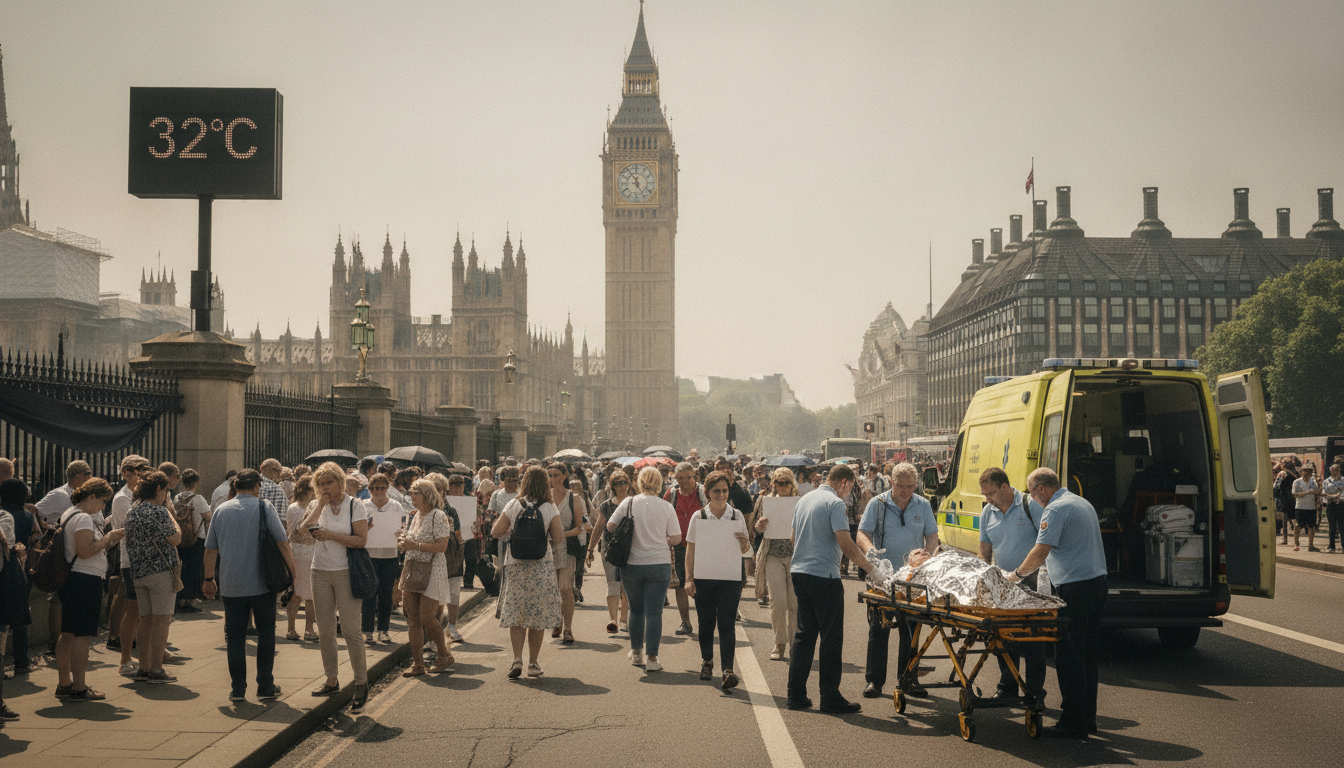
More than 2,700 heat-related deaths in England and Wales have been estimated to have occurred during two exceptional heatwaves in late spring and early summer, researchers reported on 13 July 2026. The study, led by teams at Imperial College London, the Met Office and the London School of Hygiene and Tropical Medicine, calculates that roughly 550 deaths happened between May 21 and 29 and nearly 2,200 deaths occurred between June 18 and 28. The findings add to mounting evidence that higher temperatures driven by climate change are raising immediate and severe public health risks in the UK.
Researchers’ estimate and timing
Researchers combined meteorological records, climate model outputs and prior studies on excess mortality to attribute deaths to the extreme temperatures this year. The May heatwave produced a top temperature of 35.1C in England, while the June event reached 37.7C, both cited as exceptional for the season.
The team published their figures on 13 July 2026 and stressed the numbers are estimates, noting that the UK Health Security Agency will release an official death toll in the coming weeks after analysing death certificates and medical records. The study’s timetable isolates two concentrated windows of elevated mortality: May 21–29 and June 18–28.
How the tally was calculated
The study’s authors said they used established methods that compare observed deaths during heat episodes with expected baselines derived from historical mortality statistics. Climate models were then used to estimate how much warmer those days were than they would likely have been without human-driven global warming.
Researchers stressed this approach does not assign a single cause to each death but instead quantifies excess mortality associated with extreme heat. The teams drew on expertise from public health and climate science to produce an evidence-based estimate that complements official registry-based counts.
Heatwaves unusual in timing and intensity
Officials described both events as unusual not only for their peak temperatures but for when they occurred in the calendar. Mark McCarthy, the Met Office’s climate attribution science manager, said the heatwaves were exceptional for the UK and broader Western Europe because they arrived so early and reached high intensities for the season.
Observers noted that the May spike was particularly striking because it pushed daytime maximums well above typical late-spring values, while the June wave rivalled summertime records. Emergency services and hospitals across affected regions reported surges in heat-related illness during those periods.
Role of climate change in amplifying heat
The research estimates that maximum daytime temperatures during the heatwaves were up to 4C higher than they would have been in a world without human-caused warming. Scientists involved in the study reiterated that climate change is making extreme heat more frequent and more intense, increasing the likelihood of lethal conditions.
The Climate Change Committee has previously warned that the UK is not prepared for many of the hazards posed by a warming climate. Public health experts say that attributing higher temperatures to global warming is critical to understanding future risk and planning adaptation measures for vulnerable populations.
Public health recommendations and preparedness gaps
Lea Berrang Ford from the UKHSA’s Centre for Climate and Health Security said the study helps illustrate the scale of risk posed by extreme heat to public wellbeing. UKHSA has indicated it will publish its official estimate shortly and has advocated for measures to reduce exposure for high-risk groups.
A May 2026 UKHSA report estimated that up to 92 percent of British homes could become uncomfortably hot by 2050 without changes to building standards or cooling strategies. Health advisers have urged the government to consider setting maximum workplace temperature limits and investing in air conditioning for critical public buildings such as hospitals and schools.
European mortality during late June heatwave
The UK findings come amid broader European analyses that documented thousands of additional deaths during the late-June heatwave. EuroMOMO, a network supported by the European Centre for Disease Prevention and Control and the World Health Organization, reported roughly 10,650 excess deaths across 27 countries between June 22 and 28, with about 9,000 of those occurring among people aged 65 and older.
Those continental figures underscore that the human toll of short, intense heat episodes can be high, particularly among the elderly and those with pre-existing illnesses. Researchers pooled national mortality data and concluded heat was the most plausible contributor to the spike in excess deaths where other major causes, such as COVID-19 outbreaks, were not present.
The study’s authors, public health agencies and climate advisers are calling for accelerated planning and investment to reduce heat exposure and protect vulnerable groups, pointing to the recent months as a warning of what warmer summers may bring.
