
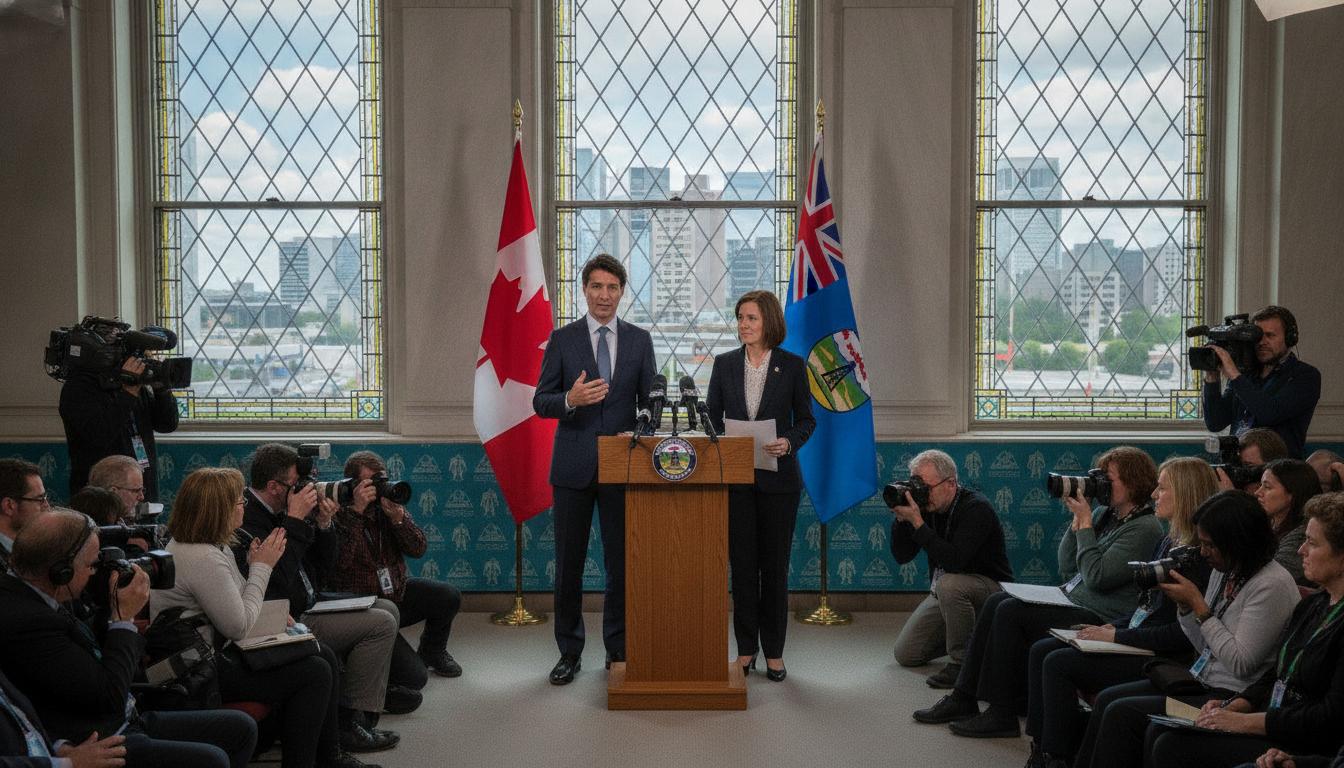
Canada and Alberta pledge equal partnership to advance Trans Mountain corridor route
Canada and Alberta pledge an equal partnership to advance a proposed route along the Trans Mountain corridor from Bruderheim, Alta. to B.C.’s southwest coast.
A joint federal and provincial agreement announced this week commits Canada and Alberta to an equal partnership to advance a pipeline route that follows the Trans Mountain corridor from Bruderheim, Alta., to the southwest coast of British Columbia. The announcement frames the move as an effort to consolidate regulatory, industry and Indigenous discussions at a single table and accelerate decision making. Officials said the initiative aims to reduce duplication and move the project through project development while addressing jurisdictional tensions.
Federal and Alberta partnership announced
A senior federal official confirmed the government would enter into a formal partnership with Alberta to share responsibility and costs for advancing the corridor proposal. The partnership is presented as equal, with Ottawa and Edmonton agreeing to align their regulatory objectives and coordinate funding where necessary.
Ministerial briefings described the agreement as a response to prolonged disputes over route approvals and as an attempt to present a united front for proponents and stakeholders. Federal and provincial spokespeople emphasized the goal of speeding review processes while maintaining existing environmental and consultation obligations.
Route follows Trans Mountain corridor from Bruderheim to B.C. coast
The proposed alignment would generally mirror the existing Trans Mountain corridor, beginning near Bruderheim, Alberta, and continuing westward toward B.C.’s southwest coast. Officials highlighted that using an established corridor would minimize new land disturbance and utilize portions of infrastructure already subject to regulatory oversight.
Planners said following the existing corridor is intended to limit incremental impacts on new areas, though final routing within that corridor will still require detailed surveys and approvals. Environmental assessments and engineering studies will need to confirm whether the corridor can accommodate the proposed design and capacity.
Indigenous and industry engagement at a single table
Negotiators said one of the central features of the partnership is a commitment to bring Indigenous communities and industry partners into a single, coordinated engagement process. The government framed this approach as a way to streamline consultations so that concerns from communities, rights holders and commercial stakeholders are addressed collectively.
Representatives for Indigenous groups have repeatedly said they expect meaningful participation and clear commitments on environmental protection, economic benefits and reconciliation. Industry stakeholders signalled cautious support, noting that coordinated talks could reduce uncertainty and help attract investment pending clear regulatory outcomes.
Political visibility at the Calgary Stampede highlighted
The pipeline discussion coincided with a heightened political presence at the Calgary Stampede, where federal and provincial politicians used the marquee event to engage with voters and stakeholders. Several members of Parliament attended Stampede events, underscoring the project’s prominence in western political discourse this season.
Officials framed the timing as deliberate, pointing to the Stampede’s role as a forum for Western interests and an opportunity to speak directly with local leaders and workers whose livelihoods could be affected by pipeline development. The public appearances reinforced that the proposal is as much a political priority as it is an infrastructure initiative.
Conservative leader rides in parade and outlines message
Conservative Leader Pierre Poilievre drew attention at the Stampede when he rode in the parade on July 3 and later hosted a Conservative Party barbecue. In remarks from the parade route posted to social media, he welcomed attendees to what he called the Greatest Outdoor Show on Earth and spoke about regional values.
At the barbecue he reiterated his emphasis on western priorities and pushed back against separatist sentiment, using the event to reinforce unity within the party and among Calgary voters. Poilievre’s participation highlighted how the corridor and related resource issues remain central topics in national party politics.
Next steps required before construction can proceed
Officials outlined several procedural milestones that must be met before any construction work could begin, including updated environmental assessments, rights holder consultations and permits from both federal and provincial regulators. They stressed that an agreement to partner on the route does not bypass statutory reviews or eliminate obligations under existing federal law.
Timelines were given only in broad terms, with negotiators saying work on studies and consultations will be prioritized and that concrete dates will follow once technical scoping is complete. Observers noted that political goodwill may accelerate scheduling, but regulatory and legal processes are likely to determine the ultimate pace of progress.
The federal and provincial announcement positions the Trans Mountain corridor proposal as both a policy priority and a test of co-operative governance between Ottawa and Alberta. With planned consultations and technical studies ahead, the coming months will determine whether the partners can translate rhetoric into legally sound approvals.
