
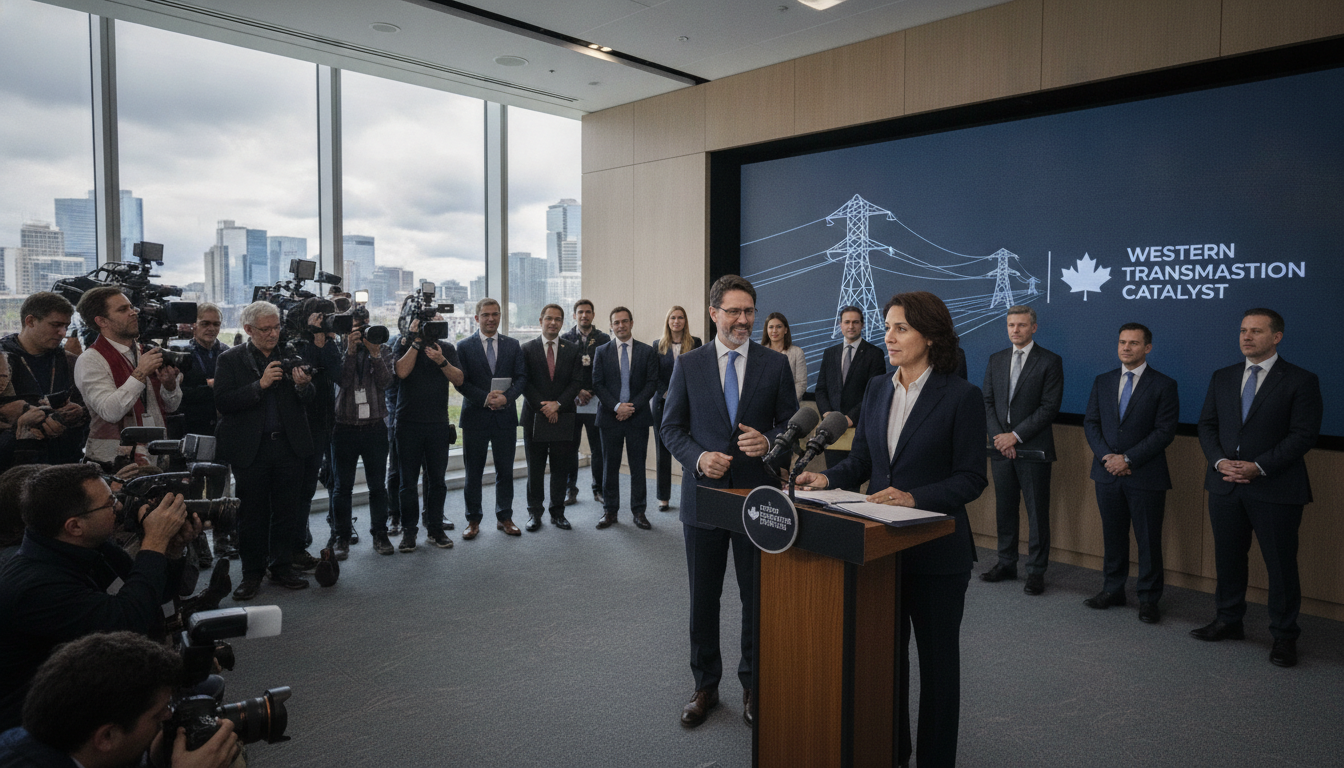
Federal $4.2M boost for Western Transmission Catalyst to expand Western Canada power links
Ottawa commits $4.2 million to the Western Transmission Catalyst program to fund cross‑provincial grid connections and improve reliability, affordability and clean energy sharing.
Prime Minister’s energy minister announces funding in Calgary
Speaking at the University of Calgary’s downtown campus on Saturday, Energy and Natural Resources Minister Tim Hodgson announced a $4.2‑million federal investment to support the Western Transmission Catalyst program. The funding is intended to accelerate work on expanding electricity transmission connections across Western Canada, with aims to strengthen grid reliability, lower costs and enable greater sharing of clean energy between provinces.
Program aims to unlock interprovincial power flows
The Western Transmission Catalyst is framed as a coordinated effort to identify and advance transmission projects that can move electricity across provincial borders. Officials say the program will target barriers that currently limit transfers of surplus renewable power, including bottlenecks, planning shortfalls and cost allocation challenges.
Planners will look to create new corridors and upgrade existing lines where doing so would deliver the largest reliability and affordability gains. Greater transfer capacity is also expected to help incorporate variable resources such as wind and solar more effectively on western grids.
Expected consumer and system benefits
Federal officials highlighted grid reliability and consumer affordability as central benefits of the investment. By enabling more efficient use of generation resources across provinces, the Western Transmission Catalyst could reduce the need for duplicate capacity and lower wholesale power costs over time.
Improved transfers can also reduce the frequency of local outages by providing alternative supply routes during extreme weather or equipment failures. For households and businesses, the combination of a more resilient grid and potential downward pressure on prices is a key selling point for the initiative.
Scope of the $4.2‑million commitment
The $4.2‑million announced is intended to support early‑stage work under the Western Transmission Catalyst program, including technical studies, corridor assessments and stakeholder engagement. Minister Hodgson framed the amount as catalytic funding to unlock larger investments from provinces, utilities and private developers.
Details about exact project selections and cost-sharing arrangements were not specified at the announcement, and officials indicated further decisions will follow as studies and consultations advance. Observers expect subsequent rounds of funding or inclusion in broader infrastructure programs once priorities are identified.
Provincial collaboration and stakeholder roles
The success of the Western Transmission Catalyst will depend on coordination among provincial governments, transmission operators, regulators and Indigenous communities. The program’s emphasis on interprovincial links requires negotiated approaches to cost allocation, jurisdictional approvals and long‑term operation of new assets.
Industry stakeholders, including utilities and independent system operators, are likely to play a central role in technical planning and implementation. The federal funding is positioned as an incentive to align provincial planning processes and to encourage collaborative solutions for cross‑border transmission challenges.
Next steps, regulatory work and public engagement
Officials said the immediate next steps will focus on mapping priority corridors, commissioning feasibility studies and launching stakeholder consultations. These preparatory activities are intended to inform project design and support regulatory applications that will be necessary for construction and permitting.
The timeline for any physical buildout will vary by project and will depend on regulatory approvals, environmental assessments and negotiated cost‑sharing. The minister’s office indicated that the Western Transmission Catalyst is designed to move from concept to shovel‑ready proposals through a staged process of planning and partnership.
Economic and environmental considerations
Proponents of expanded transmission argue that better interprovincial links can reduce greenhouse gas emissions by enabling regions to access lower‑emission generation when available. Increased transfer capacity can also lower the amount of renewable energy that is curtailed when local demand is low, improving the economics of new clean energy projects.
At the same time, large transmission projects require careful assessment of land use, environmental impacts and community consent. The federal contribution aims to fund the analytic and consultative work needed to balance economic opportunity with regulatory and environmental safeguards.
Longer‑term outlook for Western grid integration
The $4.2‑million federal injection for the Western Transmission Catalyst marks an early federal step toward longer‑term grid integration in Western Canada. If the program succeeds in aligning stakeholders and producing viable corridor plans, it could pave the way for larger capital investments that reshape how electricity flows across the region.
For consumers, utilities and policymakers, the initiative represents a strategic effort to build a more resilient, affordable and clean power system by strengthening the links between provincial grids. The coming months of studies and consultations will determine how quickly those ambitions translate into concrete projects and tangible benefits for the region.
