
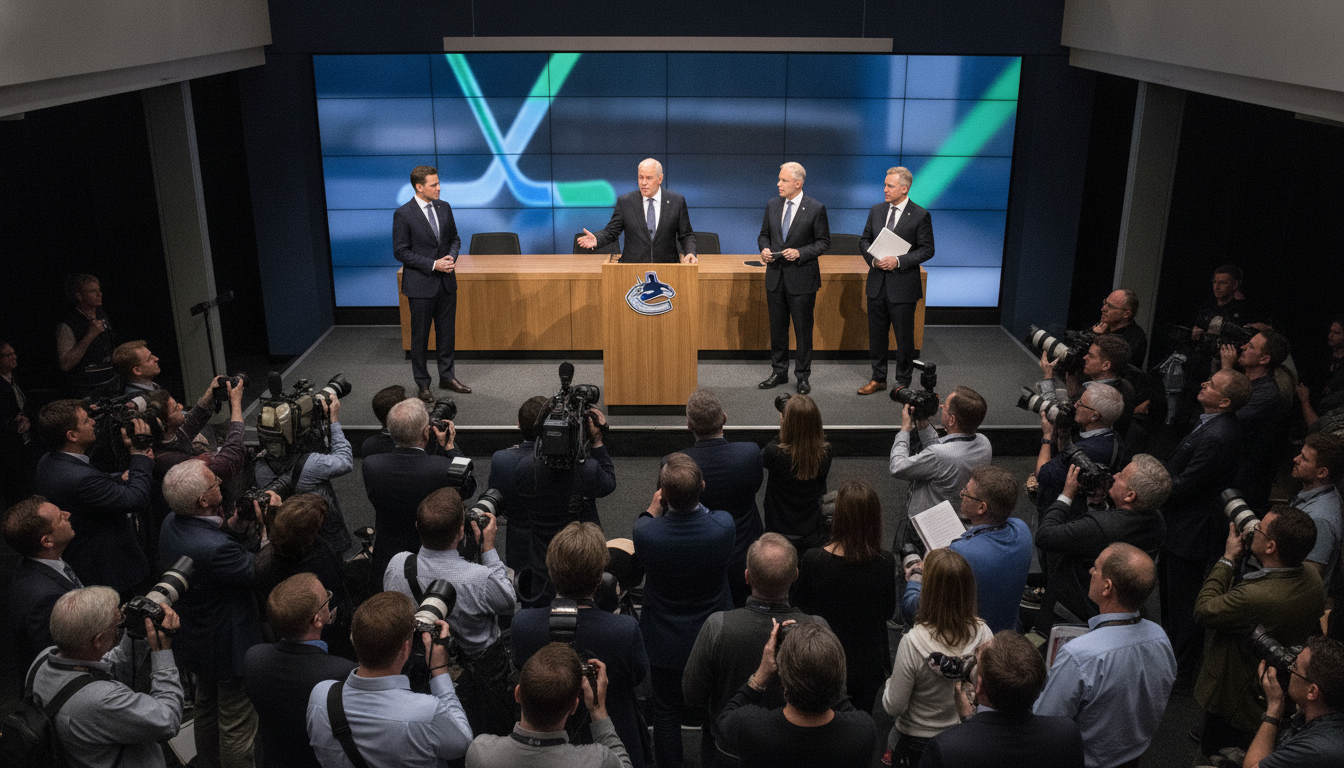
Why the Canucks Should Be Willing to Spend in the New NHL Cap-Space Climate
Analysts say the Vancouver Canucks can spend this offseason, using modern cap tools and roster flexibility to add reinforcements without harming the future.
The Canucks find themselves at a crossroads as analysts and cap experts argue the club can pursue reinforcements without mortgaging long-term health. Recent commentary has framed the “new cap-space climate” as one in which strategic signings, smart use of long-term injury relief and creative term structures can unlock upgrades. The debate centers on whether short-term expenditure can accelerate contention while preserving the core and future flexibility.
Cap dynamics have shifted leaguewide
League revenue patterns, collective bargaining adaptations and evolving roster-management strategies have changed how teams approach payroll decisions. Teams increasingly use long-term injured reserve, retained salary transactions and front- or back-loaded deals to create breathing room. That shifting toolkit gives clubs like the Canucks alternatives to blunt contract inflation while still addressing short-term needs.
Front-office executives now treat cap space as a flexible resource rather than an absolute ceiling, allowing seasonal variance to fund targeted upgrades. The result is a market where well-timed signings can generate competitive advantage without permanent commitment to unsustainable salaries. For the Canucks, this environment reduces the penalty for carefully structured investment.
Canucks roster composition supports selective spending
Vancouver’s roster, anchored by a mixture of cost-controlled young players and a handful of higher-salary veterans, creates natural allocation opportunities for the club. Cost certainty on several contracts gives the front office room to prioritize upgrades at positions that have the greatest immediate impact, such as secondary scoring, a depth defenseman or a reliable netminder. That balance makes one or two targeted moves less likely to destabilize the team’s salary architecture.
Maintaining the young core remains the franchise priority, but selective reinforcements can complement internal development. When acquisitions are complementary rather than replacement-driven, they can raise the team’s floor and ceiling simultaneously. This approach aligns short-term competitiveness with medium-term sustainability.
Cap tools the club can realistically deploy
Long-term injured reserve (LTIR) remains the most direct mechanism to create temporary capacity, allowing teams to exceed the cap while carrying injured payroll. Retained-salary trades and sign-and-trade type structures help redistribute cap burdens across seasons, creating short windows of flexibility. Clubs also use term length and signing-bonus placement to control cap hits in key years without inflating player cost on paper.
Another lever is contract sequencing: adding a short-term bridge signing or a one-year veteran deal can provide immediate help while preserving longer-term assets. These mechanisms require careful calendar planning, but they are proven techniques for teams seeking upgrades without irreversible commitments.
Priority targets and roster fits for Vancouver
From a pragmatic standpoint, the Canucks’ most valuable additions would likely be players who address scoring depth, middle-six balance and defensive steadiness. A player who can skate in the top six and drive possession numbers would reduce pressure on the core, while a reliable top-four defenseman would address matchup weaknesses. Goaltending stability also remains a recurring priority for teams aiming to convert regular-season promise into playoff success.
Trade markets, free agency and internal promotions all remain viable sourcing routes. The evaluation calculus should weigh immediate impact against asset cost, with preference for players whose skill profiles amplify existing strengths rather than create redundancy.
Timing, market competition and arbitration considerations
The offseason calendar compresses strategic options: decisions made before unrestricted free agency can secure players at manageable prices, but waiting can reveal clearer signal on true market values. Competing clubs, cap trajectories and arbitration windows complicate every major move. For the Canucks, acting early on a high-priority target may prevent a bidding war, but patience can also yield value if the market softens.
Negotiators must also factor in the arbitration cycle and the potential for escalating offers from rivals. Teams that quantify upside and downside scenarios in advance reduce the risk of overpaying while retaining the flexibility to pivot if opportunities evaporate.
Risk management and guardrails for sustainable spending
Even with expanded tools, the risk of burdening future payroll remains real if signings are poorly timed or misaligned with the club’s timeline. Contract length must be calibrated to player age and projected trajectory, and retained-salary deals should be evaluated for long-term implications. Robust scouting, analytics integration and clear philosophical alignment between hockey operations and ownership are essential guardrails.
A contingency plan is also vital: teams should identify movable assets and acceptable trade partners before finalizing commitments. That planning reduces the likelihood that a single signing creates a cascade of forced moves that undermine roster stability.
The consensus from recent analysis is clear: the Canucks can and arguably should consider strategic spending in the current cap-space climate, as long as moves are surgical, timetable-aware and aligned with a longer-term blueprint. Thoughtful use of LTIR, contract design and market timing can produce upgrades that accelerate competitiveness while keeping the club’s future intact.
