
Vaisakhi Nagar Kirtan Unites Sikh Communities Across Canada
Vaisakhi Nagar Kirtan in Canada marked the Khalsa tradition with hymns, langar and community service, highlighting unity, peace and interfaith participation.
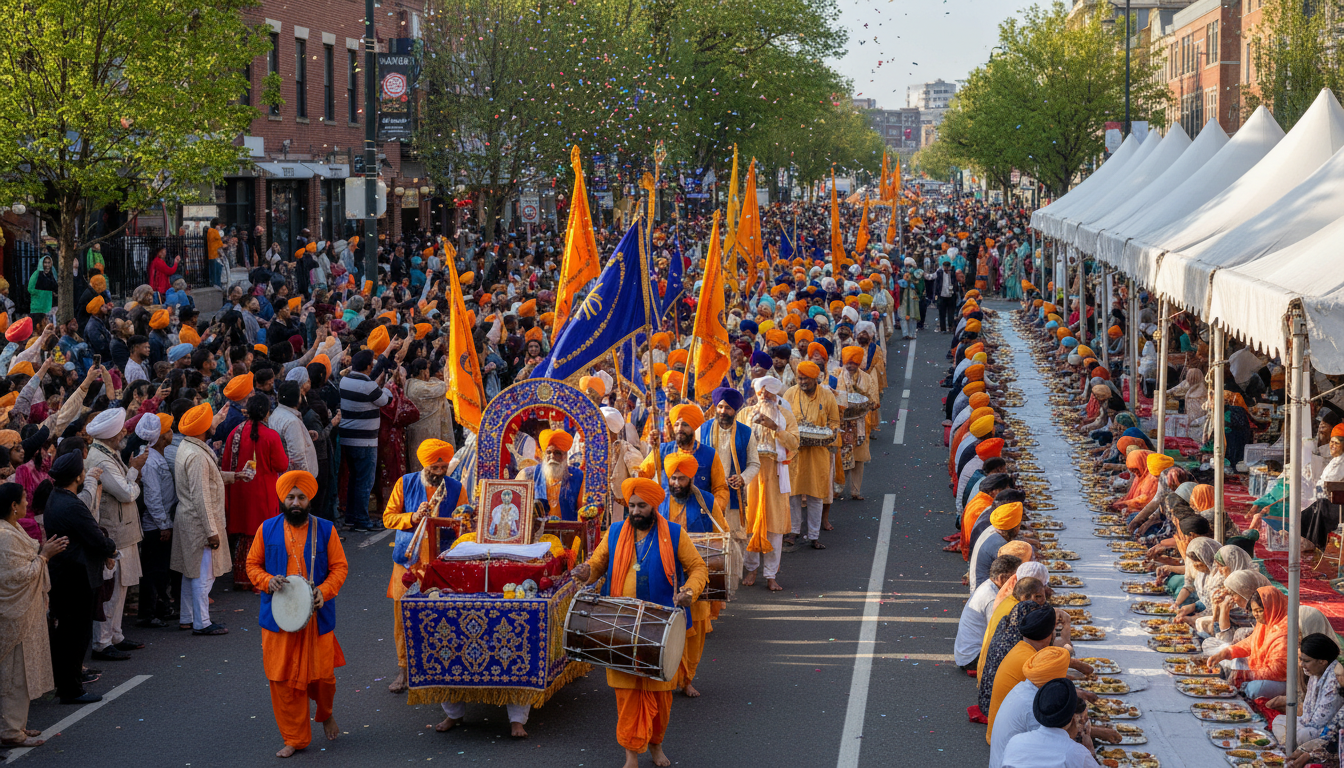
Sikh communities across Canada opened their doors and streets this spring as Vaisakhi processions drew families and faith groups to public celebrations. Vaisakhi, observed each year on April 13 or 14, commemorates the birth of the Khalsa and remains a cornerstone of Sikh religious life. The Nagar Kirtan — a flowing procession of hymn singing and open-air worship — served as the focal point for events that blended devotion, public outreach and volunteer service.
Sikh Communities Mark Vaisakhi Across Canada
Communities from coast to coast organized local parades, prayer services and cultural programs to mark Vaisakhi and the accompanying Nagar Kirtans. Local gurdwaras coordinated timings so that congregations could join processions and central prayers without overlapping with other public events. Municipal plazas and neighbourhood streets became temporary spaces for communal worship and celebration, reflecting the festival’s strong public presence.
Participation varied by city, but organizers reported robust turnout from all age groups, including many young families and seniors. Several events attracted visitors from outside the immediate neighbourhood, demonstrating Vaisakhi’s role as both a religious observance and a community festival. Attendance reinforced long-standing ties between gurdwaras and the wider public in urban and suburban settings.
Nagar Kirtan Processions Emphasize Khalsa Tradition
The Nagar Kirtan processions focused on kirtan — devotional hymn singing — and public readings that recall the founding of the Khalsa in 1699. The Khalsa tradition represents an initiation or baptism ceremony that formalizes commitment to Sikh values, and its history is central to Vaisakhi observances. Processions were led by standard-bearers and accompanied by musicians who performed sacred compositions from the Guru Granth Sahib.
Organizers said the public nature of the procession is intended to bring Sikh worship into the open and share its teachings. The pageantry and ritual elements provide both spiritual meaning for participants and an educational moment for onlookers. Religious leaders used the opportunity to explain the significance of the Khalsa and to invite broader community engagement with Sikh beliefs and practices.
Langar and Seva Feed Thousands During Celebrations
Free community kitchens, or langars, were set up at procession endpoints and at gurdwaras to serve hot meals to everyone, regardless of background. Volunteers prepared and distributed thousands of portions of simple, vegetarian food as an expression of seva, or selfless service, which is a central Sikh value. The langar is a visible expression of equality and hospitality, and it remains a defining feature of Vaisakhi events.
Beyond meals, volunteer teams organized distribution of water, first-aid stations and rest areas for elders and children. Young volunteers often helped cook, serve and clean up, reinforcing intergenerational cooperation. These logistical contributions allowed processions to remain accessible and inclusive throughout the day.
Organizers Coordinate Safety, Permits and Traffic Plans
Event planners worked with municipal officials to secure permits and manage traffic flow along procession routes to ensure public safety. Volunteer marshals and community stewards guided participants and liaised with local authorities to minimize disruption. Basic safety measures, such as temporary road closures, clear signage and hydration stations, were implemented to protect attendees and bystanders.
Organizers emphasized the importance of advance planning for large gatherings, noting that permit processes and coordination with city services take weeks of preparation. They also highlighted volunteer training for crowd management and the presence of first responders on standby. These arrangements aimed to balance religious expression with the practical demands of public events.
Community Leaders Call for Unity, Peace and Inclusion
Speakers at numerous gatherings used Vaisakhi as a platform to underscore messages of unity, social cohesion and service to others. Community leaders encouraged interfaith visitors to learn about Sikh teachings and to participate in the langar as a gesture of mutual respect. Several events included moments of silence or joint prayers with representatives from other faith communities, signalling a shared commitment to peaceful coexistence.
Organizers said the principles celebrated during Vaisakhi — equality, compassion and collective responsibility — have ongoing relevance for civic life. They urged attendees to carry the festival’s message into everyday actions, from volunteering locally to supporting vulnerable neighbours. The emphasis on inclusion aimed to strengthen community bonds beyond the festival day.
The Vaisakhi Nagar Kirtans held this year reiterated the festival’s dual role as a sacred observance and a public demonstration of Sikh values. Through hymn singing, open-air worship, langar and volunteer service, Sikh communities across Canada invited neighbours to witness and participate in a tradition that foregrounds equality, unity and compassion.
