
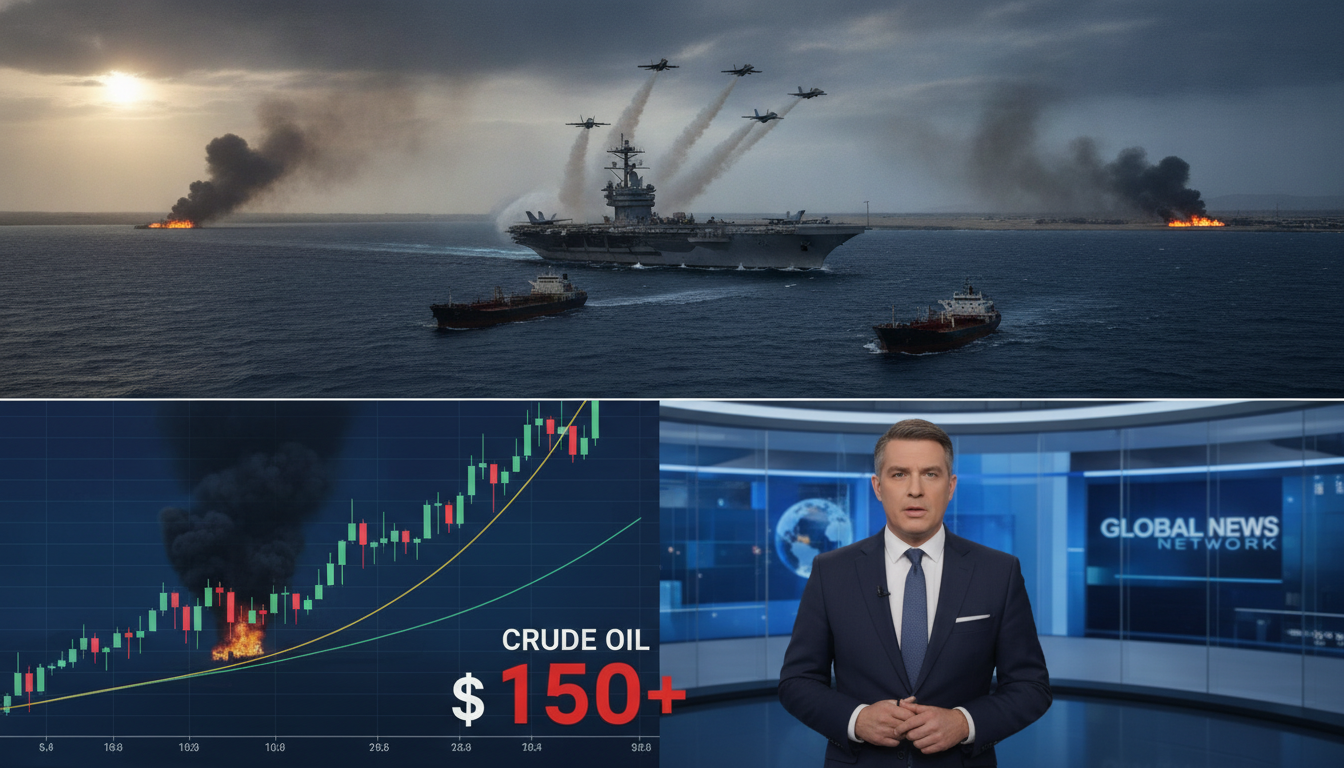
Strait of Hormuz Closed as U.S. and Iran Exchange Heaviest Strikes Since April Ceasefire
Iran announces closure of the Strait of Hormuz after renewed U.S. bombardment and maritime attacks that forced the evacuation of a container ship, raising global energy and security concerns.
U.S. Launches New Strikes on Iranian Targets
The United States carried out a fresh series of strikes against Iranian military sites late Sunday, targeting air-defence systems, coastal radars, missile and drone facilities and small naval craft, U.S. Central Command said. The operation came after what Washington described as repeated Iranian attacks on commercial vessels transiting the Strait of Hormuz. (gulfnews.com)
The strikes, which CENTCOM framed as aimed at protecting civilian mariners and commercial shipping, followed several nights of U.S. operations intended to degrade Tehran’s ability to threaten freedom of navigation. U.S. officials said the campaign used precision munitions launched from aircraft, drones and naval vessels. (gulfnews.com)
Iran Declares Strait of Hormuz Closed
Iranian authorities announced the closure of the Strait of Hormuz after reporting that a vessel had taken an “unauthorised” route and been struck near the waterway, a move Tehran said was necessary to protect the corridor it deems under its control. The closure was described by Iranian state media as effective “until further notice,” exacerbating regional tensions. (marketscreener.com)
Tehran has repeatedly restricted navigation since the outbreak of hostilities in late February, saying it will only permit transit along a single corridor adjacent to its coast and threatening ships that deviate. U.S. and other international officials reject Iran’s claim of exclusive control and insist the strait remains open under international law. (marketscreener.com)
Attack on MV GFS Galaxy and Shipping Disruption
Iranian forces struck the Cyprus-flagged container ship M/V GFS Galaxy in the strait, igniting a fire in the engine room and forcing crew to abandon ship, military and rescue authorities reported. Dozens of crew members were rescued by nearby vessels and search teams, while one crew member was reported missing in the immediate aftermath. (cbsnews.com)
The attack on the Galaxy marked a sharp escalation in assaults on commercial shipping, which had already prompted heightened naval escorts and advisories from international maritime authorities. Shipowners and insurers warned that the increased risk is curtailing traffic and complicating routing for tankers and container vessels in the region. (cbsnews.com)
Iranian Retaliation Targets Gulf States Hosting U.S. Forces
In a reciprocal escalation, Iran’s Islamic Revolutionary Guard Corps said it struck military facilities used by U.S. forces in the Gulf and launched missiles and drones at partner countries hosting American personnel, including bases in Jordan, Kuwait and Bahrain. Several Gulf states reported air-defence activations and interception of incoming projectiles. (washingtonpost.com)
Jordanian authorities reported shooting down a number of incoming missiles, and Bahrain activated public alert sirens as regional militaries engaged hostile aerial targets. Local officials in the affected states said there were no immediate reports of major damage or casualties in most incidents, though disruptions and damage were reported in some coastal and offshore locations. (washingtonpost.com)
Oil Markets and Global Economic Impact
The announcement of a new closure of the Strait of Hormuz and the renewed exchanges of strikes drove a sharp rise in oil markets, with benchmark Brent crude jumping as traders reassessed supply risk from one of the world’s key chokepoints. Market indicators showed a notable intraday spike as shipping through the strait was disrupted and insurance and freight costs climbed. (straitstimes.com)
Analysts warned that prolonged instability in the strait, through which a significant share of global seaborne oil passes, could push prices higher and disrupt refining and shipping schedules worldwide. Companies reliant on Gulf supplies said they were evaluating alternative sourcing and routing options as the situation evolved. (straitstimes.com)
Diplomatic Appeals and Regional Alerts
United Nations Secretary-General Antonio Guterres urged both Washington and Tehran to exercise maximum restraint and to resume urgent negotiations to prevent further escalation, calling for immediate de-escalatory steps to protect civilians and commercial traffic. International diplomats pressed regional mediators to reopen communication channels amid the fighting. (gulfnews.com)
Several countries in the region raised security alerts and advised residents to follow official channels for updates as military and civilian authorities worked to safeguard ports, energy infrastructure and population centres. Naval coordination centres and maritime information agencies issued advisories and expanded escort and routing measures to try to preserve safe passage where possible. (gulfnews.com)
The situation around the Strait of Hormuz remains highly fluid, with both sides trading strikes that officials say aim to limit threats to commercial navigation while simultaneously signalling resolve. International observers warned that a sustained cycle of attacks and reprisals could further destabilize global energy markets and draw additional regional actors into the conflict.
