
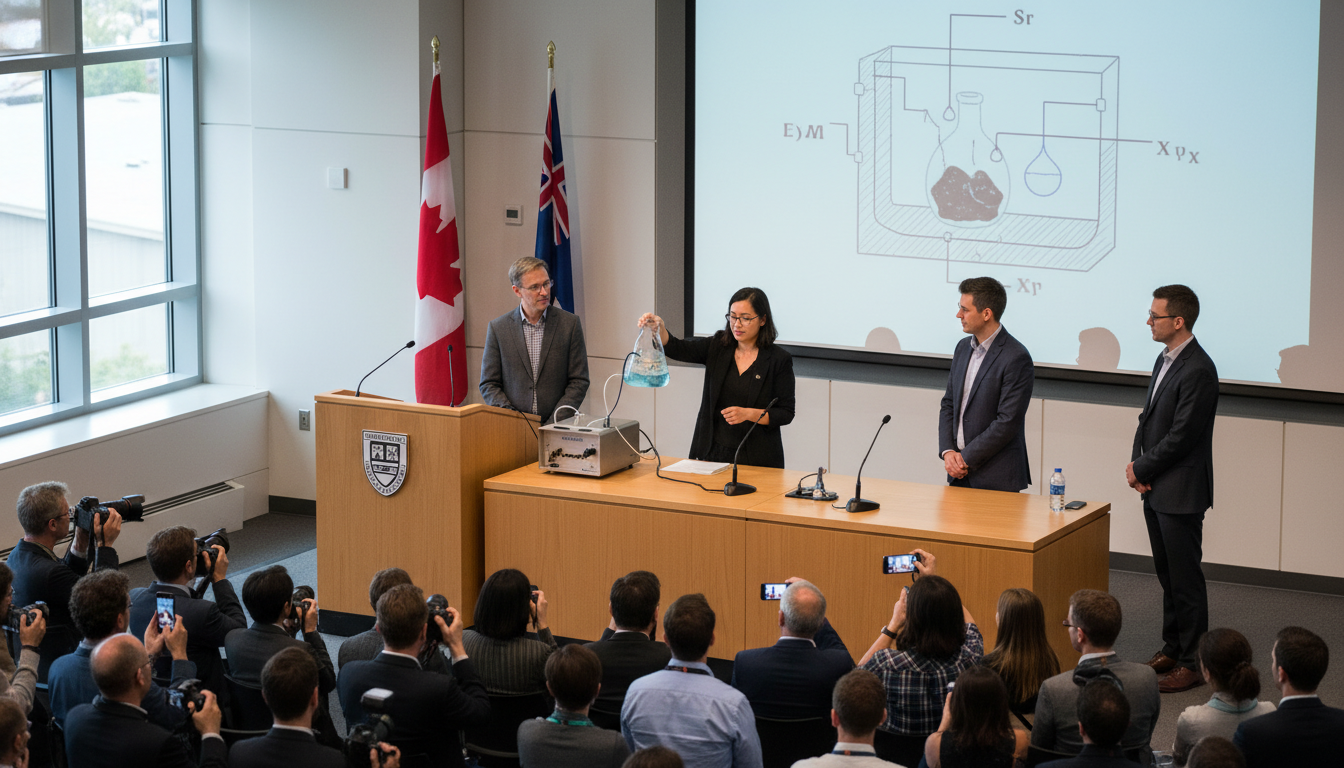
University of Alberta team unveils low-cost method for hydrogen production from water
U of A chemists developed a simple, low-cost water‑splitting electrode that produces hydrogen with seawater and renewable electricity, now licensed for industry.
A University of Alberta chemistry team says it has turned a long‑standing laboratory idea into a practical method for hydrogen production using a simple coated electrode that can run on seawater and low‑power electricity.
Researchers led by Professor Steve Bergens report a benchtop process that produces hydrogen through electrolysis with an inexpensive, scalable coating applied to conventional electrodes.
The invention has been patented by the university and licensed to an Ontario company for manufacturing and demonstration units, marking a fast transition from lab discovery to commercial trials.
Lab breakthrough on the benchtop
The discovery began with routine experiments in a U of A lab where students were testing coated electrodes for water splitting.
A rapid and reproducible rise in hydrogen output surprised the team and prompted thorough validation and refinement.
Bergens described the moment as unexpected, noting that the performance exceeded conventional expectations and drove the group to replicate and stress‑test the approach.
How the water‑reacting electrode works
Instead of bespoke hardware or exacting fabrication, the technique relies on applying a novel catalytic coating to standard electrodes in a single step.
When an electrical current is applied, the coated electrode drives the electrochemical reaction that separates water into hydrogen and oxygen more efficiently than many existing catalysts.
The process is designed to be straightforward: coat, assemble, and run with ordinary electrolysis equipment, which helps keep costs and technical barriers low.
Seawater compatibility and power flexibility
A critical development for practical deployment is the system’s compatibility with salt water, which removes the need for expensive desalination in many settings.
Researchers tested ocean water samples and found the electrode continued to perform, opening the possibility of coastal and offshore applications.
The team also emphasized that the system can operate from a variety of power sources — solar panels, wind turbines, hydroelectricity or intermittent grid power — making it suitable for both centralized plants and distributed, off‑grid installations.
Industry interest and commercialization steps
Cipher Neutron, an Ontario company focused on hydrogen systems, was the first commercial partner to test the coated electrodes in its prototype unit.
After receiving a conventional electrode and having it treated with the university coating, the company reported performance gains that prompted a licensing agreement and plans for larger‑scale manufacturing.
The technology has moved into larger demonstration units and is being integrated into manufacturing workflows, signaling a clear path from academic proof‑of‑concept to marketable products.
Funding, timeline and development hurdles
The project traces back several years and received support from the Canada First Research Excellence Fund and the University of Alberta’s Future Energy Systems program.
Bergens said the research began about eight years ago, with the specific invention emerging roughly three years ago and refined through subsequent trials and validation.
The team navigated pandemic‑era shutdowns, turnover of students and laboratory rebuilds before returning to steady progress and achieving reproducible results that justified patenting and commercialization.
Potential economic impact for Alberta industries
Hydrogen is already central to several Alberta sectors, including fertilizer production, oil refining and emerging low‑carbon steelmaking, and the new method could lower supply costs and expand domestic availability.
The ability to produce hydrogen from seawater and renewable electricity could also support proposals to blend hydrogen into natural gas systems to reduce emissions in heating and other applications.
University and industry partners argue that scalable, low‑cost hydrogen production would bolster regional energy diversification and provide feedstock for clean manufacturing across the province.
The research team credited students and institutional support for getting the project to this point, saying the combination of patient funding and persistent experimentation produced a reliable, patentable technology.
As the licensed units move toward commercial deployment, researchers and partners are focusing on scaling, durability testing and integration into existing hydrogen infrastructure.
If the performance observed in lab and early prototypes holds up at scale, the method could expand options for green and low‑emission hydrogen production across Canada and in coastal regions worldwide.
