
Tropical forest loss eased in 2025 but remains far above climate targets, study finds
New report: tropical forest loss fell sharply in 2025 but stayed well above levels needed for 2030 goals, with fires and agricultural expansion still major threats.
The pace of tropical forest loss eased in 2025, according to a new analysis by the World Resources Institute and the University of Maryland, but researchers warn the decline is uneven and still far from sufficient to meet global climate targets. The report, released on April 29, 2026, found that tropical forest loss fell notably from the record high seen the year before, yet remained elevated compared with a decade earlier. Analysts credited stronger government enforcement in key countries for much of the improvement while highlighting the growing role of fires and climate-driven extremes.
Scale of the 2025 decline
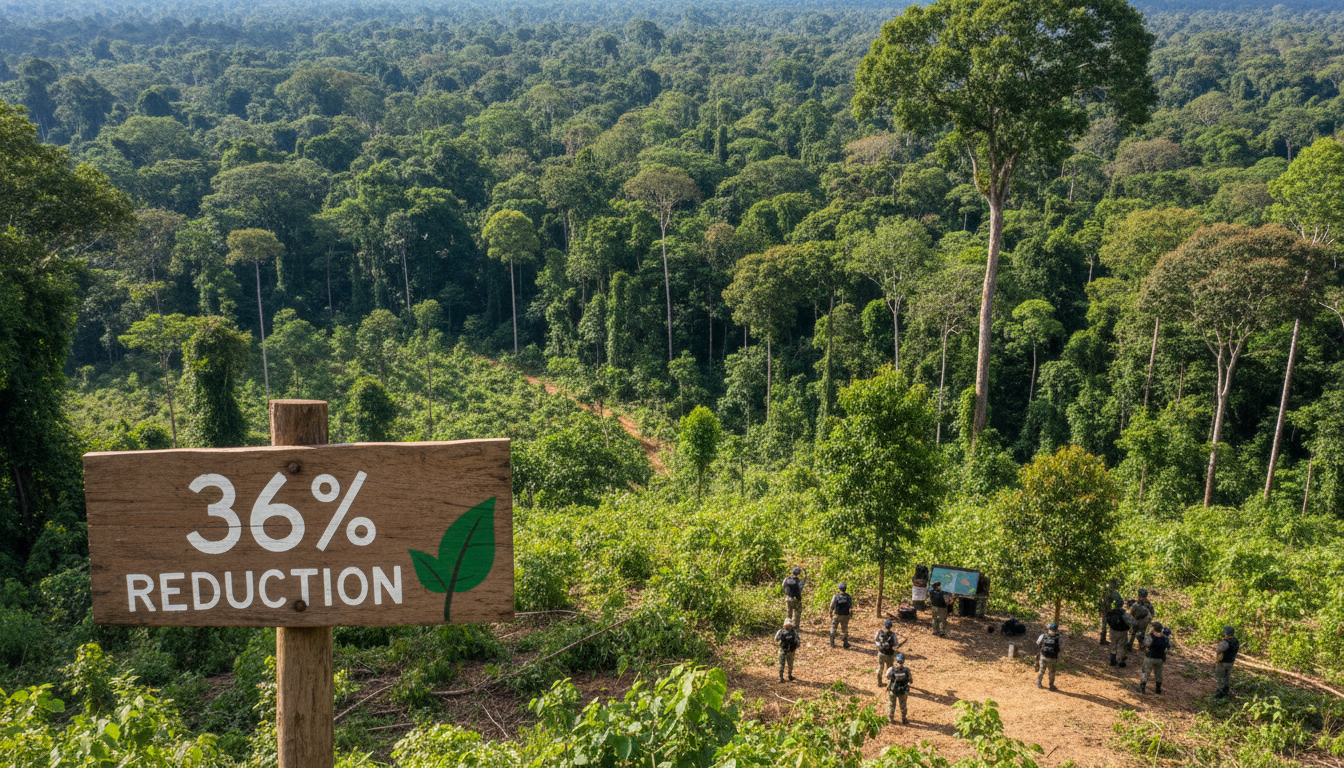
The report estimates that 4.3 million hectares of tropical primary rainforest were lost in 2025, a reduction of roughly 36 percent from 2024. Despite that improvement, researchers note that 2025 loss levels were still about 46 percent higher than a decade ago, underscoring long-term pressure on forest ecosystems. The study also warns that current trajectories remain about 70 percent above the pace needed to halt and reverse forest loss by 2030.
Brazil’s policy changes drove the largest drop
Much of the year-to-year improvement was driven by sharp declines in Brazil, where forest loss excluding fires fell by about 41 percent compared with 2024. Investigators linked the turnaround to renewed anti-deforestation measures and stepped-up enforcement under President Luiz Inácio Lula da Silva, whose administration relaunched an action plan and increased penalties for environmental crimes after taking office in 2023. Still, the report cautions that Brazil’s forests face persistent pressures from soy production, cattle ranching and localized efforts to weaken protections.
Fires increasingly shape tropical loss
Fires accounted for roughly 42 percent of tropical forest destruction in 2025, the analysis found, illustrating how burning has become a dominant driver of landscape change. Researchers said human activity remains the primary cause of many tropical fires, but that climate change is amplifying natural fire regimes and extending dangerous conditions into new regions. The return of El Niño this year is expected to heighten risks of heat, drought and wildfire, a factor that could quickly reverse recent gains.
Mixed regional trends outside the Amazon
Beyond Brazil, the report recorded further variability: Colombia reported a 17 percent reduction in forest loss, marking one of its lowest years since 2016 amid policy measures and land‑use agreements to curb clearing. In contrast, countries in central Africa — notably the Democratic Republic of the Congo and Cameroon — continued to experience high levels of tropical forest loss, driven by agricultural expansion, small‑scale clearing and weak enforcement. Globally, tree cover loss fell by about 14 percent in 2025, reflecting the patchwork of national outcomes.
Impacts on carbon sinks and climate targets
Researchers warned that escalating fires and droughts are turning what have been critical carbon sinks into episodic sources of greenhouse gas emissions. WRI’s global director for forests highlighted the fragility of current progress, saying forests remain a key buffer against climate change but are increasingly stressed by warming and extreme weather. The report emphasizes that short‑term declines in loss are encouraging but insufficient; sustained policy action and international support are still required to meet 2030 ambition.
Policy and enforcement recommendations
Authors urged governments to maintain and strengthen enforcement efforts, target the underlying drivers of deforestation such as commodity supply chains, and bolster fire prevention strategies ahead of the anticipated El Niño. They also called for investment in monitoring systems, community‑based stewardship and legal reforms to reduce incentives for clearing. The analysis noted that single‑year improvements can be reversed quickly when extreme weather or weaker governance creates new opportunities for clearing.
The study’s findings arrive as Canada grapples with domestic wildfire impacts that illustrate the global trend: last year the country recorded one of its worst fire seasons, with roughly 5.3 million hectares burned, demonstrating how climate and fire dynamics now threaten forest stability in temperate as well as tropical zones. Researchers say coordinated international and national action will be necessary to keep forests functioning as climate‑stabilizing assets rather than becoming additional sources of emissions.
