
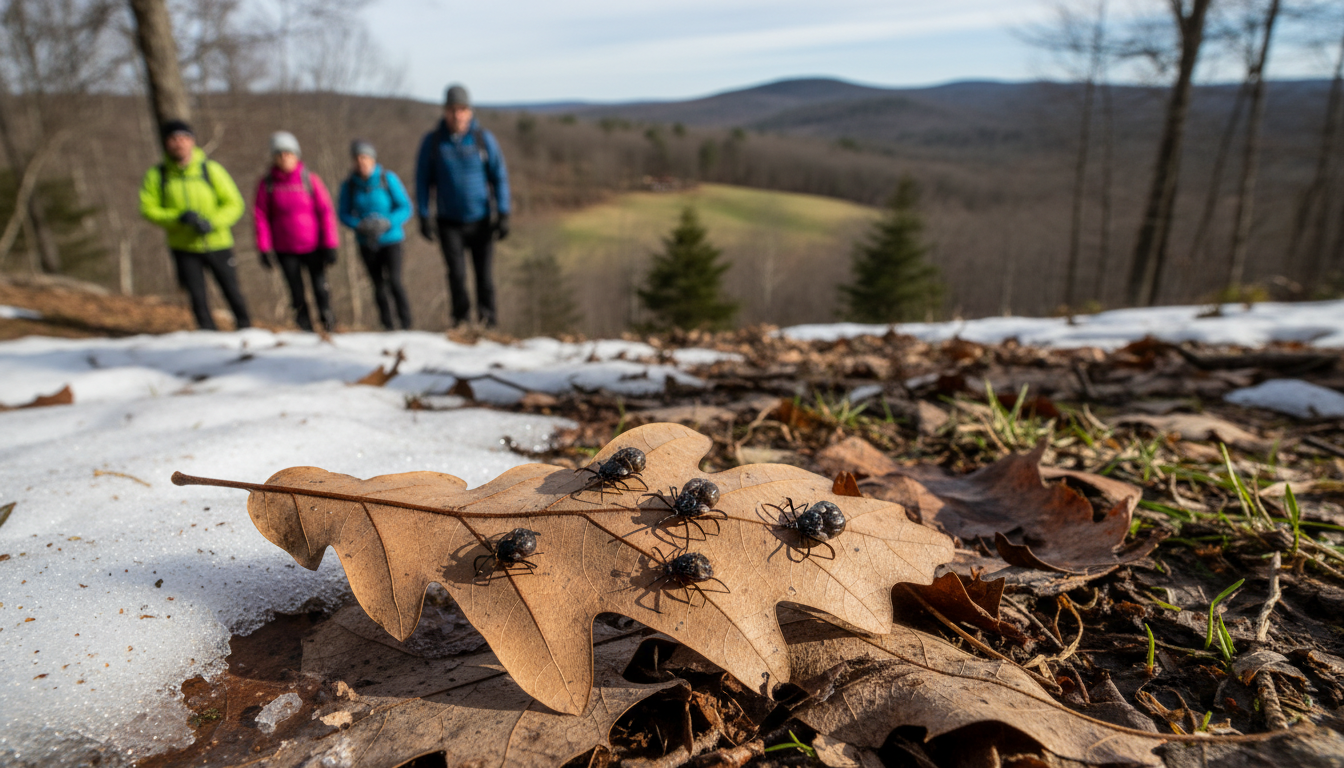
Ticks spread north as warmer winters drive rise in tick-borne illnesses across Canada
Ticks are expanding across Canada as milder winters lengthen seasons. Lyme and other tick-borne illnesses are increasing, prompting health warnings and research.
Canada is seeing a notable expansion of tick habitat and a rise in tick-borne illnesses, with health officials linking the trend to warmer winters, shifting wildlife patterns and increased human exposure. Reported Lyme disease cases rose sharply over the last decade, and public-health specialists warn that surveillance likely underestimates the true scope of infections. As provinces update guidance and researchers establish new domestic facilities, residents, employers and clinicians are adapting to a changing risk landscape.
Tick range expands north as winters warm
Public health agencies and infectious disease specialists say that milder winters have enabled several tick species to survive and reproduce farther north than in previous decades. The Public Health Agency of Canada and provincial tools show a steady geographic expansion of blacklegged ticks, sometimes called deer ticks, into areas that were once considered low-risk. Experts point to increased winter survival, longer active seasons and more suitable summer conditions as the primary environmental drivers.
Data compiled by provincial surveillance programs document rising reported cases: national tallies of confirmed and probable Lyme disease have climbed significantly since the mid-2010s. Ontario, Quebec and New Brunswick have reported notable increases in human cases and tick activity over recent seasons, and municipal health units are revising maps and public advice accordingly. Researchers warn that reported numbers likely capture only a fraction of infections because many people do not seek care or are not tested.
Lyme disease and other infections rising in multiple provinces
Lyme disease remains the most frequently reported tick-borne illness, but clinicians across Canada are increasingly diagnosing additional infections previously rare or absent in parts of the country. Anaplasmosis and babesiosis, both bacterial or parasitic infections transmitted by blacklegged ticks, are now reportable in some provinces following recent case increases. Public-health officials have also recorded rare instances of Powassan virus disease and Rocky Mountain spotted fever in regions where they were once unexpected.
Regional health authorities have issued targeted alerts after observing seasonal spikes in tick encounters and laboratory-confirmed infections. In Quebec and Ontario, public-health units reported record or near-record case counts in recent years, prompting expanded testing and awareness campaigns. These patterns have led clinicians to broaden differential diagnoses for patients with fevers, rashes or nonspecific viral symptoms following outdoor exposure.
Symptoms, complications and less-known conditions
Early symptoms of Lyme disease commonly include fever, fatigue, headache and muscle aches, and some patients develop the characteristic erythema migrans “bull’s-eye” rash near the bite site. Other tick-borne infections can present with flu-like symptoms that progress rapidly in severe cases, and certain pathogens are known to cause neurological or hematologic complications. Powassan virus disease, although uncommon, can lead to encephalitis and long-term neurologic damage, and babesiosis can cause hemolytic anemia, particularly in older or immunocompromised patients.
A growing concern among clinicians is alpha-gal syndrome, an allergy to red meat that has been linked to tick bites in parts of the United States and has emerged in isolated Canadian cases. The condition appears to be uncommon but can produce delayed and sometimes severe allergic reactions after consumption of mammalian meat. Public-health authorities emphasize that, because symptoms vary and incubation periods can differ by pathogen, clinicians should obtain detailed exposure histories when evaluating patients with compatible symptoms.
Prevention advice and public-health recommendations
Health officials continue to stress practical, evidence-based prevention strategies to reduce the risk of tick bites and transmission of infection. Recommendations include wearing long sleeves and pants in wooded or grassy areas, applying EPA- or Health Canada–approved insect repellents such as DEET, and conducting thorough full-body tick checks after returning indoors. Prompt removal of attached ticks with fine-tipped tweezers is advised, since the risk of pathogen transmission rises substantially when a tick remains attached for more than 24 to 36 hours.
Public-health units and provincial online tools provide updated maps, seasonal alerts and identification resources to help residents assess risk in their communities. Many authorities also encourage timely medical evaluation for people who develop fever, rash or other systemic symptoms after a tick bite, because early treatment reduces the likelihood of complications. Pet owners are urged to use veterinarian-recommended tick prevention products, as domestic animals can transport ticks into homes and yards.
Workplace exposure and responsibilities for outdoor employers
Outdoor workers, including farmers, landscapers, utilities crews and parks staff, face elevated exposure because their jobs place them closer to tick habitats for extended periods. Occupational health advocates are urging employers to provide training on tick awareness, prevention measures and the importance of early reporting and treatment under provincial workplace safety frameworks. Some industry groups recommend workplace policies that include provision of repellents, protective clothing allowances and scheduled tick-check breaks during high-risk months.
Farm organizations and municipal employers note that shifting tick distributions require updates to workplace risk assessments and safety plans. Employers should document training, provide access to first-aid resources and consider measures to reduce on-site tick habitat where feasible. Workers who develop symptoms consistent with tick-borne illness should receive expedited medical assessment, and supervisors should accommodate medical leave for evaluation and treatment without stigma.
Surveillance gaps and new Canadian research capacity
Public-health experts emphasize that surveillance for ticks and related diseases is resource-intensive and currently undercounts the full burden of illness. Passive surveillance systems relying on reports from clinicians and laboratories capture only detected and reported cases, and active field surveillance requires sustained funding and specialized capacity. To address gaps, researchers and institutions have moved to expand domestic capabilities, including the establishment of a Canadian Tick Research and Innovation Centre dedicated to breeding and studying native tick populations.
The new research facility aims to reduce reliance on imported specimens and enable controlled laboratory studies on Canadian tick species and pathogen transmission dynamics. Domestic breeding and controlled experiments will allow scientists to assess local genetic and environmental factors that influence tick survival, host preferences and vector competence. Public-health planners see such investments as essential for improving predictive models, guiding targeted interventions and informing future vaccine or treatment research.
Community-level measures and backyard risk reduction
Municipalities, public-health units and conservation authorities are advising homeowners to adopt landscape practices that reduce tick habitat near residences. Measures such as clearing tall grass, removing leaf litter, creating wood-chip or gravel barriers between lawns and wooded areas, and situating play areas away from dense vegetation can lower the presence of ticks near homes. Homeowners with pets should coordinate tick-prevention strategies with veterinarians, because animals can both acquire and transport ticks into living spaces.
Community outreach programs are expanding to include workshops for gardeners, recreation planners and schools to raise awareness of seasonal tick activity. Public parks and trail managers are experimenting with signage, trail routing and targeted vegetation management to balance ecological values with disease prevention. These localized steps complement broader surveillance and clinical measures by reducing opportunities for human-tick contact in frequently used spaces.
What to do if you find a tick or develop symptoms
If a tick is found attached to the skin, health authorities advise using fine-tipped tweezers to grasp the tick as close to the skin’s surface as possible and pull upward with steady, even pressure. After removal, clean the bite site with soap and water or alcohol, and monitor for symptoms including fever, rash or unusual fatigue in the weeks that follow. Many public-health units offer or recommend tick-identification services to determine species and potential risk, and online tools such as local vector-borne disease trackers can assist in exposure assessment.
Clinicians recommend seeking medical attention if a person develops systemic symptoms after a tick bite or if a suspicious rash appears, particularly if the exposure occurred in an area known for blacklegged ticks. Early treatment with appropriate antibiotics for suspected Lyme disease is highly effective and reduces progression to more severe illness. For less common infections such as babesiosis or anaplasmosis, laboratory testing and specialist consultation may be required to guide therapy.
Canada’s public-health agencies, provincial health units and academic partners describe the current moment as one of adaptation rather than alarm. While rising case counts and expanding tick ranges present challenges, authorities emphasize that risk can be managed through a combination of prevention, early detection and coordinated research. Residents are encouraged to remain informed, practice recommended precautions and seek care when indicated to minimize personal and community impact.
The spread of ticks into new areas underscores the interconnected nature of climate, wildlife and human activity, and it has prompted a coordinated response across public-health, occupational and research communities. With enhanced surveillance, workplace measures and new domestic scientific capacity, Canada aims to narrow knowledge gaps and strengthen prevention. In the meantime, Canadians are advised to continue enjoying outdoor life while taking sensible steps to reduce tick exposure and to consult public-health resources when questions or symptoms arise.
