
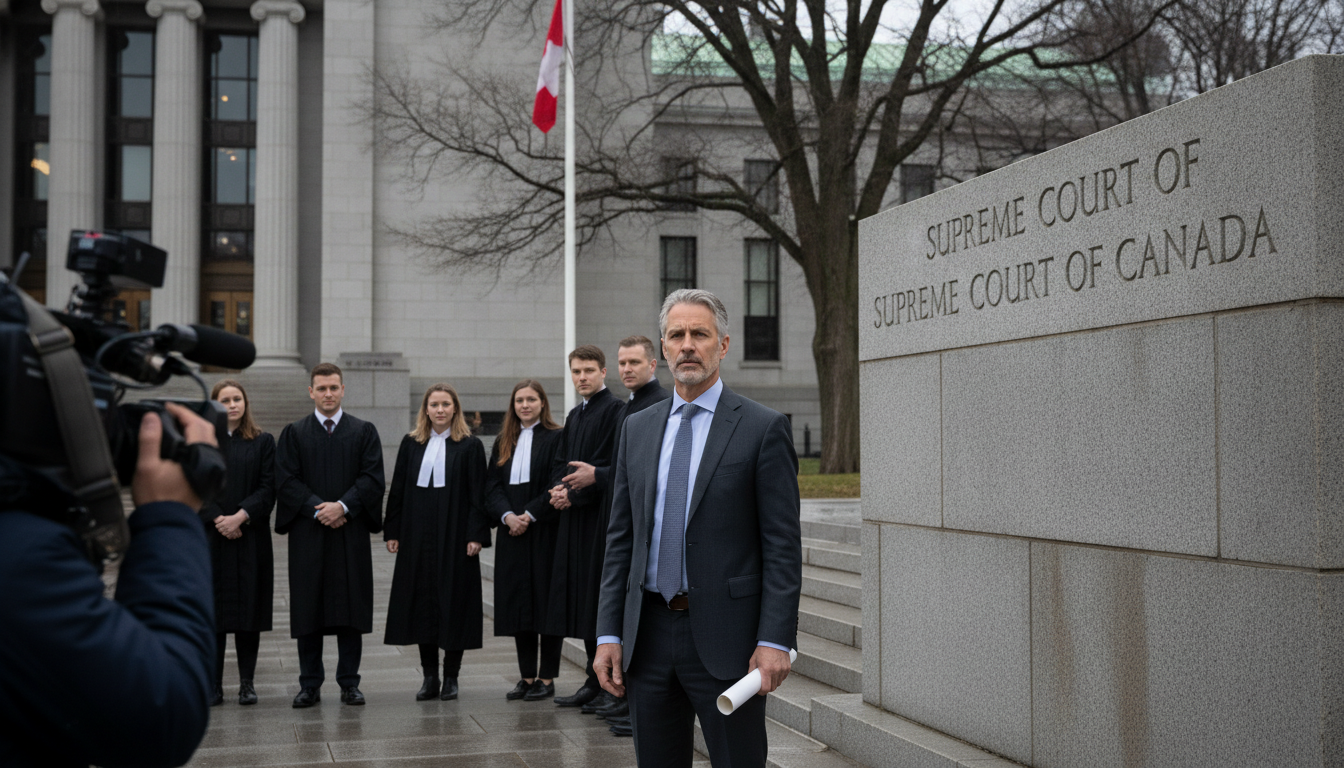
Supreme Court clears way for Joe Anglin lawsuit against former Alberta chief electoral officer
Supreme Court majority says Joe Anglin lawsuit alleging misfeasance by former Alberta chief electoral officer Glen Resler can proceed to trial in 2026.
Canada’s top court has ruled that the Joe Anglin lawsuit seeking $2.2 million against former Alberta chief electoral officer Glen Resler may continue to trial. The judgment, released on Friday, June 19, 2026, held that Anglin’s claim raised a reasonable cause of action and was not a prohibited collateral attack on the 2015 election result. The decision does not decide the merits of the allegations but allows the case to be tested in court.
Supreme Court majority allows claim to proceed
A majority of justices concluded Anglin’s civil claim survives preliminary dismissal and warrants a full hearing on its facts. Justice Mary Moreau, writing for the majority, emphasized that the claim “assumes the unimpeachability of the election result and seeks compensation for misfeasance during the election process.” Three justices, including Chief Justice Richard Wagner, registered partial dissent, but the court’s decision leaves the path open for trial.
Court affirms misfeasance in public office as an available remedy
The ruling affirms that the tort of misfeasance in public office can be a legitimate route for a candidate to seek damages where bad faith is alleged by an election official. The court noted that Alberta’s Election Act does not bar all civil proceedings and in some circumstances allows redress for misconduct. Justices said the legal framework leaves “a door open to civil proceedings where bad faith is alleged,” meaning the courts can examine whether public officials exceeded their lawful authority.
Allegations against former chief electoral officer Glen Resler
Anglin alleges Resler acted in bad faith by launching investigations during the 2015 campaign that harmed his re-election chances in Rimbey–Rocky Mountain House–Sundre. In his statement after the decision, Anglin framed the dispute as a principle-driven fight against “abuse of power” by a public official extending over nearly a decade. Resler served as Alberta’s chief electoral officer until May 2024 and has denied that the investigations constituted improper conduct; lawyers for Resler declined to comment on Friday’s ruling.
Campaign investigations and fines cited by plaintiff
During the 2015 campaign the chief electoral officer investigated several complaints against Anglin, including issues related to campaign signage and the handling of the electors list. One probe resulted in a $250 fine over signs that read “Re-Elect Joe Anglin M.L.A.” after the legislature had been dissolved, and another led to a $500 fine after an electors list was found in surplus office inventory, a latter penalty that was later rescinded by a judge for procedural unfairness. Anglin maintains he did not challenge the vote outcome but contends the timing and conduct of those inquiries were politically damaging and undertaken in bad faith.
History of litigation and appellate decisions
The dispute has played out over more than a decade in Alberta’s courts. In 2024 the Alberta Court of Appeal reinstated part of Anglin’s lawsuit while dismissing claims of malicious prosecution, narrowing the issues for trial. Friday’s Supreme Court decision builds on that appellate history by rejecting assertions that parliamentary privilege or statutory immunity automatically barred civil claims. The court’s order simply permits the remaining allegations to proceed to a fuller factual examination.
Implications for election law and future claims
Legal observers say the decision could be one of the first from the Supreme Court of Canada to consider whether a candidate can recover damages for a lost chance at election due to the conduct of election officials. By recognizing misfeasance in public office as a viable claim in this context, the ruling may encourage other litigants to pursue civil remedies where they allege bad faith by administrative actors. At the same time, the court stopped short of creating new liabilities, underscoring that proof of bad faith and causation will remain central to any successful claim.
The case will return to lower courts where Anglin must prove the factual basis of his allegations and the causal link to his election losses. For now, the June 19, 2026 Supreme Court decision ensures that the Joe Anglin lawsuit will be litigated on its merits rather than dismissed at the outset.
