
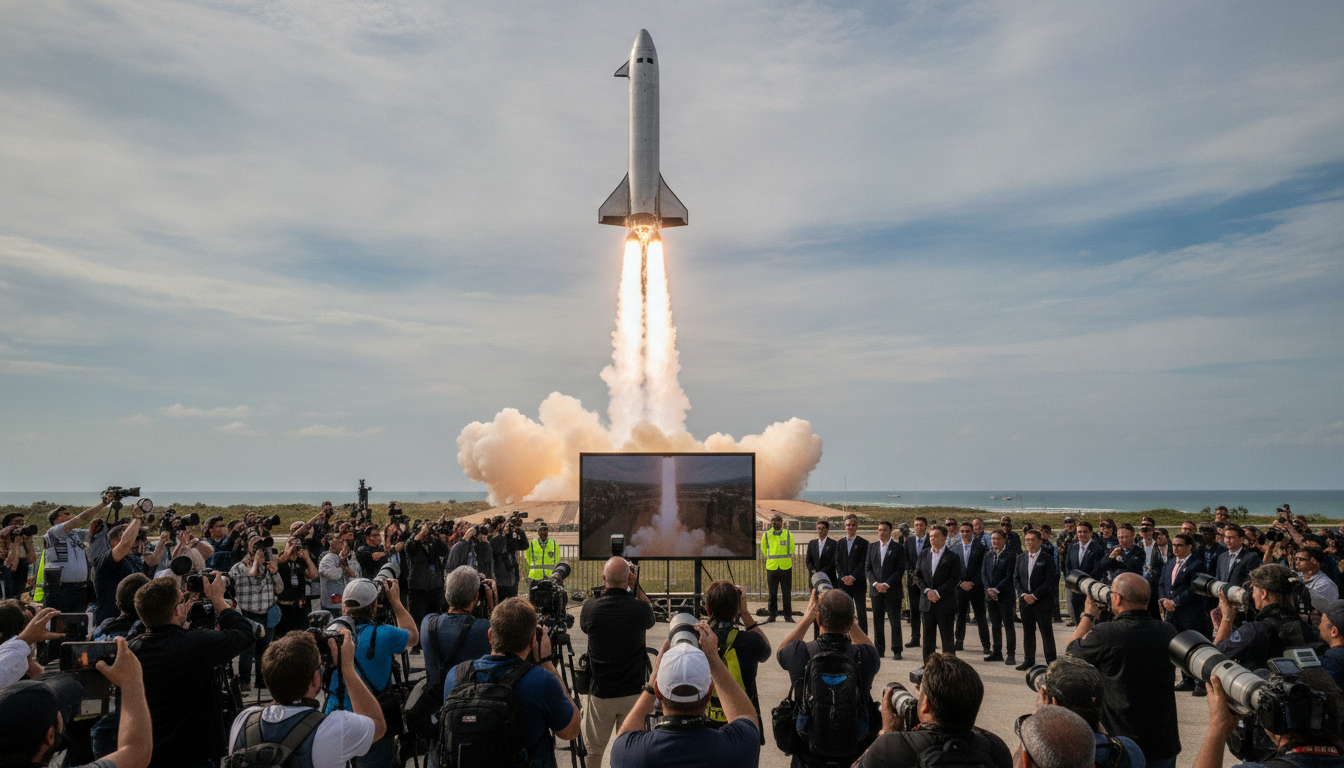
SpaceX Starship test flight achieves objectives while booster suffers hard splashdown
SpaceX’s Starship test flight successfully launched from Starbase on July 24, 2026, completing key objectives for the upgraded vehicle while the Super Heavy booster failed its landing. The Starship test flight carried 20 next‑generation Starlink V3 satellites and marked the second flight of the Version 3 hardware. (arstechnica.com)
Launch and mission summary
The Starship stack lifted off from SpaceX’s Starbase site in Boca Chica, Texas, during a late‑evening window on July 24, 2026. The 408‑foot vehicle cleared the pad and climbed as planned, with the upper stage continuing on toward a suborbital trajectory while carrying commercial payloads. (arstechnica.com)
SpaceX said the flight pursued objectives similar to the preceding test, focusing on system validation for the Version 3 Super Heavy and Ship hardware. The company and independent trackers noted that the vehicle executed a series of planned maneuvers before the upper stage deployed a stack of satellites. (spacepolicyonline.com)
Abort sequence and schedule slips before liftoff
The July 24 launch followed an abort attempt roughly one week earlier when flight controllers halted ignition after several Raptor engines failed to start during the July 16 countdown. That last‑second abort prompted an intensive troubleshooting period at the Starbase complex. (space.com)
A subsequent weather‑related delay briefly pushed activity again, giving engineers additional time for prelaunch checks and fueling rehearsals. SpaceX teams used the interval to reverify the Raptor 3 engine start sequences and to confirm payload integration ahead of the second attempt. (space.com)
Upgrades in Starship Version 3 and test objectives
Version 3 of Starship and the Super Heavy booster represents a significant redesign focused on reliability and performance, including changes to engine plumbing, structural reinforcements, and updated avionics. Engineers said the upgrades aim to reduce ignition anomalies and improve the vehicle’s reentry and landing capability compared with earlier flights. (arstechnica.com)
This test also served as the debut deployment opportunity for SpaceX’s next‑generation Starlink V3 broadband satellites, with the Starship upper stage carrying and ejecting a stack of 20 units built for higher throughput. The deployment was a primary mission objective and was reported to have completed successfully. (spacepolicyonline.com)
Booster landing: engine issues and splashdown
During the descent phase, the Super Heavy booster experienced engine restart problems that prevented a controlled landing and caused the stage to impact the Gulf of Mexico at high speed. Telemetry and visual tracking indicated the booster completed its high‑thrust burn but failed to execute subsequent burns needed for a soft recovery. (arstechnica.com)
Recovery teams and range safety officials monitored the splashdown area and assessed environmental and maritime risks as the booster came down. SpaceX’s post‑flight updates and independent observers are expected to provide detailed telemetry and a root‑cause assessment in the days ahead. (arstechnica.com)
Operational outcomes and industry reactions
Analysts described the flight as a mixed technical outcome: a successful upper‑stage mission that demonstrated payload deployment capability, offset by a booster loss that underscored remaining challenges in reuse and landing reliability. Observers noted the mission still advanced key development goals for the Starship program. (spacepolicyonline.com)
Market and regulatory watchers said the deployment of Starlink V3 hardware from a Starship test is notable for commercial operations, signaling SpaceX’s push to integrate Starship into its broader satellite‑deployment cadence. Industry stakeholders will follow SpaceX’s incident analysis closely to gauge readiness for more frequent flights. (spacepolicyonline.com)
Next steps for SpaceX and the Starship program
SpaceX is expected to examine booster telemetry and engine start logs to determine the sequence that led to the failed landing burn, with engineers likely to focus on Raptor restart sequencing, turbopump behavior and software checks. The company’s history of iterative fixes suggests follow‑on test flights will incorporate targeted hardware and software changes. (arstechnica.com)
Regulators and range authorities will review flight data and any environmental impact from the booster impact, while SpaceX plans to reschedule subsequent tests once corrective actions are in place. The company has previously used such inputs to make rapid design refinements between flights. (cbsnews.com)
The July 24 Starship test advanced several program goals by validating Version 3 performance in flight and by successfully deploying new Starlink V3 satellites, even as the Super Heavy booster’s failed landing underlined the program’s ongoing engineering challenges. (spacepolicyonline.com)
