
Knesset Approves Controversial Israel Media Reforms; High Court Freezes Key Clauses
Knesset approves Israel media reforms; High Court freezes key provisions after lawsuits by unions and watchdogs, raising press freedom concerns before Oct. vote.
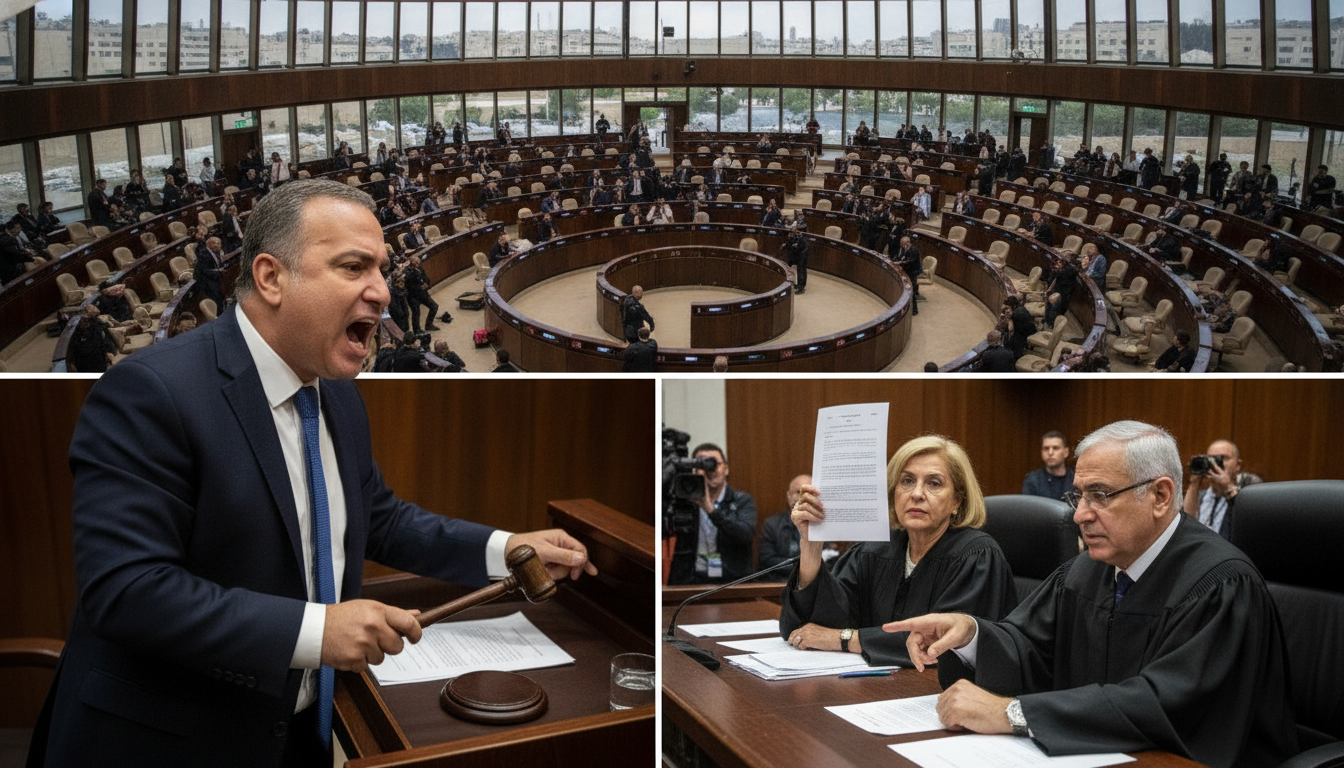
Israel’s parliament approved a sweeping package of Israel media reforms on July 17, 2026, prompting immediate legal challenges and a High Court of Justice order temporarily blocking some of the law’s most contentious provisions. Critics and press freedom organisations say the measures would give the government substantially greater influence over broadcast and news outlets. (aljazeera.net)
Knesset passage and court intervention
The legislation was pushed through in a late-session legislative blitz as the Knesset prepared to dissolve ahead of October’s general election, with lawmakers voting to overhaul the regulatory framework for public and commercial media. Opponents argued the package removed longstanding safeguards and rushed through changes without adequate debate. (aljazeera.net)
The High Court of Justice responded to petitions filed by the Union of Journalists in Israel and other groups by issuing an interim freeze on specific clauses that petitioners said would take effect immediately and could reshape the media ahead of the vote. The court set a timetable for the state to respond before deciding whether to broaden or lift the freeze. (timesofisrael.com)
Key regulatory changes in the new law
The reforms change the architecture of media oversight, eliminating or weakening rules that have governed cross-ownership, newsroom standards and independent funding mechanisms for public broadcasting. Supporters say the moves will deregulate a sector they describe as biased, while opponents say they will enable political interference and commercial consolidation. (investing.com)
Among the most contested elements are the removal of minimum journalism standards and the lifting of limits on ownership of multiple outlets, steps that critics warn could concentrate editorial control and reduce plurality. The bill also alters how ratings and state advertising are allocated, which analysts say could tilt revenue streams toward pro-government outlets. (investing.com)
Legal challenge and immediate consequences
Journalists’ unions, watchdog groups and several opposition parties brought urgent petitions to the High Court arguing that parts of the law would irreparably skew the media environment if allowed to take effect before judicial review. The court’s interim order preserves the status quo on those clauses while it considers the full legal arguments. (timesofisrael.com)
The government has been given a fixed window to respond to the petitions, after which the justices will decide whether to extend the freeze, narrow it or allow some provisions to be implemented. Meanwhile, less disputed elements of the legislation that do not face immediate injunctions have been allowed to stand. (timesofisrael.com)
Netanyahu, Karhi and conflict-of-interest questions
Prime Minister Benjamin Netanyahu did not participate in the parliamentary vote, citing a 2020 agreement that bars him from engaging in government actions that could relate to his ongoing corruption trial. Nonetheless, Communications Minister Shlomo Karhi publicly thanked Netanyahu for the “mission” to deliver right-wing media reform, and later said a legal opinion found no breach of the prime minister’s conflict-of-interest restrictions. (aljazeera.net)
Opposition lawmakers and legal analysts have flagged the public expressions of gratitude and party coordination as potentially problematic given the prime minister’s trial, and they say the optics deepen concerns about whether the legislation is being used for partisan advantage. The controversy has sharpened existing tensions between the executive and judicial branches. (aljazeera.net)
Critics warn of shrinking independent coverage
International and domestic press freedom monitors warned that the reforms would further erode independent journalism in Israel and amplify outlets aligned with the governing coalition. Reporters Without Borders and the Union of Journalists in Israel have argued that the measures target the institutional checks that protect editorial independence and plural reporting. (rsf.org)
Observers also pointed to longstanding concerns about the narrow framing of certain conflicts in Israeli current affairs coverage, including criticisms that reporting has often marginalised Palestinian perspectives and humanitarian impacts. Advocates say changes that reduce newsroom standards or centralise funding decisions risk making that imbalance more pronounced. (lemonde.fr)
Political stakes ahead of October elections
With the Knesset dissolved and a general election scheduled for October 27, parties on both sides framed the dispute over media law as part of a broader battle over democratic institutions and public discourse. Supporters of the reforms argue they are correcting a biased media environment, while opponents warn the timing and scope of the changes aim to shape the electoral playing field. (aljazeera.net)
The court’s pending rulings will determine whether the disputed clauses can be used in the run-up to the vote, leaving newsroom editors and political strategists watching closely. For citizens and voters, the episode has intensified debate over who controls information during one of the country’s most consequential election campaigns. (timesofisrael.com)
The coming weeks will test Israel’s legal checks on legislative power and the resilience of media institutions under pressure from political actors.
