
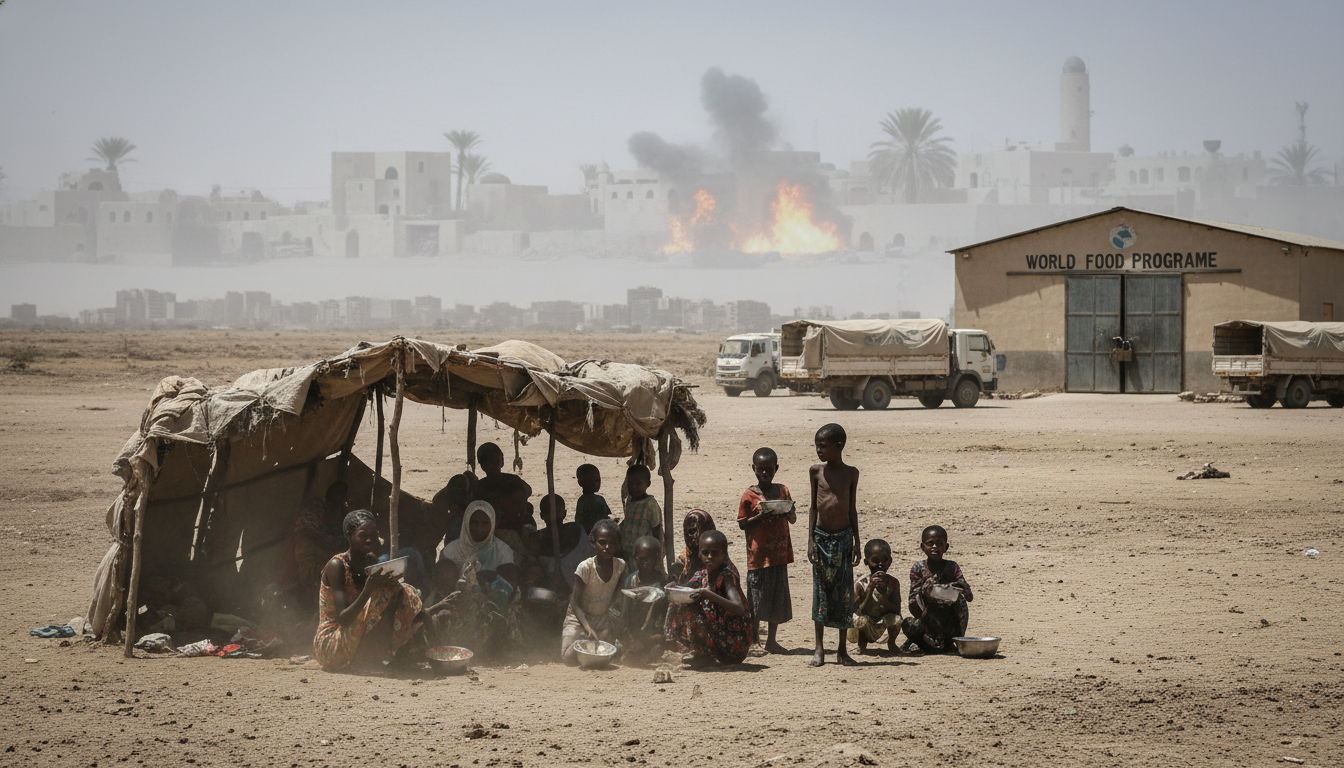
Somalia hunger crisis deepens as drought, aid cuts and Middle East war push food prices higher
Somalia hunger crisis: Drought-driven malnutrition has worsened in May 2026 as cuts to humanitarian assistance and rising global food and fuel costs tied to the Middle East war squeeze supplies and deepen shortages.
The Somalia hunger crisis has intensified in recent weeks, with aid groups warning that people already weakened by years of drought now face even harsher choices as international funding falls and commodity prices surge. Humanitarian workers say that interruptions to aid deliveries and higher transport and food costs have reduced the reach of relief programs in key regions. The situation, seen across both rural districts and crowded displacement camps, is unfolding amid a fragile recovery from repeated climate shocks.
Drought left families without food stocks
Many Somali households entered 2026 with depleted grain reserves after consecutive poor rainy seasons, local officials report. Without reliable harvests, families have relied on savings, animal sales and small aid distributions to avoid starvation. Those coping strategies have been exhausted in numerous communities, leaving children and older adults particularly vulnerable to acute malnutrition.
Pastoralists in parts of central and northern Somalia have watched livestock die or lose market value, undercutting a primary livelihood. With reduced milk and meat availability, nutritional options that once buffered drought impacts have narrowed, fueling higher rates of undernutrition among infants and young children.
Cuts to humanitarian assistance have narrowed relief
Humanitarian organizations say a recent retrenchment in funding has forced reductions in food rations, malnutrition screening and drought response operations. Agencies that have operated year-round are scaling back outreach, closing clinics in some districts and prioritizing the most severe cases. The result is fewer families reached and longer waits at distribution points.
Logistical hurdles have compounded the funding gap, with shortages of vehicles, fuel and secure transport routes delaying deliveries. Aid coordinators warn that even where supplies exist, the capacity to move them to remote or conflict-affected areas is limited, leaving many communities effectively unreachable.
Global conflict pressures fuel price shocks
Traders and relief officials point to the ongoing war in the Middle East as a key driver of recent price spikes, particularly for staples and fuel. Disruptions in shipping, increased insurance costs and a jump in global fuel prices have pushed up the cost of moving grain into Somalia’s ports and then overland to inland markets. Those added expenses are passed to consumers in the form of higher food prices.
For import-dependent countries and regions, these market shifts translate quickly into reduced purchasing power for poor households. Families that once bought small amounts of grain or oil now report buying less or skipping meals entirely, increasing the risk of acute hunger.
Displacement and market stress reshape needs
As livelihoods collapse, more families are relocating to urban centers and internally displaced persons camps in search of aid and casual labor. Camp managers describe crowded sites with limited sanitation and strained food distributions. New arrivals increase demand at markets that already struggle with tightened supplies and higher prices.
The demographic shift also complicates aid planning, since mobile populations are harder to locate and assist with standard program models. Aid agencies report difficulty in tracking movements and adapting assistance packages quickly enough to meet changing needs.
Aid coordinators appeal for immediate, sustained funding
Humanitarian coordinators and nongovernmental organizations are urging donors to restore and increase contributions to emergency operations, noting that short-term infusions can prevent more severe outcomes. Rapid funding would allow teams to reopen nutrition programs, extend cash-transfer schemes and reestablish stable food distributions in hard-hit districts. Relief groups emphasize that predictable, multi-month support is more effective than intermittent, reactive grants.
Coordination bodies also call for investment in logistics — fuel, transport and warehousing — to ensure supplies can reach isolated areas. Without those backbone services, even well-funded programs struggle to deliver assistance where it is most needed.
Long-term risks for stability and recovery
Analysts warn that prolonged malnutrition and displacement carry broader consequences for Somalia’s recovery and security. Chronic undernutrition during the first 1,000 days of life can have lasting effects on health, learning and productivity, while widespread economic hardship can fuel tensions over scarce resources. Communities dependent on agriculture and pastoralism risk losing the assets they need to rebuild once rains return.
Development actors say that recovery will require both immediate humanitarian relief and longer-term investments in climate-resilient agriculture, water infrastructure and market stabilization. Integrating emergency response with resilience programming is seen as critical to prevent repeated cycles of crisis.
Humanitarian sources on the ground say rapid action this month could avert the worst outcomes, but that window is closing as resources and supplies are stretched thin. Restoring funding, stabilizing markets and protecting access to affected areas are being presented by relief agencies as essential steps to stop the Somalia hunger crisis from deepening into a wider catastrophe.
