
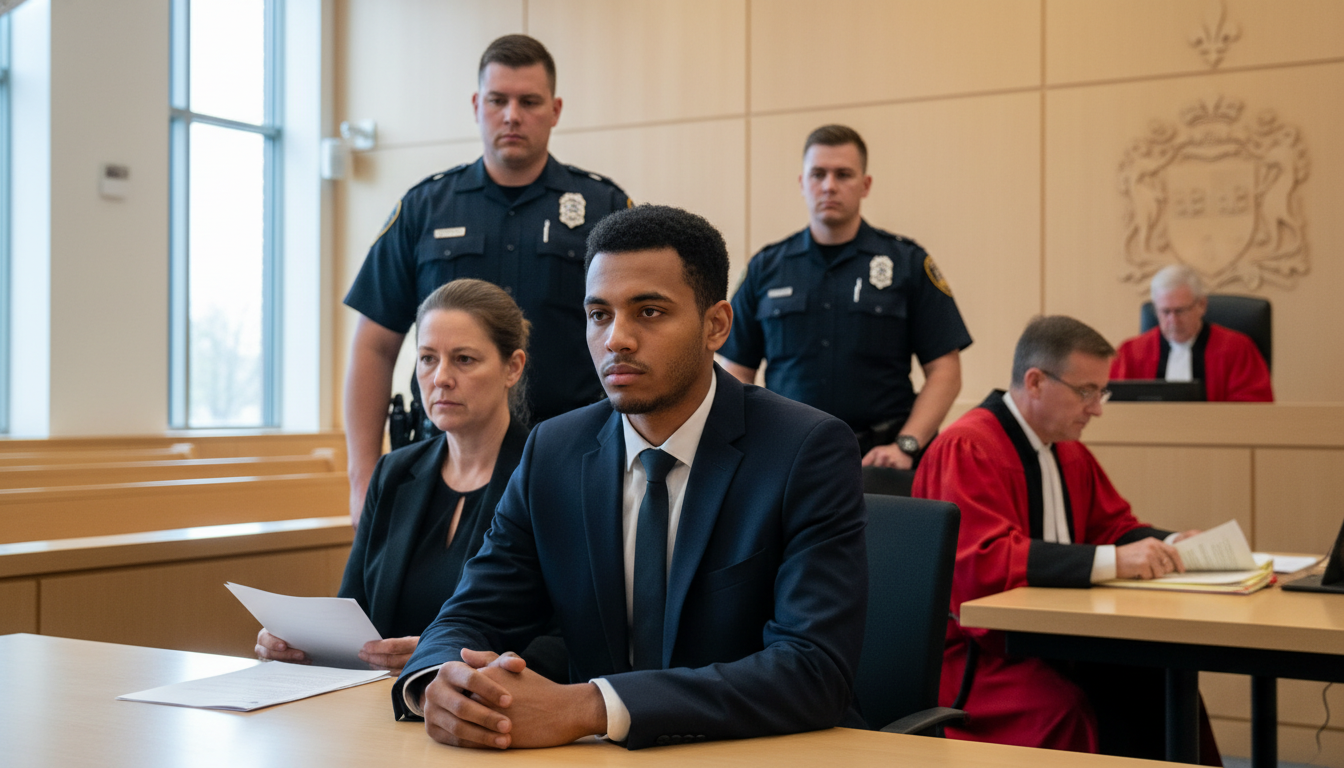
Shimei-Baraka Saiba sentenced to life in prison for murder of Daphnée Jolivet
Quebec court imposes life sentence on Shimei-Baraka Saiba for the first-degree murder of 19-year-old Daphnée Jolivet; parole barred for 10 years in Quebec City.
A Quebec judge on Friday sentenced Shimei-Baraka Saiba to life imprisonment for the first-degree murder of 19-year-old Daphnée Jolivet, ruling that parole will not be available for at least 10 years. The offence occurred on October 25, 2023, in the Maizerets neighbourhood of Quebec City, where Jolivet was raped and killed in her parents’ home. Saiba was 16 at the time of the crime and his identity had been protected under youth privacy rules until the matter moved through the adult sentencing process. Prosecutor Hugo Breton of the Director of Criminal and Penal Prosecutions had argued for an adult sentence, and Judge José Rhéaume concluded that a youth sentence would not adequately reflect the seriousness of the acts.
Sentence handed down by Quebec court
Judge José Rhéaume delivered the adult sentence at the Quebec courthouse, imposing life imprisonment with no possibility of statutory release for 10 years. The court found the gravity of the offence and the developmental maturity of the offender supported treating the matter as an adult case. The judge said a sentence specific to youth would not have provided a sufficient measure of accountability given the nature of the crimes.
Circumstances of the October 25, 2023 attack
On October 25, 2023, Daphnée Jolivet, then 19, was attacked in the basement of her parents’ residence in Maizerets, a neighbourhood of Quebec City. The attack occurred in the presence of Jolivet’s younger brother, who intervened and was seriously injured while trying to stop the assailant. Court records and submissions at sentencing described the attack as violent and premeditated, and the outcome left the Jolivet family deeply affected.
Prosecution’s long-standing request for adult treatment
The Director of Criminal and Penal Prosecutions, represented by prosecutor Hugo Breton, had sought an adult sentence for Saiba since last year. Breton argued the severity of the offence and public safety considerations warranted lifting youth protections and proceeding with an adult disposition. The court accepted that position and noted the prosecutor’s submissions in reaching the sentencing decision.
Judge’s reasoning on development and accountability
In his decision, Judge Rhéaume addressed the offender’s developmental profile, indicating it more closely resembled that of an adult than an adolescent for the purposes of sentencing. The judge concluded that the statutory youth sentencing framework would not deliver a penalty commensurate with the harm caused. He also cited the lasting and “devastating” effect the crimes had on the victim’s family when explaining the need for an adult sentence.
Victim impact and family consequences
The court heard about the profound impact the attack had on Jolivet’s relatives, including the brother who attempted to intervene and remains physically and emotionally affected. Sentencing submissions described long-term trauma for the family and emphasized the community’s need for accountability. The judge referenced those harms in setting a sentence intended to reflect both punishment and the seriousness of the offence.
Parole eligibility and what a life sentence means
Under the sentence imposed, Saiba will not be eligible to apply for parole for 10 years, though eligibility does not guarantee release at that time. A life sentence for first-degree murder carries the possibility of parole after the minimum period set by the court, and any application would be subject to review by the Parole Board of Canada. The judge’s decision specifies the minimum period before eligibility, aligning the sentence with the court’s assessment of public protection and denunciation.
The sentence brings to a close the court’s determination of penalty, though legal processes such as potential appeals or other motions may still be pursued by the defence. The case and its outcome have reignited discussion about how youth offenders are treated in the justice system when the offences committed are particularly severe. More details on the proceedings and any subsequent legal steps are expected to be reported as they become available.
