
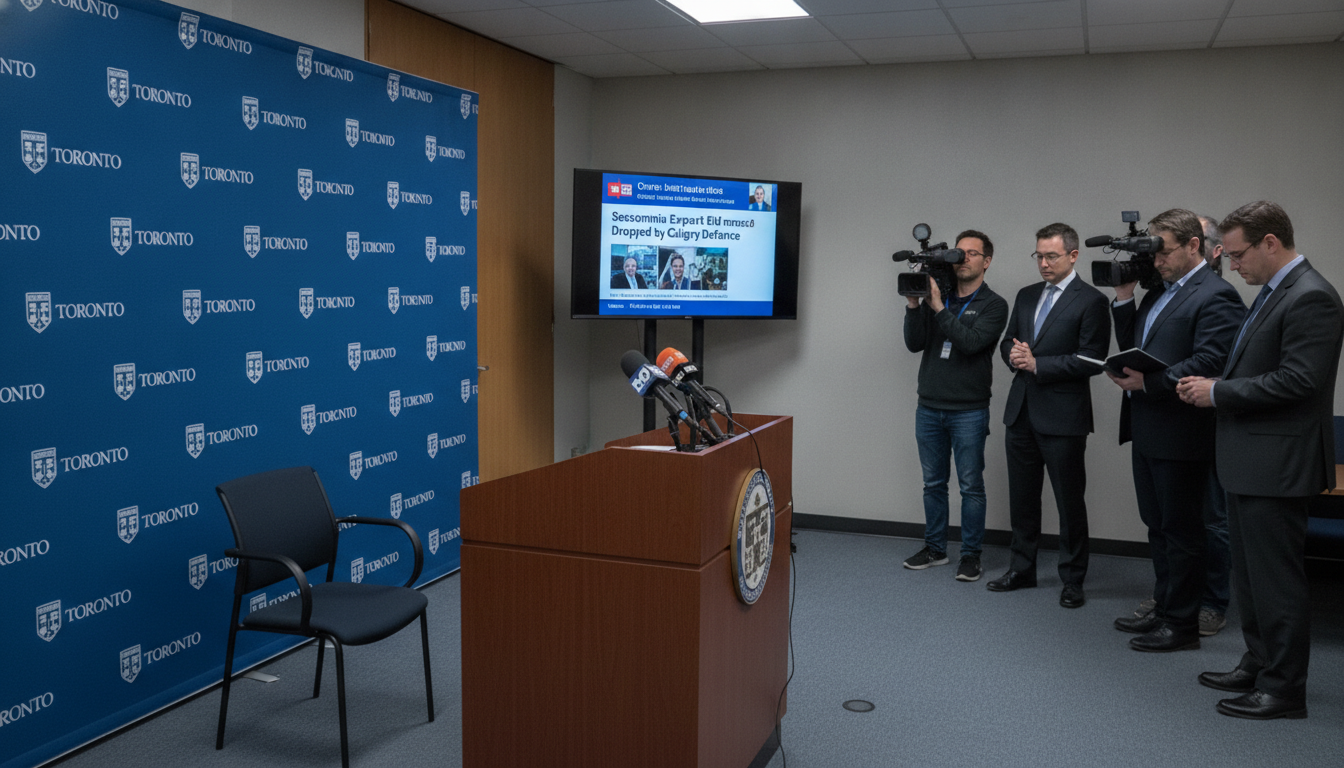
Calgary defence withdraws bid to qualify sexsomnia expert after testimony concerns
Calgary defence withdraws bid to qualify sexsomnia expert after the proposed witness admitted possible conflation of patient data; judge will decide on an adjournment Tuesday.
A new defence lawyer in a Calgary sexual-assault case on Monday abandoned his effort to have a University of Toronto professor recognized as a sexsomnia expert after the witness’s own testimony raised doubts about his findings. The withdrawal came after Dr. Colin Shapiro acknowledged the possibility he had “conflated” information from two patients when formulating a diagnosis, prompting defence counsel Allan Fay to say he no longer had confidence in the doctor’s evidence. The motion to qualify Shapiro had been central to a defence strategy that sought to present sleep disorder testimony as relevant to the accused’s state at the time of the alleged offence.
Defence counsel cites loss of confidence in proposed expert
Allan Fay told Justice Jim Eamon he was “taken aback” by Dr. Shapiro’s evidence and would not call him to testify in this matter or in any other case. Fay said he had not anticipated the issue of conflation and that the admission undermined Shapiro’s credibility as an expert on parasomnias such as sexsomnia. The defence now seeks an adjournment of the trial to reassess strategy in light of the withdrawal and to consider alternative expert evidence. Fay’s remarks underscored the central role the proposed expert testimony had played in the accused’s defence planning.
Witness acknowledged possible conflation of patient data
Dr. Colin Shapiro, a University of Toronto professor who has used the term sexsomnia to describe sexual behaviours occurring during sleep, testified in earlier hearings that people can engage in complex actions while asleep without awareness. During Monday’s proceedings he conceded there was a risk he had combined details from two separate patients when arriving at his conclusions about the accused, a disclosure that prompted the defence to retreat from its application. The admission raised immediate questions about the reliability of the diagnostic material and the basis for any opinion he might offer in court. That uncertainty was decisive for Fay, who said he no longer believed Shapiro could give credible, reliable assistance to the jury.
Charges and original expert application explained
The accused faces a charge of sexual assault allegedly involving a former intimate partner, and the original defence team had sought to introduce expert evidence on uncontrolled behaviours during sleep. Earlier filings from the defence had named Dr. Shapiro as an expert in clinical and forensic assessment and in parasomnias, including sexsomnia, which the doctor has described in prior research and testimony. The proposed evidence was intended to support an argument that the accused may have been acting during a sleep state, without volition or awareness. With Shapiro disqualified by the defence itself, the legal focus shifted to whether the trial should be delayed so new expert evidence can be secured.
Crown opposes adjournment, offers alternate expert review
Crown prosecutor Kenna Morris told Justice Eamon the court should reject the defence’s request for an adjournment because the Crown has already retained an expert, Dr. Mark Pressman, who has reviewed the relevant material. Morris said Pressman can assess the data and provide testimony, reducing the need for delay to obtain new experts. The Crown argued that such a review preserves the trial schedule and ensures the accused’s right to a timely proceeding is respected. The prosecutor’s position frames the dispute as one of timing and access to expert analysis rather than the admissibility of a novel medical theory.
Judge to hear further submissions before ruling on delay
Justice Jim Eamon scheduled further submissions for Tuesday to determine whether an adjournment is warranted and how the trial should proceed with the proposed expert evidence now in question. The judge’s decision will weigh the defence’s claim of prejudice if deprived of a qualified expert against the Crown’s argument that an alternate expert review is available and the public interest in a timely trial. Eamon must also consider procedural fairness, including whether the defence’s change in position was avoidable and how it affects witness availability and case preparation. The ruling will set the next steps for a case that hinges in part on specialized medical testimony.
Courtroom precedent and scrutiny of sleep-related defences
Sexsomnia and other parasomnia defences have drawn increased judicial scrutiny in recent years because they raise complex questions about consciousness, responsibility and the limits of medical certainty. Courts typically assess such claims through a combination of clinical evidence, expert testimony and cross-examination aimed at establishing the reliability of diagnoses and the presence of corroborating facts. The debate in this Calgary courtroom illustrates how vital an expert’s methodological rigor is to the admissibility and persuasive value of specialized testimony. Judges and juries must navigate competing expert accounts while balancing scientific uncertainty with legal standards for culpability.
The court will reconvene Tuesday for further argument, and whatever decision Justice Eamon makes will shape the immediate timeline of the sexual-assault trial and the defence’s ability to present medical evidence relating to sleep disorders.
