
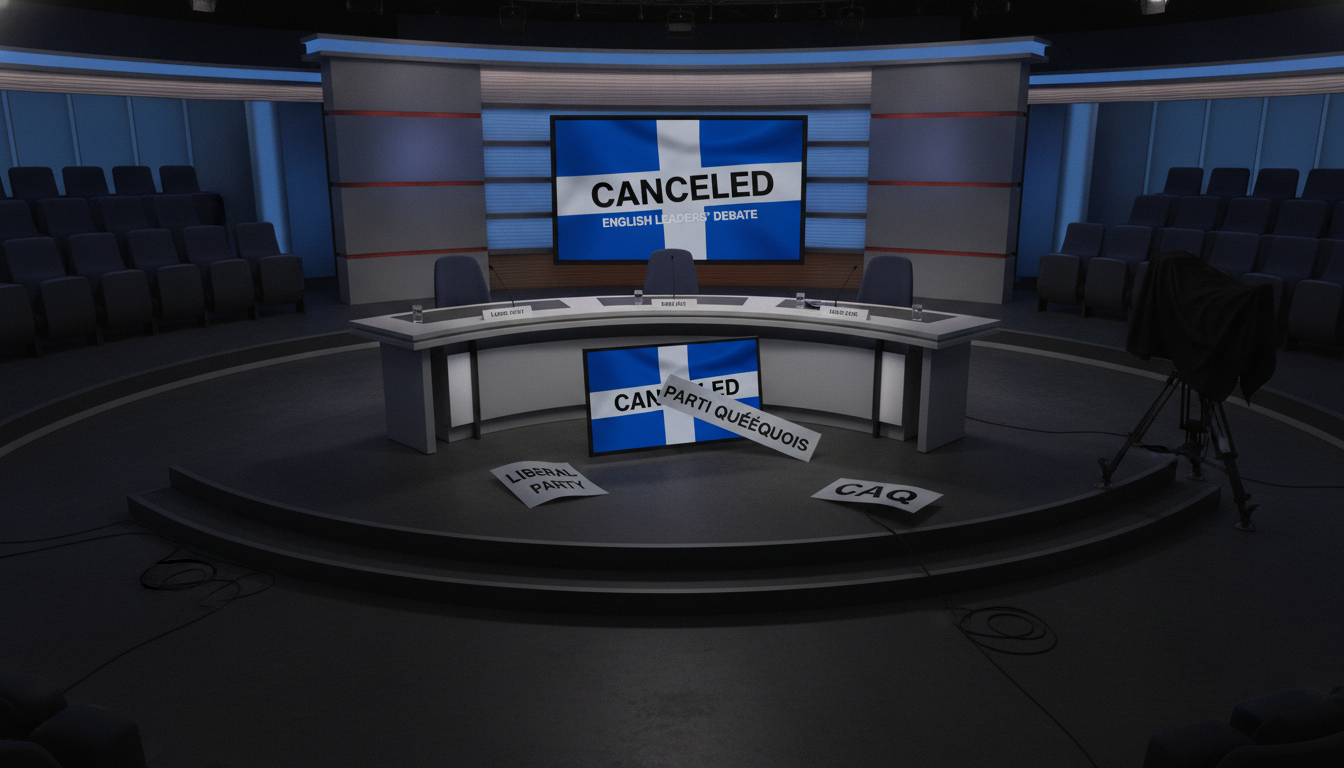
CAQ and PQ decline English leaders’ debate ahead of Oct. 5 Quebec election
CAQ and PQ refuse to join a planned English leaders’ debate on Sept. 24, leaving anglophone media without a televised forum before the Oct. 5 provincial election.
The Coalition Avenir Québec and Parti Québécois have declined invitations from a consortium of anglophone media to take part in an English leaders’ debate, meaning there will be no English-language televised debate during the campaign leading to the October 5 provincial election. The proposed 90-minute debate was scheduled for September 24 and had been organised by a group including CBC Quebec, CTV News Montreal, CJAD 800, Global Montreal, CityNews Montreal and The Gazette. The decision follows similar refusals in past elections and has drawn immediate attention from other parties and media outlets focused on anglophone audiences.
Parties that declined and their stated reasons
The PQ told organisers it would focus its resources on campaigning on the ground rather than participating in the English-language debate. Party officials framed the choice as a tactical campaign decision aimed at local outreach in francophone and mixed communities.
The CAQ said it declined after reviewing the party’s campaign calendar and thanked the media consortium for its efforts to promote democratic exchange. A CAQ spokesperson characterised the refusal as logistical rather than a comment on the importance of English-language engagement.
Who accepted and conditions set by other parties
Two parties signalled they would take part: the Parti conservateur du Québec and Québec solidaire both accepted the invitation to appear in the proposed English leaders’ debate. The Parti libéral du Québec told the consortium it would participate only if all five principal parties agreed to take part, mirroring the condition that had applied to the French-language debates.
That stance left organisers without a clear five-party lineup, a requirement the Liberals said was necessary for parity with the French debate schedule and for ensuring equal representation across the political spectrum.
Planned format and timing of the debate
Organisers had scheduled a single, 90-minute debate in English for September 24, to occur one day after a French-language leaders’ debate hosted by Radio‑Canada. The intent was to offer anglophone viewers a comparable forum to question party leaders on policy, governance and issues specific to English-speaking communities in Quebec.
The consortium designed the event to mirror past bilingual debate opportunities while acknowledging the limited number of English-language forums traditionally available in Quebec provincial campaigns.
Historical context of English-language leaders’ debates in Quebec
English-language leaders’ debates in Quebec have been rare. The first live televised English debate among provincial leaders took place in 2018, marking a notable expansion of bilingual campaign coverage. In 2022, organisers again faced refusals that led to the cancellation of an English debate after the CAQ and the Parti Québécois declined to participate.
Beyond televised events, the only earlier leaders’ engagement in English between major provincial figures took place in 1985 as a radio broadcast featuring the Liberal and Parti Québécois leaders. That history underscores the sporadic availability of English-language forums for provincial campaigns.
Reactions from anglophone media and civic groups
Anglophone media in Quebec expressed disappointment at the withdrawals, saying the absence of a leaders’ debate will reduce opportunities for English-speaking voters to compare party platforms directly. Broadcasters and editorial desks highlighted concerns about equitable access to political information, particularly for communities that rely primarily on English-language coverage.
Community organisations and some civic advocates urged parties to consider alternative arrangements, such as town halls or targeted interviews, to ensure anglophone voters receive substantive coverage of candidates’ positions on health, education and language policy.
Implications for voter outreach and campaign dynamics
Analysts say the absence of an English leaders’ debate could shift campaign dynamics by reducing a shared, live platform where leaders must address questions from the anglophone public and the broader media. Parties that decline such forums may rely more heavily on targeted messaging, social media and regional events to reach English-speaking constituencies.
Observers also note that conditional participation—such as the Liberals’ position requiring all five parties to join—can complicate organisers’ ability to secure inclusive debates and may incentivise parties to either negotiate terms or prioritise alternative channels to reach voters.
The refusal by the CAQ and PQ to attend the proposed English leaders’ debate has left anglophone media and some voters without a central televised forum ahead of the October 5 election, prompting calls for expanded engagement and alternative coverage to ensure English-speaking Quebecers have access to leaders’ positions and policy debates.
