
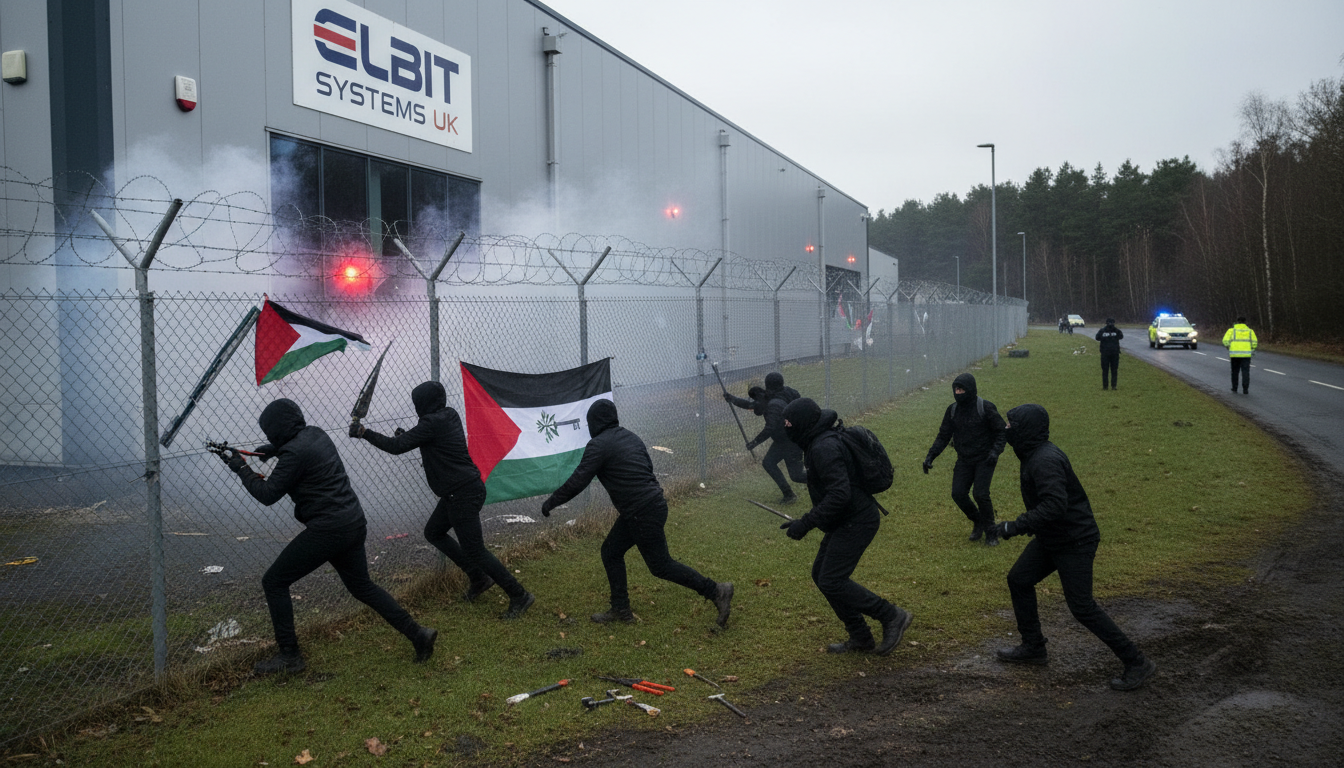
Elbit drone factory break-in: UK activists storm site in latest pro-Palestine action
Pro-Palestine activists broke into a UK factory in what they described as an Elbit drone factory break-in on April 24, 2026, saying the site made drones for Israel’s military. The group People Against Genocide said the action was intended to “shut Elbit down” and disrupt what it called Israel’s war machine. (aljazeera.com)
The raid and activists’ statement
The group People Against Genocide said members entered the plant in the early hours and targeted equipment they described as part of a drone production line. Activists published a statement declaring the move a deliberate tactic to interrupt the supply of systems they allege are used in operations against Palestinians. (aljazeera.com)
The action follows a string of direct interventions at defence-related facilities across the UK by pro-Palestine groups over recent years. Organisers said the aim was both symbolic and practical: to halt operations and draw attention to what they call complicity in conflict. (aljazeera.com)
History of actions at Elbit-linked sites in Britain
Elbit Systems and its UK subsidiaries have been the focus of repeated direct actions, occupations and legal challenges since the mid-2010s. Activist groups including Palestine Action and others have previously broken into or blockaded sites they say supply components used by the Israeli military. (en.wikipedia.org)
Those earlier incidents culminated in high-profile prosecutions and trials after a dramatic raid on an Elbit UK facility in 2024, and in several jury decisions earlier this year that have complicated prosecutors’ cases. The legal aftermath has intensified scrutiny of both company operations and how authorities respond to political direct action. (theguardian.com)
Legal consequences and police response
It was not immediately clear whether arrests were made at the April 24 action or whether criminal charges would follow, and local police statements were still pending as of publication. Past clashes at Elbit-linked sites have led to major police operations and prosecutions, with some defendants acquitted of the most serious charges in recent months. (aljazeera.com)
Crown and local authorities have previously framed similar break-ins as serious criminal conduct, while campaigners have argued their actions are forms of protest against alleged human-rights abuses. The push-and-pull between enforcement and activism remains a live issue for police and prosecutors. (lse.co.uk)
Elbit’s UK footprint and the drone supply debate
Elbit Systems is a major global defence contractor with subsidiaries and sites in Britain that, according to public records and reporting, carry out research, development and manufacture of unmanned aerial systems and related components. The company has been the subject of sustained criticism from rights groups for its role in supplying equipment to armed forces overseas. (en.wikipedia.org)
Industry analysts note that advanced drone systems combine components from multiple suppliers and jurisdictions, complicating claims about the provenance and ultimate use of specific parts. That technical and contractual complexity has been at the centre of both campaigners’ complaints and company legal defences. (en.wikipedia.org)
Campaigners’ tactics and messaging
People Against Genocide and allied groups have increasingly emphasised disruptive direct action, saying traditional protest has failed to stop what they describe as arms exports and technology transfers to Israel. In statements accompanying the April 24 incursion they used stark language to frame the factory as part of a “murderous” apparatus and urged wider solidarity. (aljazeera.com)
Tactics have ranged from roof occupations and gate blockades to more forceful break-ins that campaigners argue are necessary to impede production. Critics, however, say such actions risk public safety, damage lawful business operations and may deter companies from operating in the UK. (theguardian.com)
Political and commercial fallout
The actions at Elbit-linked facilities have prompted debate in Westminster and among corporate clients and insurers about reputational and legal exposure. Some councils, customers and service providers have faced pressure from activists to sever ties or terminate leases, while ministers and industry representatives warn of the economic and security implications of disrupting defence supply chains. (lse.co.uk)
Business groups have argued that the defence sector’s work supports jobs and national capabilities, while campaigners say commercial interests should not insulate suppliers from scrutiny over how equipment is used abroad. The dispute has become a recurring flashpoint in broader discussions about trade, ethics and foreign policy. (en.wikipedia.org)
The situation remains fluid and authorities were still assessing the April 24 incident as this article went to press. Observers said the break-in is likely to renew calls for clearer oversight of defence contracting and for government clarification on the legal boundaries of protest targeting military suppliers.
