
Pope Leo XIV prison visit in Equatorial Guinea spotlights inmate dignity and conditions
Pope Leo XIV prison visit in Equatorial Guinea on April 23, 2026, saw him address 600 detainees in pouring rain, criticizing conditions and urging dignity.
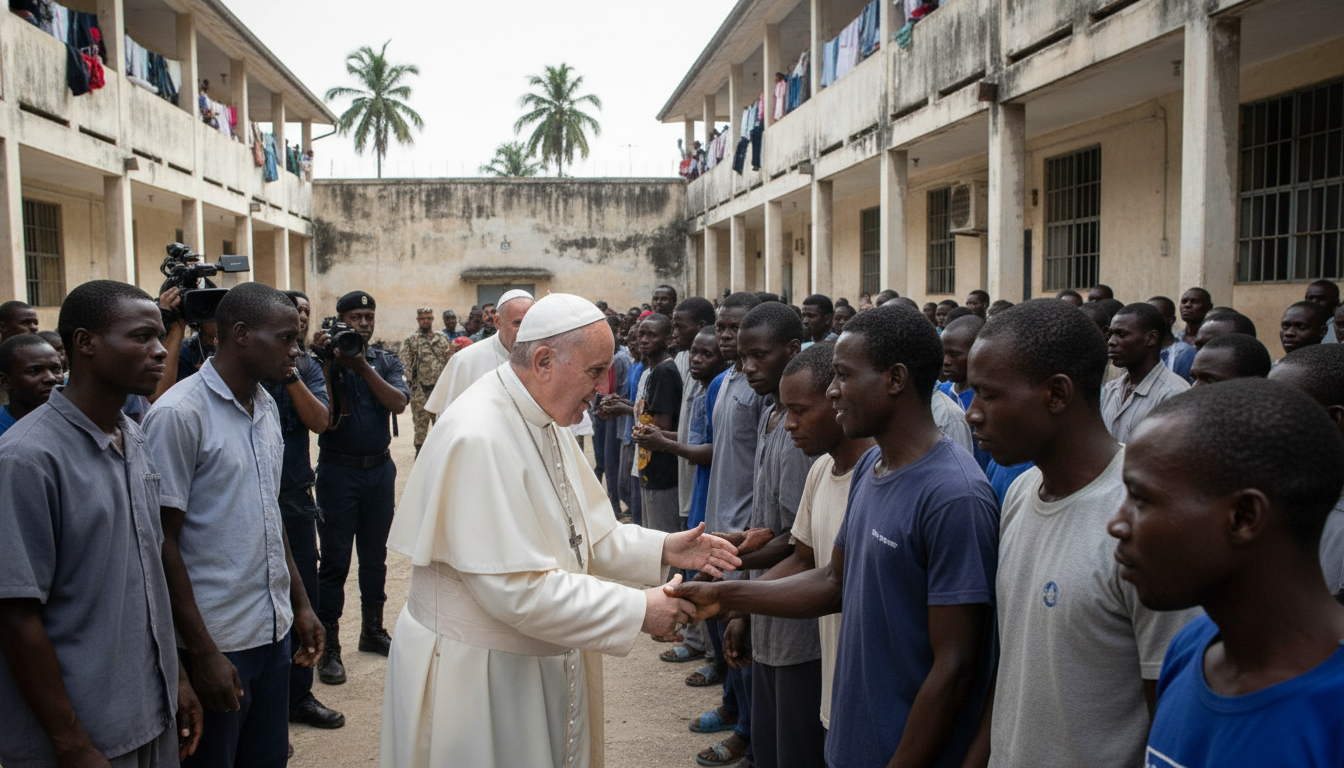
On April 23, 2026, on the final day of his Africa tour, Pope Leo XIV made an unannounced visit to a prison in Equatorial Guinea and spoke to roughly 600 inmates amid heavy rain. The pope used the encounter to highlight the dignity of detainees and to criticize the state of prison conditions, framing the visit as part of his broader pastoral and humanitarian message. The visit drew immediate attention from local observers and international watchers alike because of its setting and the pope’s pointed remarks.
Pope Leo XIV prison visit draws attention to conditions
The pontiff’s appearance at the prison was brief but highly symbolic, taking place outdoors as rain poured over the compound and the assembled detainees. Officials at the site said about 600 people gathered to hear him, and the rain did little to dampen the mood of the encounter. The pope’s direct reference to the state of facilities underscored concerns about overcrowding, sanitation and the treatment of prisoners that he raised during the trip.
Address emphasized dignity and reconciliation
In his address, Pope Leo XIV spoke about human dignity, the need for mercy and the importance of reconciliation for individuals and societies. He urged that even those deprived of liberty be treated with respect and afforded access to rehabilitation and humane living conditions. The message linked spiritual themes with practical concerns, calling on authorities and communities to prioritize restorative measures over purely punitive ones.
Rain and logistics marked the visit
The visit was notable for its challenging conditions: heavy rain slowed movements and required on-site adjustments for both security and the pope’s entourage. Despite the weather, organisers ensured the meeting proceeded, and the pope remained on site long enough to address the assembled inmates and meet a small group of detainees afterwards. The scene — a papal figure speaking to prisoners in the rain — contributed to the symbolic resonance of his remarks and attracted international media coverage.
Official responses and limited immediate comment
There was no immediate public comment from Equatorial Guinea’s prison authorities in the hours following the visit, and local officials were not quoted at the scene. Vatican representatives framed the trip as pastoral in nature and emphasized the pope’s focus on marginalized groups, though detailed follow-up statements were limited immediately after the event. Human rights organisations monitoring prison conditions in the region noted the visit would likely sharpen scrutiny of detention centres and could prompt calls for independent assessments.
Diplomatic and human rights implications
The pope’s intervention carries potential diplomatic weight given the prominence of a papal visit and the timing at the close of a multi-country trip. Religious and civil society leaders in Africa and beyond often view visits like this as catalysts for policy discussion, especially when they draw attention to systemic problems. Advocates say the public critique of prison conditions could spur renewed conversations about reforms, access to legal aid, and investment in rehabilitation services.
The visit also has symbolic value for local communities and for detainees themselves, who heard a high-profile moral appeal affirming their worth and hope for reconciliation. Observers expect follow-up from both church networks and human rights organisations seeking clarity on conditions and possible steps toward improvement.
The pope’s outreach at the prison capped a tour that combined liturgical events, meetings with political leaders and engagements with vulnerable populations, leaving questions about next steps for both the Vatican and Equatorial Guinea’s authorities on the treatment of detainees.
