
Permanent Peoples’ Tribunal to Hear Cases on Indigenous Children and Unmarked Graves in Montreal
Montreal will host the Permanent Peoples’ Tribunal from May 25–29, 2026, to examine alleged state responsibility for harms against Indigenous children, including residential schools and unmarked graves.
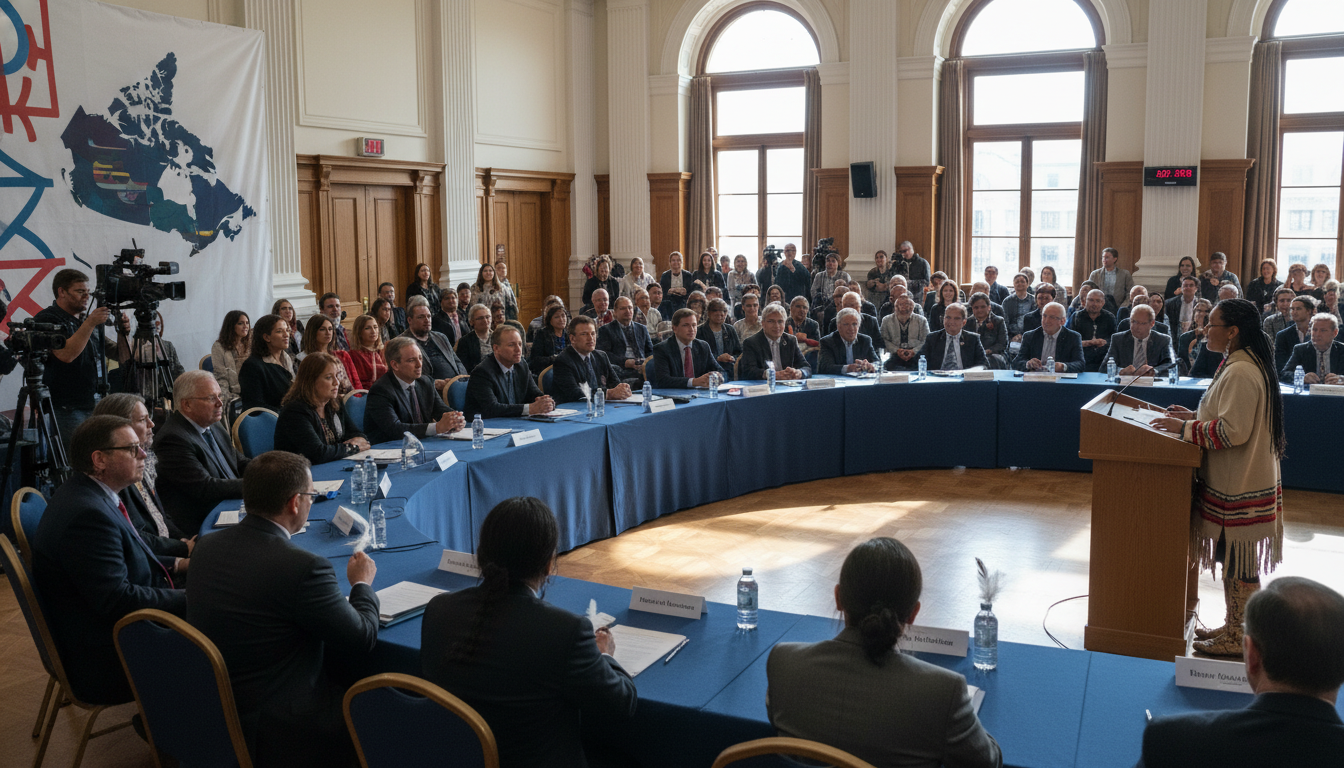
The Permanent Peoples’ Tribunal (PPT) will sit at Centre Daphné in Montreal from May 25 to 29, 2026, to hear testimony and expert evidence alleging systemic harms to Indigenous children across Canada. Organizers say the tribunal will examine the government’s role in residential schools, forced sterilizations and the cultural and intergenerational trauma tied to language and identity loss.
Schedule and public access
The tribunal’s public hearings are scheduled for May 25–29, with a provisional declaration expected on May 29 and a final ruling to be released on September 30, 2026.
Proceedings will be conducted in English and French with simultaneous translation. In-person seating is limited and organizers are encouraging the public to follow the hearings online.
Origins and organizers
The initiative was driven by Na’kuset, director of the Foyer des femmes autochtones de Montréal (FFAM), who helped raise funds and build support to bring the tribunal to Montreal. Several organizations requested the hearing, including the FFAM, the David Suzuki Foundation, the Fondation des générations à venir and Amnesty International Canada (Francophone).
Organizers point to the 2021 discovery of approximately 215 possible burial sites near the former Kamloops residential school as a catalyst for renewed action. They say the tribunal aims to ensure sustained public attention and formal documentation of alleged violations.
Allegations under examination
The tribunal will consider a range of alleged abuses, notably deaths and disappearances of Indigenous children at residential schools, coerced or forced sterilizations, and policies that contributed to cultural erasure. Witnesses and experts are expected to connect historical policies to ongoing harms within communities.
Panel members will also review evidence of institutional responsibility across government agencies, law enforcement, and other state actors. Organizers describe the process as a way to document systemic patterns and to make visible harms that many feel have not been fully addressed.
Panel composition and expert testimony
A seven-member panel of jurists, scholars and community representatives will hear testimony in Montreal. The roster includes international and Canadian experts, Indigenous advocates, and academics with experience in human rights and genocide studies.
Among anticipated participants are Indigenous activists and survivors, scholars such as Andrew Woolford of the University of Manitoba, and independent experts including former special interlocutor Kimberly Murray. The tribunal’s secretariat, which is based in Italy, says the mix of judges and experts is intended to bring legal, historical and cultural perspectives to the record.
Relationship to prior inquiries and commissions
Organizers and experts stress that the Permanent Peoples’ Tribunal is not a court with enforcement powers but an independent forum to document evidence and issue findings. Proponents say it is designed to fill accountability gaps left by previous processes, including the national Truth and Reconciliation Commission and the National Inquiry into Missing and Murdered Indigenous Women and Girls.
Critics and some legal scholars note the tribunal’s findings are symbolic rather than legally binding, but supporters counter that a public international hearing can pressure authorities and amplify calls for concrete remedies. Advocates say such visibility can reinforce demands for investigations, reparations and institutional reforms.
Government response and potential impact
The federal government was invited to present a defence but declined to participate in the hearings, describing the forum as an independent, non-governmental initiative. A departmental spokesperson acknowledged the deep harms caused by the residential school system and reiterated ongoing government efforts on healing and reconciliation.
If the tribunal finds state responsibility, its recommendations would be non-binding but could include calls for expanded support to survivors, additional investigations, repatriation of cultural property and other measures to address documented harms. Organizers say they hope the tribunal’s conclusions will bolster public understanding and spur political and institutional action.
A growing number of advocates want visible public commemoration measures similar to those in other countries that confronted mass atrocities. Proposals discussed by proponents include provincial museums dedicated to residential school histories, commemorative markers in public transit and educational initiatives to ensure the experiences of survivors remain prominent in the national record.
The Permanent Peoples’ Tribunal in Montreal aims to place testimony and evidence on the public record and to press for accountability where many feel past recommendations have not led to sufficient change. Supporters say the forum offers survivors and communities an additional avenue to make their experiences visible and to seek recognition and remedies that have so far been incomplete.
