
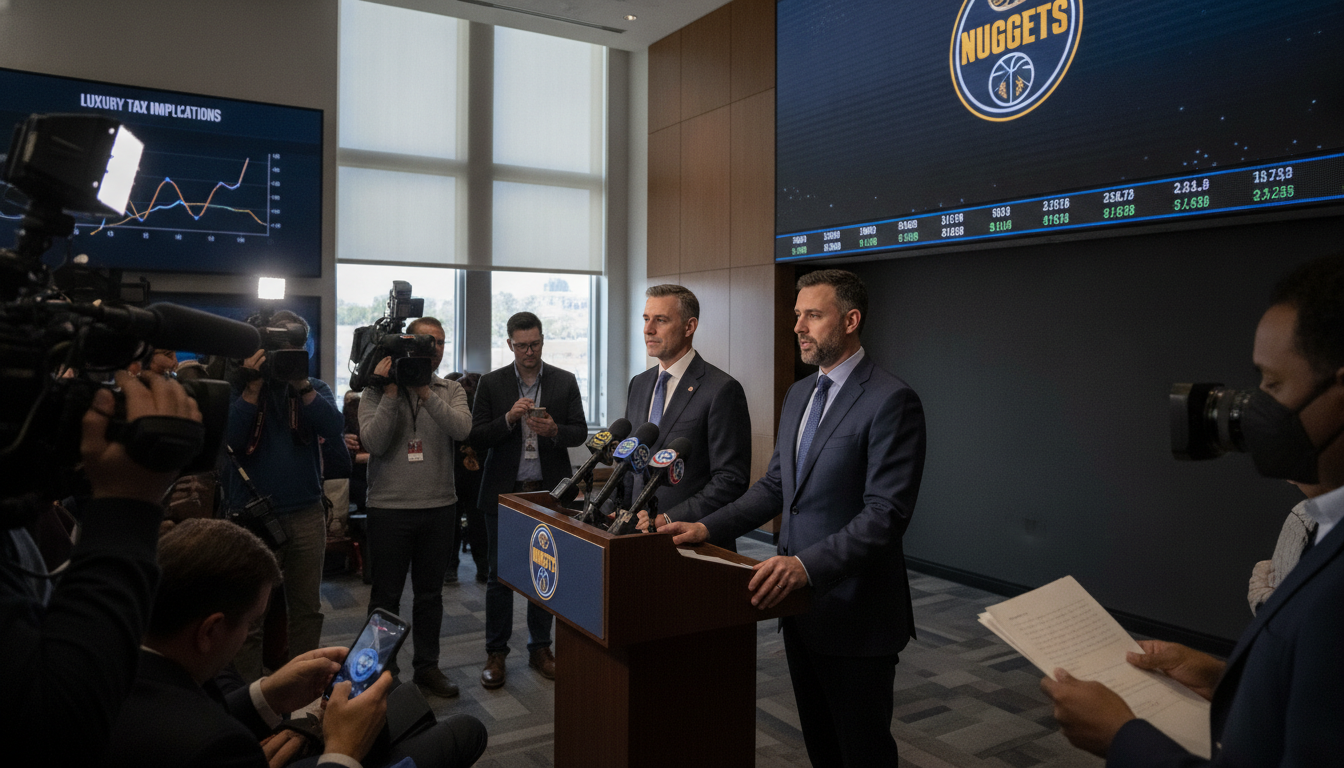
Nuggets match Jones offer sheet, keeping undrafted guard as roster mainstay while luxury tax soars
Denver matches restricted offer for Jones, preserving a home-grown rotation player while accepting a $32 million luxury tax increase that pushes the team into the second apron.
The Denver Nuggets have matched an offer sheet for guard Jones, keeping the 25-year-old who rose from a 2024 undrafted two-way signee into a regular rotation player. By matching the restricted free agent’s deal, the Nuggets retained a developmental success story but also accepted a substantial rise in their luxury tax obligations, a move that will shape roster flexibility heading into the next season.
Nuggets match Jones offer sheet
The franchise exercised its right to match Jones’ restricted free agent offer, preventing him from joining another team. The decision keeps a player who contributed across 64 games as part of Denver’s rotation last season.
Front-office officials cited Jones’ progression from a two-way contract to a standard NBA deal in February as a key factor in the move. The organization prioritized internal continuity after a season in which Jones established himself as a reliable option off the bench and a frequent starter.
Jones’ trajectory from two-way signing to rotation regular
Jones went undrafted in 2024 and initially joined the Nuggets on a two-way contract, a pathway increasingly used to develop late-entry prospects. Over the course of the season he converted that two-way deal into a full standard NBA contract and appeared in 64 games, starting 37.
Statistically, Jones averaged 5.5 points and 3.3 rebounds while connecting on 39.6 percent of his three-point attempts, numbers that underscored his value as a floor-spacing contributor. Coaches and scouts within the organization pointed to his steady improvement, defensive effort, and shooting touch as reasons the club moved to secure him long-term.
Financial consequences: luxury tax spikes by $32 million
Matching the offer sheet carries a heavy payroll consequence for Denver, increasing the team’s luxury tax liability by roughly $32 million. The club’s tax bill reportedly jumps from about $36 million to approximately $68 million, placing the Nuggets above the second apron, a threshold that restricts certain personnel moves and decreases roster flexibility.
The luxury tax implication was highlighted by NBA insider Shams Charania, who noted the Nuggets are currently the only team sitting in the second apron. That status can limit trades and signings because teams above the apron face tighter collection rules and penalties, affecting both short-term maneuvering and long-term planning.
Roster context after offseason departures
Denver’s decision to match also comes in the wake of offseason losses that thinned bench depth, including departures of Jonas Valančiūnas and Tim Hardaway Jr. The club’s front office viewed retaining Jones as a way to replenish home-grown depth without surrendering draft assets or sacrificing continuity.
With veterans moving on, Jones’ presence offers a mix of shooting and positional versatility that the Nuggets will use to soften the blow of lost contributors. Coaches expect him to remain a rotation piece and to pick up additional minutes if injuries or match-up needs surface early in the season.
Implications for team strategy and cap management
The move signals the organization’s willingness to prioritize internal development even at a measurable financial cost. By matching Jones’ offer, Denver maintains a player familiar with its systems, but it also narrows the margin for further payroll additions without incurring additional tax penalties.
The second-apron designation will require the front office to be more deliberate in constructing the remainder of the roster, balancing competitive needs against potential luxury tax escalators. Financial advisers and team executives will now weigh options that minimize future tax exposure while preserving the core that has sustained recent success.
The Nuggets’ decision reflects a broader league trend of teams investing in home-grown talent that fits their style, even when that investment increases short-term payroll strain. For Denver, the bet is that Jones’ continued development and fit within the rotation will justify the elevated tax position and contribute to on-court continuity.
Looking forward, Jones is expected to enter the upcoming season as part of Denver’s regular rotation, trusted for his shooting and minutes flexibility. The franchise’s commitment to match his offer underlines a strategic choice to retain young contributors who have already integrated into team chemistry.
The Nuggets will now navigate the salary landscape with the added constraint of the second apron while aiming to remain competitive, using roster planning and player development to offset the financial impact.
