
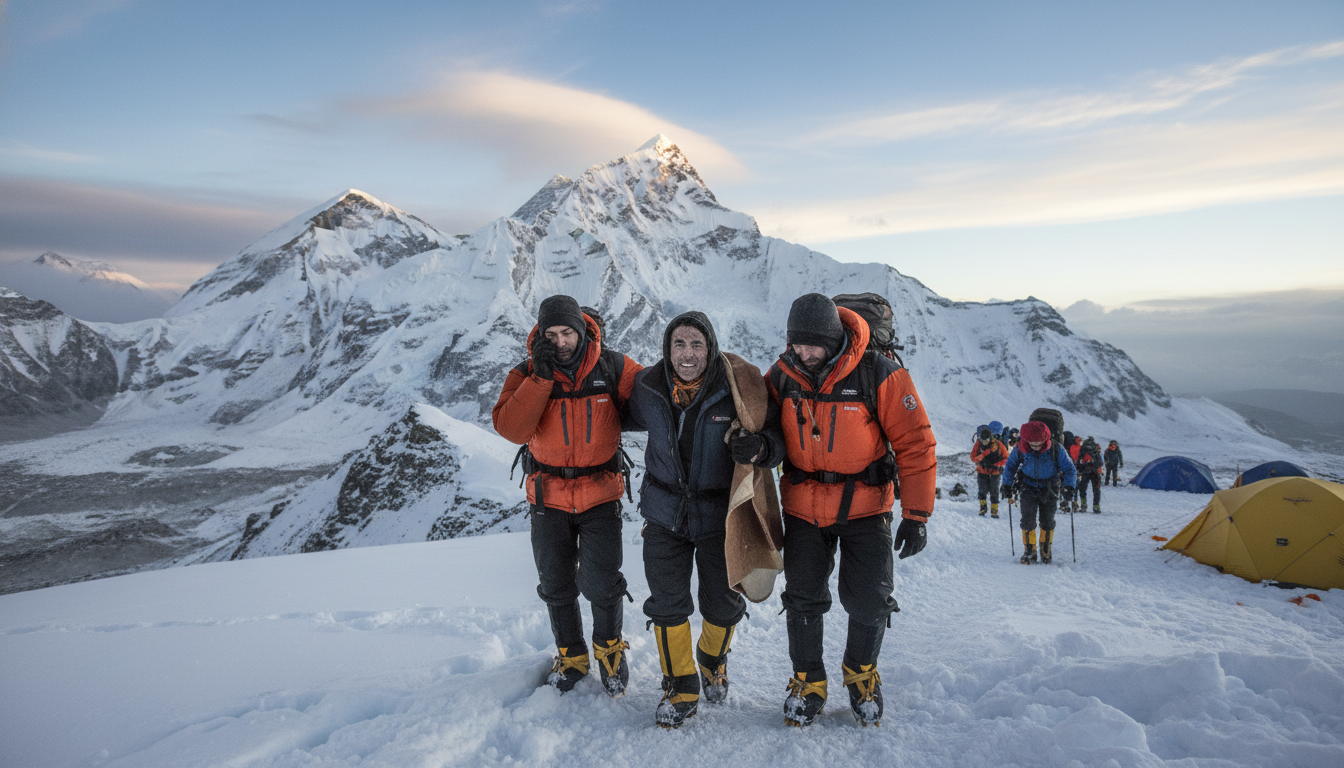
Mount Everest guide Dawa Sherpa found alive after six days missing
Mount Everest guide Dawa Sherpa was found alive on Thursday, June 4, 2026, six days after he went missing on May 29, 2026, prompting a large high‑altitude search and relief across the climbing community.
Initial discovery and timing
Rescue teams and climbers located Dawa Sherpa late on Thursday, June 4, after an intensive search that began when he was reported missing on May 29. The guide’s survival came as searchers combed high ridgelines and camps for signs of him amid challenging terrain and changing weather conditions.
Officials and expedition leaders said the discovery ended nearly a week of worry for colleagues, family members and other teams on the mountain. The recovery was described as precarious given the altitude and the physical stress Dawa likely endured while isolated on the slopes.
Response from climbing teams
Multiple climbing teams and local rescuers joined the search effort, pooling manpower and local knowledge to cover routes commonly used in the spring season. Camp teams coordinated sweeps between high camps and base areas, sharing information about last-known sightings and likely travel paths.
Expedition operators at base camp and veteran guides emphasized that cooperation among groups was central to the search, with climbers and support staff volunteering to take on difficult shifts despite their own summit plans and safety considerations.
Medical care and evacuation
After being located, Dawa Sherpa was moved from the high slopes to a lower-altitude area where he could receive stabilizing medical attention. He was then transported to a medical facility for further evaluation and treatment for exposure and fatigue, officials said.
Health teams cautioned that while being found alive is a positive development, high-altitude injuries and effects of prolonged exposure can require days of monitoring and follow-up care. Family members and colleagues have been kept informed as clinicians assess his recovery needs.
Background on Dawa Sherpa and role of Sherpa guides
Dawa Sherpa was identified as a guide working on Mount Everest during the spring climbing season, a period that typically draws the largest number of commercial expeditions to the mountain. Sherpa guides play an essential role in route fixing, camp management and rescue, operating in hazardous conditions that demand skill and local expertise.
The Sherpa community’s involvement in search and rescue efforts on Everest has long been central to survival outcomes for missing climbers, and this case highlighted that reliance as colleagues searched until he was found. The recovery has prompted renewed attention to the risks guides accept while supporting international climbers.
Seasonal context and safety challenges
The spring climbing window on Everest, which runs through April and May and sometimes extends into early June, concentrates teams at high altitude and increases exposure to objective dangers such as avalanches, crevasses and sudden storms. Those conditions can complicate searches and make timely rescues more difficult.
Safety specialists note that even experienced climbers and guides can become disoriented or separated in whiteout conditions, and that remote rescues at extreme altitude often depend on a combination of helicopter support, roped teams and the work of nearby expeditions. This incident underscores the persistent hazards of high-altitude mountaineering.
Relief among family members and colleagues was visible across base camp as word spread that Dawa had been found alive. Many who had taken part in the search expressed gratitude that the effort succeeded and emphasized the continuing need for proper acclimatization, communication equipment and clear contingency plans.
Dawa Sherpa’s survival after six days missing on Mount Everest has ended a tense week for the climbing community and his family, and his ongoing medical care will determine when he can return home and resume work on the mountain.
