
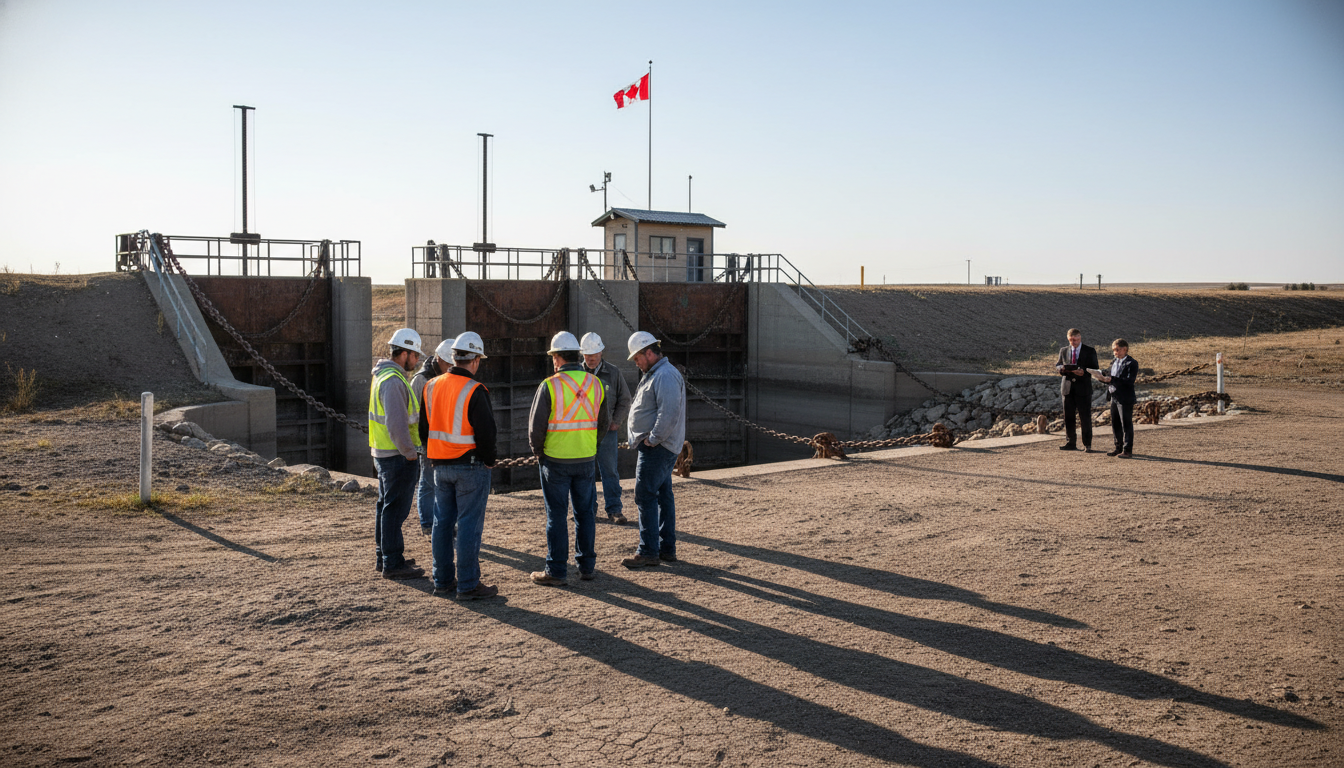
IJC orders Canadian halt to Milk River water withdrawals after cross-border deficit
Canada ordered to stop Milk River water withdrawals after an April 30 deficit to the United States, affecting irrigators during the April 1–Oct. 31 season.
The International Joint Commission’s accredited officers have instructed Canadian irrigators to cease withdrawals from the Milk River after Canada fell into a deficit to the United States as of April 30. The order applies during the irrigation season, when Canadian users are normally eligible to divert up to 25 per cent of the river’s natural flow. The directive is intended to ensure compliance with the bilateral water-sharing provisions overseen by the commission.
Order issued by IJC accredited officers
The International Joint Commission’s accredited officers, who monitor treaty obligations between Canada and the United States, issued the stop-withdrawal order following flow accounting that showed a shortfall in Canada’s allowance. The officers are empowered to enforce temporary operational measures when international apportionment under the governing treaty is at risk. Their instructions require immediate cessation of diversions by Canadian irrigators drawing directly from the Milk River until flows recover or other adjustments are agreed.
The order does not change the established irrigation season, which runs from April 1 to Oct. 31, but it does restrict the customary entitlement to up to 25 per cent of the river’s natural flow while the deficit remains. Officials say such interventions are part of routine treaty enforcement intended to preserve long-term equitable use of transboundary waters.
How the treaty allocation works
Under the binational framework administered by the IJC, each country’s use of certain cross-border rivers is quantified and monitored to prevent one side exceeding agreed entitlements. For the Milk River, Canadian users are typically permitted to divert a quarter of the natural flow during the designated irrigation period. When upstream or downstream conditions change, the IJC’s accredited officers adjust operations to restore balance between both countries’ entitlements.
Accounting for flows includes inflows, diversions, reservoir levels and natural variability, and officers report regularly to both federal governments. When a deficit to the United States is recorded, Canada is expected to take corrective measures—such as curtailing withdrawals—to resolve the imbalance and meet treaty obligations.
Immediate impact on irrigators and rural users
The order affects farmers and other water users who depend on Milk River diversions for irrigation and livestock watering early in the growing season. Many operations plan their planting and irrigation schedules around the April 1 start of the season, and an abrupt curtailment can force growers to delay watering or seek alternative supplies. Smaller users without access to stored water or alternative sources are most vulnerable to sudden restrictions.
Local irrigation districts and water co-operatives will play a key role in implementing the order and communicating steps to members. District managers may prioritize essential uses, such as livestock water, and may request provincial or federal support if the curtailment extends and threatens crops or livelihoods.
Monitoring, enforcement and compliance measures
Accredited officers maintain ongoing monitoring of Milk River flows and diversion volumes to confirm compliance with the IJC’s direction. Enforcement mechanisms are largely operational and cooperative, relying on provincial authorities and local water managers to halt diversions when instructed. The commission’s officers can also recommend flow adjustments and share technical data with both countries to guide recovery measures.
Compliance is considered central to maintaining the treaty’s credibility, and officers emphasize transparency through regular reporting. Where non-compliance risks persist, further operational directives or consultations with federal agencies may follow to resolve disagreements or technical challenges.
Provincial and federal roles in response
Provincial water managers are responsible for implementing the withdrawal restrictions on the ground and advising irrigators of their obligations under the IJC order. They coordinate with municipal water suppliers and irrigation districts to manage allocations and to identify emergency measures if necessary. Federal officials in both Ottawa and Washington typically receive updates from the IJC and may engage in diplomatic or technical discussions to expedite resolution.
Support measures could include mobilizing stored water, releasing reservoir supply where available, or assisting users to access alternative sources. The specific mix of responses depends on local infrastructure and the duration of the deficit identified by the accredited officers.
Outlook for the irrigation season and next steps
The immediate outlook hinges on river flows, precipitation, and upstream conditions that influence the Milk River’s natural flow. If inflows increase and the deficit is eliminated, the IJC’s officers can lift the withdrawal restriction and restore regular diversion levels. Conversely, a prolonged shortage would require additional conservation measures and contingency planning for affected users.
Irrigators and local managers will be watching subsequent flow reports closely and preparing for a range of scenarios. The IJC’s ongoing role will be to balance both countries’ needs while ensuring the treaty’s apportionment is respected.
The cessation order issued by accredited officers underscores the importance of cross-border water accounting and the potential for operational rules to affect day-to-day water users, particularly early in the irrigation season. Farmers, irrigation districts and provincial authorities now face the immediate task of managing water for the coming weeks while the commission’s monitoring continues.
