
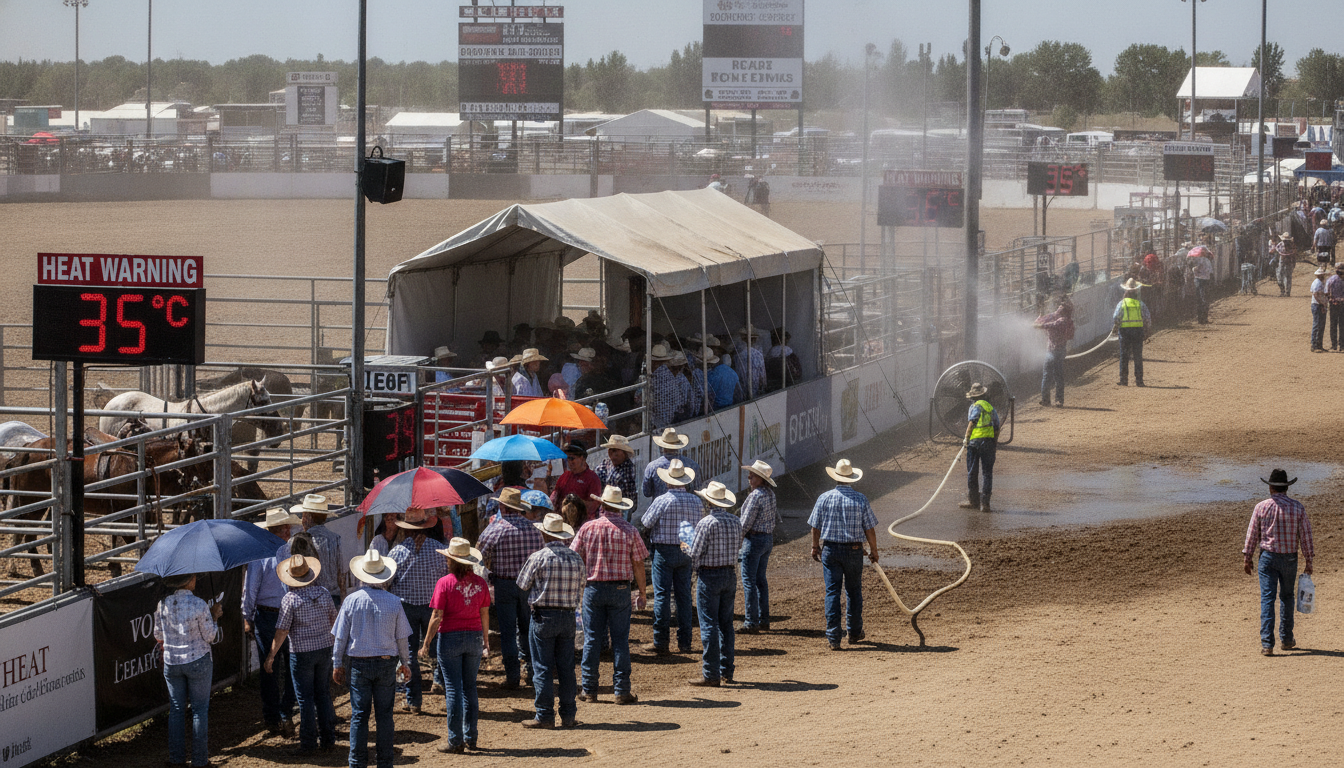
Medicine Hat heat surges during Stampede as residents and services adapt to mid‑thirties temperatures
Medicine Hat heat spikes during Stampede week, prompting residents and first responders to rely on ice packs, shaded pavilions and altered routines as temperatures climb into the mid‑30s.
Strong opening paragraph summarizing the news event.
Medicine Hat heat baked the city again this Stampede week as forecasts called for highs in the mid‑30s and long‑running local practices came into play to beat the sun. Residents and event staff reported drawing heavy drapes, seeking tree‑lined picnic areas and retreating to air‑conditioned pavilions as daytimes grew hot and nights stayed warm. City leaders and frontline workers described operational adjustments, from altered uniforms to improvised cooling techniques, as heat warnings remained in effect across southern Alberta.
Heat warnings and local thresholds
In southern Alberta, heat warnings are issued when sustained daytime and nighttime temperatures reduce opportunities for overnight recovery, and Medicine Hat follows a steeper threshold than some regions. Meteorological guidelines used locally trigger alerts when daytime highs reach about 33 C alongside overnight lows near 16 C, a higher bar than the more common 30 C/14 C pair used elsewhere. Officials say the stricter threshold helps maintain the warning’s usefulness, avoiding near‑constant alerts through much of July and August.
This year’s Stampede opened under those conditions with forecasts of prolonged hot spells and several event days expected above 30 C. The combination of daytime heat and limited overnight cooling drew particular attention because it increases strain on vulnerable populations and on infrastructure. Public advisories emphasized hydration, limiting strenuous outdoor activity in midday and identifying shaded or air‑conditioned refuges at the fairgrounds.
Local leaders also described how the warnings translate into on‑the‑ground measures at the festival and across municipal services. Organizers adjusted scheduling and staffing to allow frequent breaks in cool areas, while volunteer and municipal crews encouraged attendees to use designated cooling stations. The warnings prompted heightened coordination between emergency services, event management and utility operators to monitor demand and respond to heat‑related incidents.
Why Medicine Hat gets warmer than nearby cities
Medicine Hat has long been known for its warm, dry climate, and multiple meteorological factors explain why summer maxima here often top neighbouring centres. The city ranks among Canada’s sunniest urban centres and sits on predominantly grassland prairie with relatively sparse tree cover to absorb solar radiation. That landscape allows ground and air to heat more rapidly during the day, producing higher maximum temperatures than areas with denser vegetation.
Geography also plays a role: the region lies east of the Rocky Mountain foothills, and air descending from higher elevations undergoes compression and warming as it spreads out across the plains. Forecasters describe this as a summer counterpart to chinook dynamics in winter; the same descending motion that can produce warm, dry winds in cold months also contributes to heat buildups in summer. The cumulative effect is a climate that routinely posts higher daytime peaks and longer hot spells, extending into adjacent parts of Saskatchewan.
Long‑term station data reflect those differences in plain numbers: typical July maximums in Medicine Hat sit around the high 20s to near 30 C, several degrees warmer than cities farther west. That systematic warmth helps explain why residents speak of "Stampede heat" as a seasonal expectation rather than an anomaly. It also underpins municipal planning, emergency readiness and the cultural adjustments that recur each year when the fair arrives.
Stampede weather patterns and event impacts
Stampede week brings thousands of visitors and dozens of outdoor activities, concentrating heat exposure for attendees and staff alike. Over recent years nearly half of event days have exceeded 30 C, with some opening days reaching the upper 30s, placing strain on food vendors, performers, livestock handlers and volunteer crews. The combination of direct sun, dusty surfaces and crowded midways amplifies the perceived temperature and raises the risk of heat‑related illness.
Event managers said they rely on an array of mitigation measures during these hot stretches, including expanding shaded seating, scheduling high‑intensity acts for cooler evening hours, and stationing water distribution points around the grounds. Larger indoor pavilions are used as cooling hubs where possible, and agricultural exhibits that are air‑conditioned see increased foot traffic during peak heat. Organizers also coordinate with medical teams to monitor for heat stress and to triage cases quickly when they arise.
Attendees adapt too, seeking tree‑lined picnic areas, fans and chilled treats to stay comfortable. Many fairgoers arrive prepared with sun protection, handheld fans and reusable water bottles, while families with young children look for shaded play spaces. Those who work outdoors for long stretches reported pacing their activity and using regular rest cycles to reduce exertion during the hottest hours of the day.
How residents and frontline services cope on hot days
Local routines reflect years of experience living with Medicine Hat heat, but frontline services have added practical adaptations to maintain safety and continuity during heat waves. Police foot patrols, for example, described switching to breathable uniform materials where possible and instituting more frequent rest breaks to prevent overheating on beat. Officers also reported using frozen gel packs tucked between body armour and clothing to draw heat away from the torso during spells of intense sunshine.
City leadership encouraged households to use familiar cooling strategies: closing curtains and blinds through the day, sleeping in basements or lower floors where temperatures are typically cooler, and opening windows at sunset to draw in night air. Mayor Linnsie Clark noted that these habits — drawing heavy drapes from dawn to dusk, prioritizing shaded meal areas and carrying handheld fans — are widely practiced during Stampede week and are an accepted part of local life.
Business and venue operators said they increase staffing at shaded concession areas and make air‑conditioned spaces available for seniors and other vulnerable visitors. Some commercial vendors alter menus and service times to reduce worker exposure, and volunteer groups often assist with water distribution and shaded seating. The cumulative adjustments from individual households to municipal crews aim to limit the health impacts while keeping events and daily life moving.
Public health messaging and infrastructure pressures
Heat waves bring both public health challenges and infrastructure stress, and local authorities stressed prevention as the first line of defence. Health recommendations focus on hydration, avoiding prolonged midday exertion, checking on elderly or medically vulnerable neighbours, and recognizing early signs of heat exhaustion. Organizers and health partners promoted cooling centres at the fair and reminded visitors that shaded breaks and cold beverages are important precautionary steps.
Utilities officials pointed to a pronounced seasonal pattern in energy demand: unlike many Alberta centres where winter peaks dominate, Medicine Hat’s power consumption climbs sharply in summer, increasing roughly twenty per cent during high‑use periods. That surge reflects widespread air conditioning use, refrigeration needs for vendors and the cumulative demands of events, and it heightens the importance of contingency planning for outages. Utility operators said they monitor load closely and coordinate with event management to avoid localized disruptions.
Emergency services and health facilities prepare for a higher caseload during sustained heat, with triage protocols and public communications geared to recognize heat‑related illness early. Outreach teams emphasize that cooler, air‑conditioned environments dramatically reduce risk, and they advise residents to take advantage of public spaces set aside for respite. The combination of individual precautions and systemic readiness is designed to limit hospital admissions and keep community functions operational.
Heat as part of local history and identity
Warm weather is woven into Medicine Hat’s civic story and local culture, and historical anecdotes underscore how the climate has been used to promote the city for more than a century. Early civic boosters touted the region’s temperature as an attraction, and historic images and accounts show a longstanding local narrative that embraces the sun and dry summers. That identity shapes how residents talk about and respond to heat today.
Histories collected by local museums and writers describe agricultural life adapted to arid conditions and a social memory of outdoor work punctuated by seasonal routines. For many, enduring summer heat is a matter of practicality and pride: farmers, festival volunteers and long‑time residents recount strategies that have become almost ritualized in late July. At the same time, officials and planners frame that lived experience alongside technical data to inform emergency preparedness and public messaging.
Longer term, recurring hot spells have influenced municipal priorities around green space, shade infrastructure and energy resilience. While residents continue to treat Stampede heat as a familiar phenomenon, planners are increasingly discussing how to balance cultural celebration with investments that reduce exposure on the hottest days. The conversation links historical identity with contemporary public safety needs as the city navigates annual extremes.
Final paragraph
Medicine Hat heat once again framed this year’s Stampede experience, and the city’s mix of long‑standing local practices and targeted public measures helped manage risks as temperatures climbed. From improvised cooling methods used by police to citizens retreating to shaded pavilions, the responses reflect both cultural adaptation and an operational focus on health and continuity. As Medicine Hat continues to host mid‑July events, municipal leaders and residents say they will keep refining strategies to protect people while maintaining the community traditions that accompany the summer fair.
