
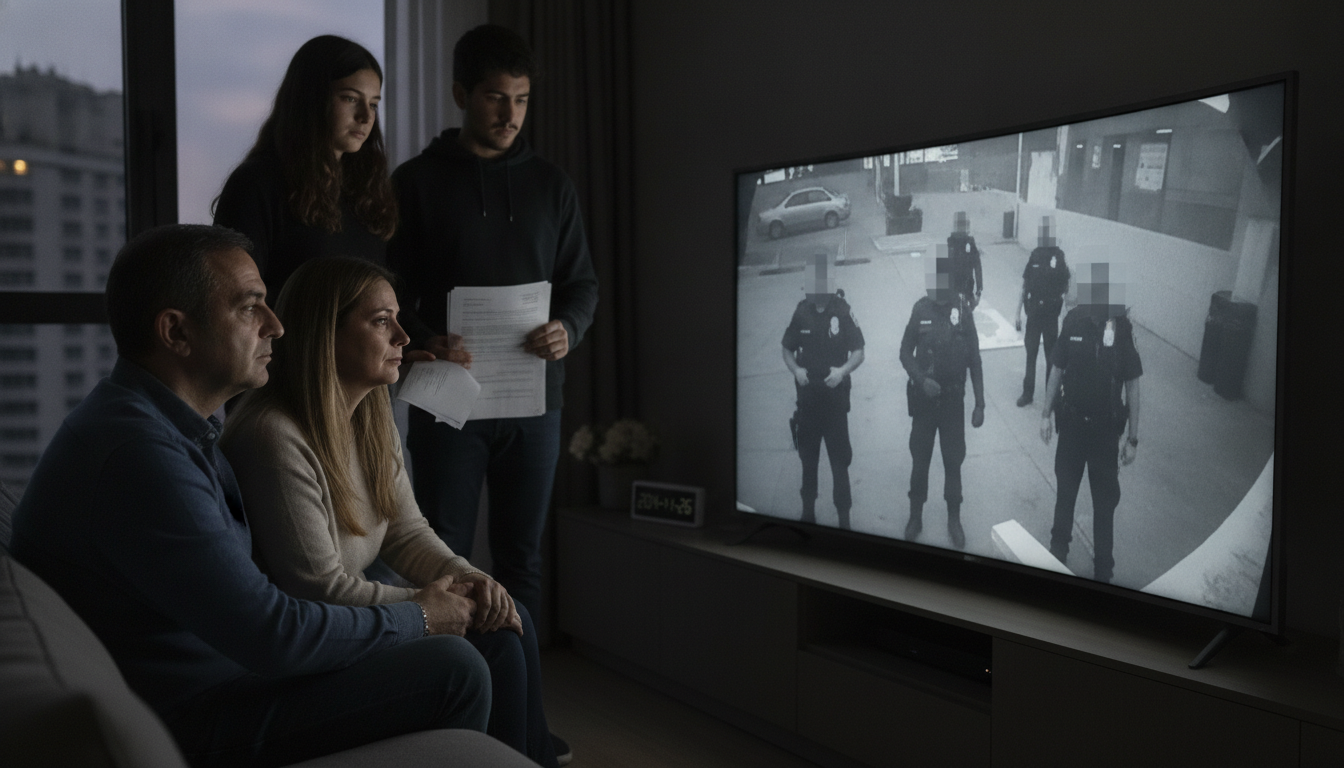
Mathios Arkangelo footage re-edited to anonymize officers amid publication bans
Filmmakers say Mathios Arkangelo footage provided by his family was public record and re-edited to anonymize officers, respecting active court processes and publication bans.
The film’s producers confirm the Mathios Arkangelo footage used in their project was supplied by his family and had been part of the public record for two years. They say multiple media outlets had previously used the same material, but editorial choices were shaped by ongoing legal proceedings. Rather than delay the film with extended legal challenges, the production team says it moved quickly to adapt the clips to remove any identifying features of law enforcement officers.
Family provided footage was already public
The producers stated the family of Mathios Arkangelo supplied the original material to the filmmakers and that the clips had been accessible publicly for an extended period. That accessibility, they said, meant the footage was not newly discovered evidence but part of a record that other outlets had referenced. The team stressed that acknowledging the provenance of the footage was central to preserving the family’s account of events.
The statement made clear the decision to use the material was taken with awareness of its prior circulation. The filmmakers noted the family’s desire for their story to be told remained a guiding consideration throughout editing and legal review. They emphasized the importance of balancing public interest in the footage with protections required by the justice system.
Court processes and publication bans influenced editing
According to the production’s statement, active court processes and publication bans played a decisive role in how the footage was handled. Those legal restrictions, the filmmakers said, were intended to protect the identities of individual officers involved in matters before the courts. Faced with those constraints, the team opted not to pursue protracted legal battles that could have delayed release.
Instead of challenging the bans through extended litigation, the filmmakers reported they followed a tactical approach to compliance. That strategy, they added, allowed the project to move forward while minimizing potential interference with ongoing judicial matters. The production framed the choice as a pragmatic response to the legal environment surrounding the case.
Technical steps taken to anonymize officers
Filmmakers described specific editing measures designed to make officers unidentifiable while keeping the narrative intact. Those measures included image modification, cropping, and other techniques intended to obscure faces and distinctive markings without altering the factual content of the footage. The team said the objective was to preserve the family’s perspective without running afoul of court orders.
The production maintained that these changes did not distort the sequence of events or the broader context conveyed by the material. They argued the edits were narrowly tailored to remove identifying details and were guided by legal advice. The result, the team said, sought to respect both judicial protections and journalistic responsibility.
Media use of the footage prior to the film
The filmmakers pointed out that several media organizations had previously used the same footage in their reporting, underscoring that the clips were not exclusive to the new film. That prior use, they argued, placed the material within a broader public discourse and media record. At the same time, the production acknowledged that those earlier broadcasts had not removed identifying details to the same extent.
Producers suggested the film’s editorial approach reflected a different set of considerations, chiefly the existence of current court orders. They said the choice to anonymize was not a comment on earlier reporting but a compliance decision tied to present legal obligations. The team also noted the sensitivity surrounding reporting on active court matters, especially when identities are legally protected.
Legal and ethical considerations cited by producers
The production framed its actions as an attempt to strike a balance between public interest and judicial fairness. By avoiding extended legal representation to challenge publication bans, the team said it sought to prevent delays that might impede the family’s ability to share their perspective. The producers described their approach as both "swift and tactful," aimed at minimizing harm while preserving the integrity of the story.
Observers in media law often emphasize that publication bans and similar orders exist to protect the fairness of trials and the safety of individuals. The filmmakers’ statement reflects that legal reality and indicates a willingness to adjust editorial practices in response to court directions. Their account suggests an attempt to navigate complex ethical terrain without sacrificing journalistic aims.
Outlook for the film and remaining legal matters
With the edited footage incorporated, the film’s producers said they are moving forward with distribution plans while remaining attentive to any further legal developments. They indicated readiness to make additional changes if required by courts or new information from the family emerges. The production reiterated that protecting the family’s narrative was a key priority in all editorial decisions.
The statement underscores the continuing intersection between media coverage and legal process in cases that attract public attention. As the situation evolves, producers say they will continue to weigh legal obligations against the imperative to document the family’s experience. Those decisions will shape how similar material is handled in future reporting and filmmaking.
The filmmakers concluded that adapting the Mathios Arkangelo footage to render officers unidentifiable allowed them to present the family’s account responsibly while complying with active court protections.
