
Kharkiv strike kills one, injures nine as Russia and Ukraine exchange drone and refinery attacks
Russian guided bombs struck a Kharkiv residential block, killing one and wounding nine, including a child, as Kyiv and Moscow reported heavy drone losses amid attacks on oil targets.
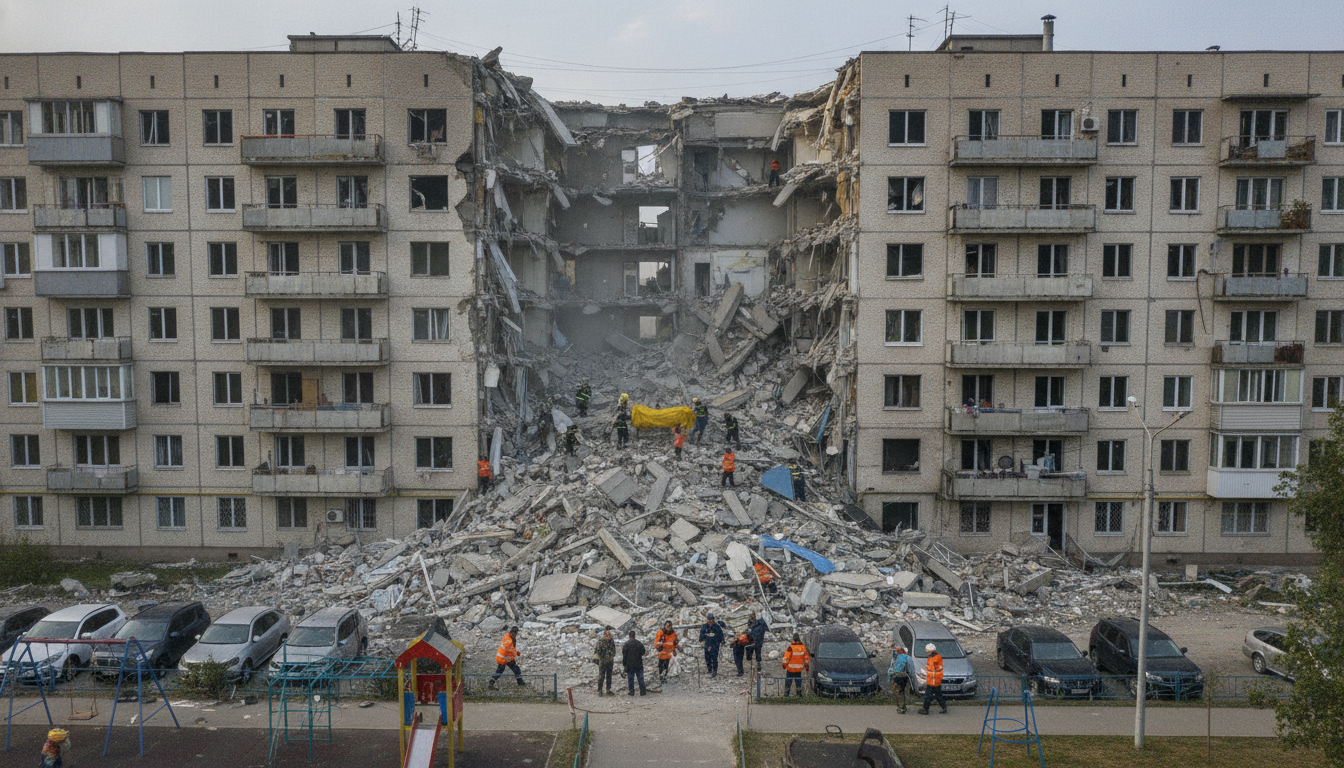
The early-morning Kharkiv strike on Saturday hit a low-rise apartment building in the Kholodnohirskiy district, local officials said, leaving a body recovered from the rubble and multiple people injured. Mayor Ihor Terekhov reported the fatality on Telegram while regional governor Oleh Syniehubov confirmed nine wounded, five of whom were hospitalized. The incident underscores renewed hostilities in and around Ukraine’s second-largest city as both sides reported extensive drone activity overnight.
Rescue crews clear debris and recover a victim
Rescue teams worked for hours at the scene, using heavy equipment to remove concrete and metal from the damaged building. Emergency services said they extracted one body from the wreckage and transported several injured residents to hospitals for treatment. Neighbourhood residents described a rapid response by medics and municipal teams as they searched for anyone still trapped.
Casualties include a young child and multiple hospitalizations
Among the wounded was a six-year-old child, according to regional authorities, highlighting the strike’s impact on civilians. Syniehubov said five of the injured required hospital admission, while others received on-site care before being released. Officials did not immediately provide a detailed list of identities pending notification of relatives.
Separate drone strike kills a civilian in Kharkiv region
In a separate incident near Kharkiv late Friday, a Russian drone struck a civilian vehicle, killing a man and wounding the driver, the regional governor reported. The attack added to mounting civilian tolls in urban and suburban areas around the city over recent days. Local authorities continue to investigate the precise circumstances and recover evidence from the scene.
Air forces report heavy drone losses on both sides
The Ukrainian air force said it shot down 92 of 99 Russian drones launched overnight, with the remaining seven striking targets in three localities. Moscow’s defence ministry countered with its own claim, stating its forces downed 177 Ukrainian drones during the same period. Independent verification of those tallies is not available, and each side’s figures could not be immediately reconciled.
Attacks extend to oil infrastructure in Russia and Ukraine
Russian officials reported that air defences repelled a drone attack on a refinery in Tyumen, western Siberia, with no damage reported and personnel evacuated, according to local authorities. Kyiv has repeatedly targeted oil and fuel facilities inside Russia in recent months, aiming to disrupt revenue streams it says fund Moscow’s military campaign. One of the largest recent strikes hit a major refinery near Moscow, producing vast plumes of black smoke and disrupting hundreds of flights, according to reports.
Strategic aims and civilian consequences of strikes
Officials on both sides frame these operations as strategic efforts to degrade the opponent’s military capacity and economic resources. Analysts say strikes on fuel infrastructure can have ripple effects on civilian supplies, contributing to localized shortages and price pressure in affected regions. Humanitarian groups warn that attacks near residential areas increase the risk to non-combatants and complicate relief and reconstruction work.
Russia has not publicly acknowledged or commented on the Kharkiv residential strike, and Moscow’s statements about repelling attacks on its infrastructure underscore the tit-for-tat escalation. Kyiv’s targeting of energy assets is presented by Ukrainian officials as a tactical response meant to obstruct funding for the war, while Russian authorities emphasize defensive successes in airspace protection.
Recovery, medical treatment and investigations are ongoing in Kharkiv as municipal officials coordinate with regional and national responders to document the damage and provide aid to affected families. Emergency shelters and social services have been mobilized for displaced residents, and investigators plan to survey the site when conditions allow.
International observers and humanitarian organizations monitoring civilian harm in conflict zones have repeatedly called for increased protections for non-combatants and clearer measures to prevent strikes in populated areas. The latest incidents in Kharkiv and the continuing exchanges over fuel targets highlight the complex and dangerous interplay between military objectives and civilian safety.
As rescue and medical teams continue their work, authorities in Kharkiv urged residents to remain vigilant and follow civil defence guidance, while both Kyiv and Moscow maintain competing narratives about the scale and success of overnight drone operations. The human cost of the strikes, particularly the death and injuries among civilians, remains central to local response and recovery efforts.
