
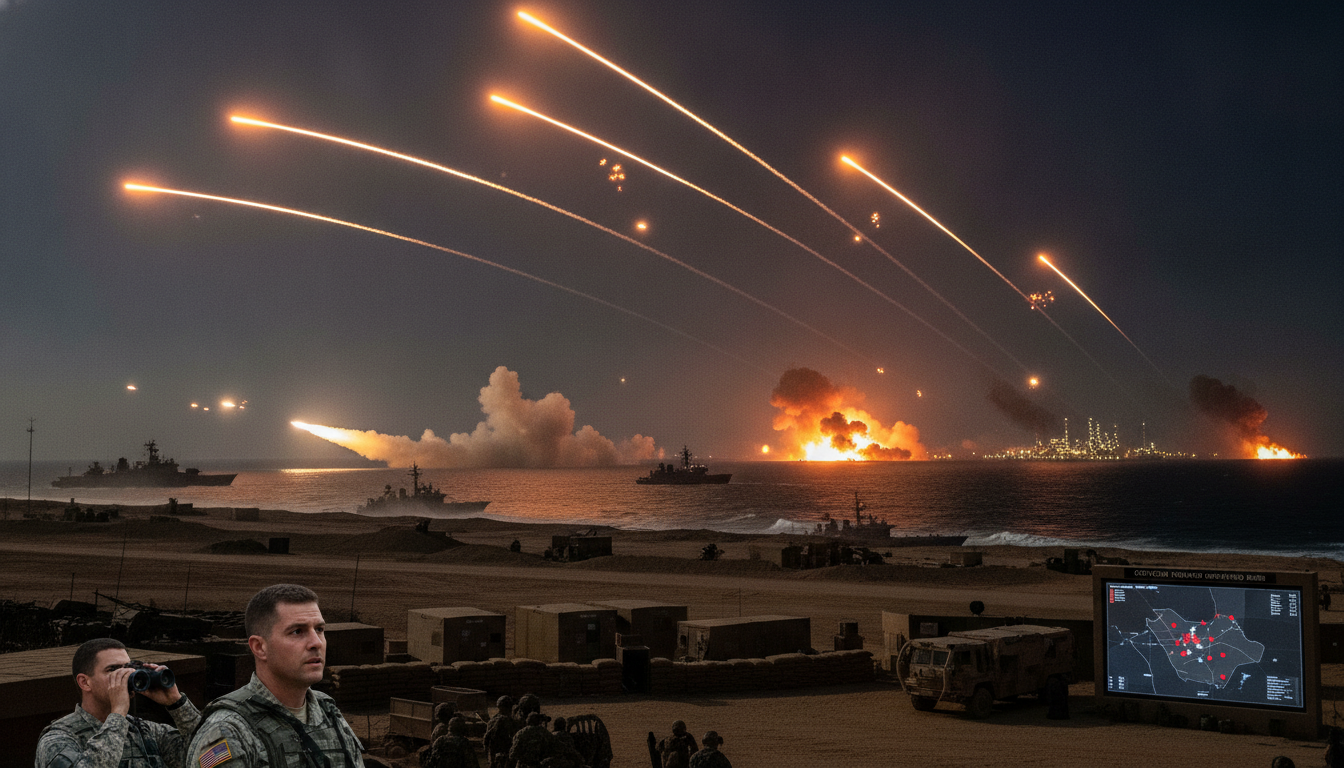
Iran–U.S. clashes escalate as missiles and drones strike Jordan and Gulf states
Iran–U.S. clashes escalate as missiles and drones hit Jordan and Gulf states after U.S. strikes, heightening tensions ahead of World Cup start on June 11, 2026.
The Iran–U.S. clashes intensified overnight as Tehran launched missiles and drones toward Jordan and several Gulf neighbours in direct response to U.S. retaliatory strikes.
The exchanges followed the downing of an American helicopter over the Strait of Hormuz and came on the eve of the FIFA World Cup start on June 11, 2026, when Iran’s national team is due to play on U.S. soil.
The developments cast doubt on U.S. President Donald Trump’s recent pledge that a “very good” agreement to end the wider Middle East war could be reached within days.
Iran–U.S. clashes resume overnight
Iran claimed responsibility for strikes against facilities that it said were connected to U.S. forces and their partners, while Washington said it had carried out precision strikes in retaliation for the helicopter loss.
Iranian state outlets and the foreign ministry described the latest actions as responses to repeated violations of the ceasefire signed on April 8, and warned that diplomatic efforts were being undermined by the continued use of force.
Missiles and drones target Jordan and Gulf sites
Iranian missiles and armed drones were reported flying toward Jordan and Gulf states overnight, with Iran saying strikes hit bases hosting U.S. personnel and allied assets.
Jordanian authorities reported having destroyed five incoming missiles aimed at the Azraq area, home to a U.S. facility, while Kuwait’s military said it was engaging hostile aerial targets without specifying their origin.
U.S. retaliatory strikes hit southern Iran
U.S. forces carried out strikes that targeted sites in the southern Iranian towns of Jask and Sirik and on Qeshm island in the Strait of Hormuz, according to official statements and state media reports.
State television in Iran said two reservoirs were destroyed in the strikes, temporarily cutting potable water supplies for some 20,000 residents, a development likely to increase pressure on local authorities and raise humanitarian concerns.
Diplomatic condemnations and mixed messages from Washington
Washington’s public messaging has been inconsistent in recent days, alternating between offers of an imminent diplomatic deal and pointed warnings of further military consequences.
President Trump posted on his social platform that Iran had “talked too long” and warned Tehran it would pay a price, a comment Tehran’s foreign ministry cited as evidence of contradictory signals that hamper negotiations.
Conflict spreads to Lebanon’s south and civilian toll rises
The wider regional conflict has also flared in southern Lebanon, where Israeli bombardments and Hezbollah counterstrikes have resumed despite the fragile truce that followed months of fighting.
Lebanese authorities reported that Israeli strikes killed at least 11 people on Tuesday in and around Tyre, and Israel has ordered evacuations in parts of the city, saying the moves are necessary to protect civilians and troops.
Regional powers call for restraint as fears grow of wider war
Russia and China each issued statements expressing deep concern and urging an immediate halt to armed actions to prevent further escalation across the Middle East.
Analysts say the back-and-forth military responses increase the risk of miscalculation, particularly as multiple states and non-state actors are now directly involved or positioned nearby, heightening the potential for unintended clashes.
Humanitarian agencies and regional officials warn that continued strikes on infrastructure and populated areas could worsen displacement and shortages of essential services.
The unfolding clashes follow a sequence of events that began in late February, when U.S. forces joined operations with Israel on February 28, and escalated through March and April as hostilities spread to Lebanon and beyond.
Iran has insisted any comprehensive U.S. agreement to end the broader Middle East war must address the situation in Lebanon, where fighting between Hezbollah and Israeli forces has persisted since March 2.
The immediate consequences include increased military alert across allied bases in Bahrain, Jordan and other Gulf states, interrupted civilian water supplies on southern Iranian islands and heightened security measures ahead of international events.
As diplomatic channels attempt to re-engage, officials in Washington and Tehran face domestic political pressure and the challenge of translating competing demands into a durable ceasefire.
The prospect of a negotiated settlement, once described by the U.S. president as imminent, now appears uncertain as both sides weigh further military and diplomatic options while regional and global powers press for de-escalation.
