
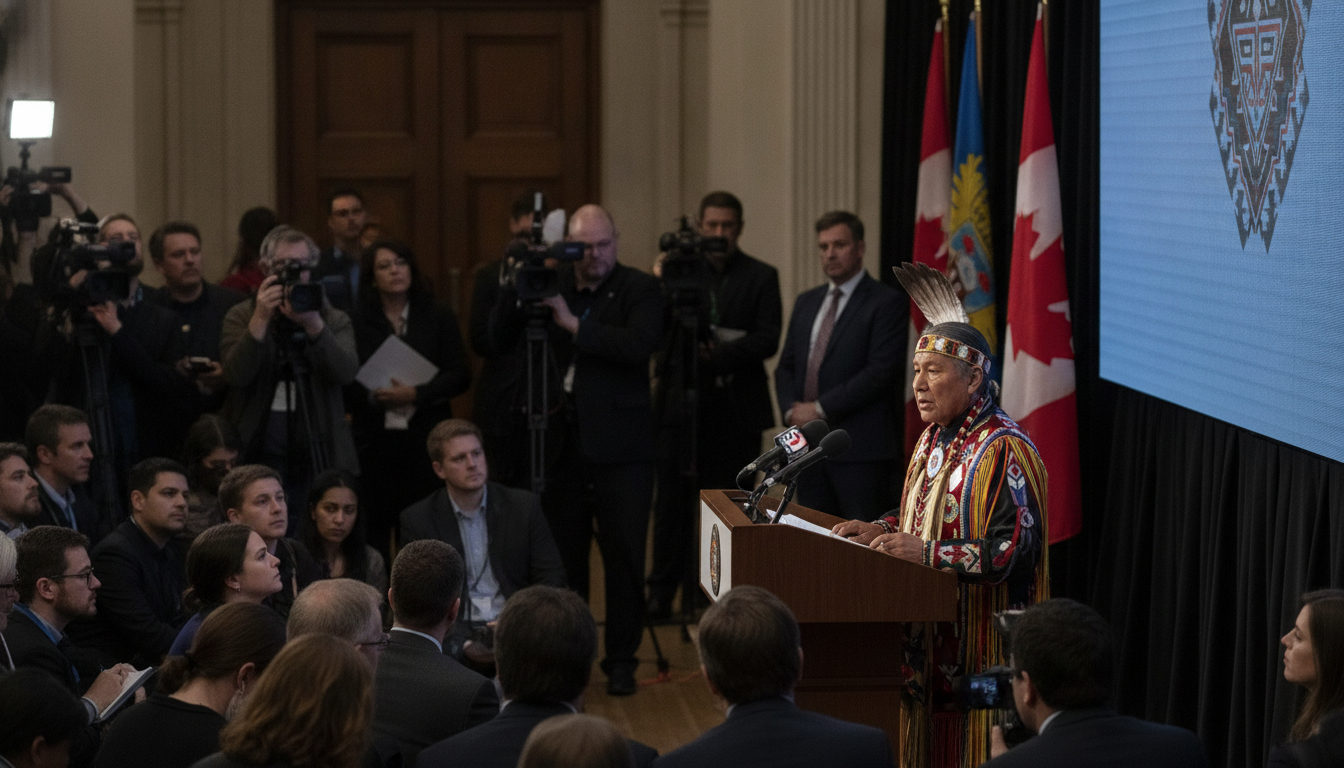
Hate crimes against Indigenous chiefs spark calls for treaty respect and protections
Indigenous leaders and community members are sounding the alarm over a recent surge in hate crimes against chiefs and elected officials, saying the attacks reflect broader failures to honour treaties and the Crown’s responsibilities. The escalation, community advocates say, is worsening tensions and prompting urgent demands for stronger protections for Indigenous leaders. Local voices point to a pattern of disrespect and intimidation tied to long-standing grievances over treaty obligations and representation.
Community alarm grows over targeted attacks
Community members describe an atmosphere of fear after a string of incidents targeting chiefs and other Indigenous officials. Those impacted say harassment ranges from online abuse and threats to acts of vandalism and public intimidation that undermine leaders’ ability to represent their nations. Advocates argue the pattern is not isolated and reflects deeper societal tensions that need immediate attention.
Residents and Indigenous organizations are calling for swift action to stem the tide of hostility and to ensure chiefs can carry out their duties without fear. They emphasize that attacks on leaders are attacks on entire communities, weakening governance and eroding trust in public institutions. The calls for protection are growing louder as community meetings and social media forums document rising concern.
Calls for government to honour treaty responsibilities
Many Indigenous advocates link the harassment to frustrations over treaty implementation and perceived governmental inaction. They say the Crown, represented by federal and provincial bodies, has legal and moral obligations to uphold agreements and protect Indigenous peoples and their institutions. For those on the front lines, the failure to consistently honour treaties contributes to resentment and, at times, hostile behaviours directed at community leaders.
Campaigners are urging governments to reaffirm treaty commitments and to work collaboratively with nations to resolve disputes through treaty processes, not through public antagonism. They stress that clear, consistent engagement and tangible progress on outstanding obligations would reduce friction and reinforce mutual respect. Legal scholars note that treaty duties include both consultation and concrete actions that can help address root causes of conflict.
Leaders demand enhanced safety measures
Indigenous chiefs and council members are seeking practical measures to improve safety, including better resources for community policing, protective services at public events, and faster responses to threats. They want law enforcement to treat threats against leaders with the seriousness accorded to attacks on other public officials. Many also request training for frontline officers on cultural sensitivity and the historical context underlying Indigenous-government relations.
Beyond policing, leaders are pushing for support systems that strengthen community resilience, such as funding for conflict resolution programs, public education campaigns to counter misinformation, and legal assistance for those facing harassment. Supporters argue that a multi-pronged approach—combining prevention, protection and education—offers the best chance to reduce attacks and restore civic calm.
Historical context underscores treaty obligations and Crown role
Analysts and community historians point to a long history of treaty-making and broken promises that shape contemporary relations between Indigenous nations and the Crown. Treaties often contain complex obligations related to land, resources and governance, and many communities continue to seek fulfillment of those commitments. The frustration that arises from unresolved treaty issues can manifest in public disputes and targeted hostility toward leaders seen as negotiators or representatives.
Observers caution that addressing current tensions requires both immediate safety measures and sustained efforts to advance treaty implementation. They note that governments who take proactive steps to meet treaty obligations can reduce grievances that sometimes fuel antagonism. Restoring trust, experts say, is a long-term endeavour that hinges on transparency, good-faith negotiation and meaningful outcomes.
Voices from communities emphasize respect and accountability
Community members offered firsthand accounts of how the climate of intimidation impacts daily life and governance. One respondent, identified as Pete, said the ongoing pattern of hate crimes against chiefs and nations “needs to stop,” arguing that attacks are becoming increasingly brazen and disrespectful. He added that officials who swore oaths to represent the Crown appear to act as if those responsibilities do not exist, intensifying frustration within communities.
Others echoed Pete’s concerns, saying that sustained disrespect—whether through discourse, broken promises or outright threats—undermines reconciliation efforts. Many called for leaders on all sides to recommit to respectful dialogue and for public figures to use their platforms to denounce harassment. There is a shared sense that dignity for Indigenous peoples and their institutions must be protected as a cornerstone of civic life.
Advocates outline next steps and demand accountability
Indigenous organizations and allies have outlined a series of next steps that include statutory reforms, independent investigations into serious incidents, and strengthened enforcement of hate-crime laws. They also want clearer accountability mechanisms to ensure governments deliver on treaty commitments and to make it harder for public discourse to tip into violence or intimidation. Educational initiatives aimed at increasing public understanding of treaties and Indigenous governance are part of the proposed solution set.
While concrete timelines and commitments remain to be set, community leaders say the momentum for change is building and that they will continue to press for both immediate protections and longer-term structural remedies. The emphasis is on coordinated action across communities, legal systems and government bodies to prevent further harm and to uphold the rule of law.
The mounting concern over hate crimes against Indigenous chiefs has galvanized communities to demand stronger protections, clearer treaty obligations and an end to public hostility that threatens governance and reconciliation efforts.
