
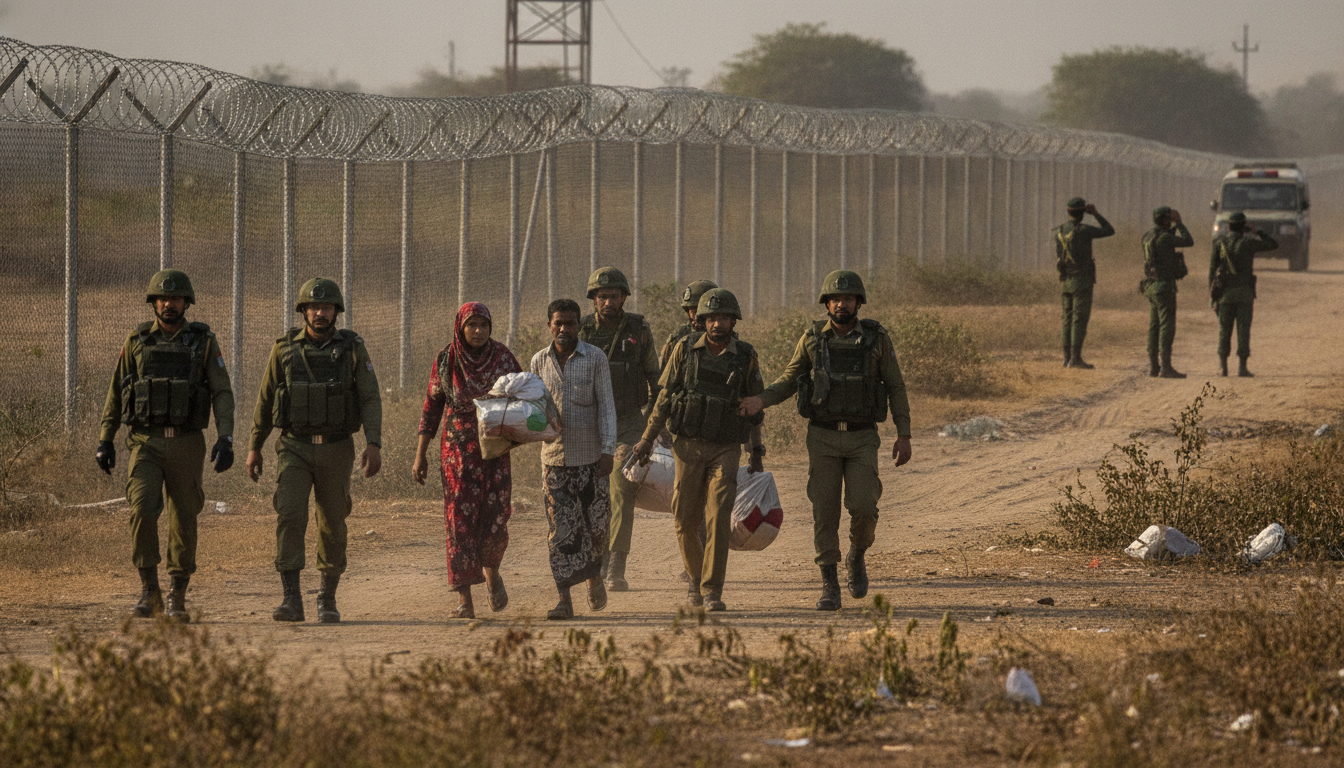
India-Bangladesh border deportations escalate as night-time pushbacks leave migrants stranded
India-Bangladesh border deportations surge as West Bengal roundups and night pushbacks leave migrants stranded in buffer zones and raise diplomatic tensions.
The India-Bangladesh border deportations campaign has intensified in recent months, with migrants and families repeatedly caught between security forces on both sides of the frontier. Incidents of people being rounded up in West Bengal and then appearing on Bangladesh’s bank of the river — sometimes in the dead of night — have increased reports of stand-offs in the 2,500-mile border zone. Neighbouring governments and local communities are now trading accusations over whether migrants are being formally repatriated or forcibly pushed across the boundary.
Standoff in Durgapur illustrates new pattern
A recent episode in the Lalmonirhat district of northern Bangladesh illustrates the rising tensions along the frontier, where a man, three women and a child were detained after they crossed from India under cover of darkness. Fishermen found the group near dawn and for roughly a day the migrants remained in the buffer strip as Indian and Bangladeshi border units met to decide their fate. Neighbouring villagers and local journalists said the captives appeared terrified and that both sides at times warned they could use force if the group tried to move.
Claims and counterclaims over numbers and procedures
Authorities in West Bengal have said the state’s crackdown has identified and expelled thousands of people they believe lack valid papers, with local officials reporting mass detentions since a deportation drive began in late May. Bangladeshi officials, however, say formal repatriations through established channels have been far smaller, and that their forces have resisted attempts by Indian personnel to “push in” hundreds of people without documentation. The divergent tallies have become a central point of diplomatic friction and complicate efforts to process returnees through agreed procedures.
Political drivers behind the enforcement push
The enforcement campaign in West Bengal follows a campaign pledge from the state’s new leadership to “detect, delete and deport” undocumented migrants, a slogan that has shaped local operations and voter-roll reviews. Critics say the rhetoric has inflamed communal tensions that trace back to political upheavals across the border in 2024, while supporters argue the measures are a long-overdue effort to secure a porous boundary. The political backdrop has added urgency to enforcement but also raised questions about the safeguards used when identity and citizenship are hard to verify.
Border infrastructure and persistent gaps
The border itself is a complex and often shifting landscape of rivers, marshes and sandbars; the two countries retain a 150-yard buffer on each side where farmers traditionally tend fields. India has erected fencing, gates, searchlights and CCTV along much of the line and maintains near-constant patrols, yet gaps remain where geography makes barriers impractical. Those physical limitations, combined with longstanding social and linguistic ties across the frontier, mean movement — both of people seeking work and of smugglers carrying goods — continues despite stepped-up security.
Conditions in holding centres and the human toll
West Bengal authorities have repurposed guesthouses and emergency shelters as temporary holding facilities for detainees awaiting deportation, turning a government guesthouse in Tentulia into one such camp with a stated capacity of about 200 people. Local police described basic living conditions at these sites: supervised accommodation, simple meals and limited medical care, and guarded transfer to other locations. Detainees include men who say they entered India for work and possess Bangladeshi identity cards, underscoring the difficulties officials face when claims of nationality must be established quickly.
Local communities caught between enforcement and safety concerns
Residents in border villages report growing unease about being near patrol routes and buffer areas, fearing they might be caught in confrontations or misidentified during roundups. Several groups pushed out of India have spent days stranded in the buffer zone, exposed to sun and rain while authorities negotiated their status. Local security forces in Bangladesh have urged villagers to report intrusions, but farmers and shopkeepers say the daily reality of tending fields that straddle the boundary leaves them vulnerable to sudden enforcement actions.
The surge in India-Bangladesh border deportations has heightened both humanitarian and diplomatic stakes, exposing the difficulty of balancing border security with legal and ethical obligations to identify and fairly process people on the move. Until stronger bilateral mechanisms are agreed and implemented for verification and repatriation, vulnerable migrants and border communities are likely to remain at risk of abrupt pushbacks, protracted detention and public-health and safety strains on both sides of the frontier.
