
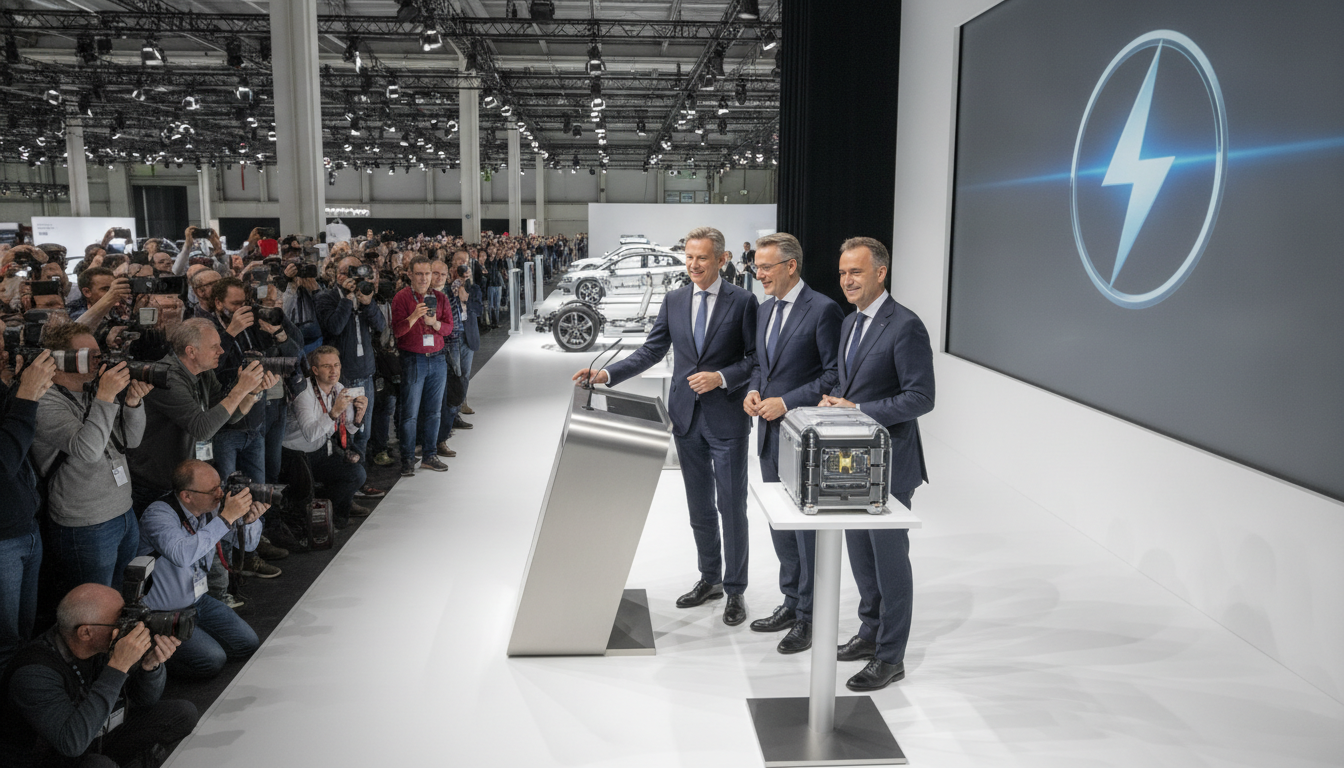
German premium automakers declare "new era" as they say battery gap has been closed
German premium automakers tell investors and the public they have closed a perceived technology gap in electric vehicle batteries, signaling a "new era" for the sector.
Opening statements from industry leaders
Mercedes-Benz CEO Ola Källenius described recent technical progress as ushering in "a new era" for the company, framing advances in battery and electrification technology as transformational.
BMW’s new chief executive Milan Nedeljkovic told stakeholders the firm is setting "technologically and emotionally new standards," indicating a shift in both engineering and customer-facing design.
Both executives used the platform provided by recent presentations and product reveals to stress that traditional concerns about German premium brands lagging behind global rivals in battery technology are being addressed.
Their comments aim to reassure investors, suppliers and buyers that the two automakers are accelerating the transition to electric models while retaining performance and brand character.
Executives point to integrated battery and software gains
Officials highlighted not only improvements in cell chemistry and energy density but also advances in vehicle integration that boost range and charging performance.
That combination—better cells plus smarter software and thermal management—was presented as the key reason the companies believe they have narrowed earlier competitive shortfalls.
Leaders emphasized that progress is not measured by a single metric but by a suite of improvements covering charging speed, longevity, weight reduction and vehicle architecture.
This integrated approach is being positioned as the differentiator that will allow German premium automakers to preserve their driving dynamics while delivering the efficiency customers demand.
BMW and Mercedes outline differing technical routes
BMW has signaled a multi-track strategy that blends partnerships, in-house development and modular platforms designed for electrification.
Under Milan Nedeljkovic’s leadership, BMW is emphasizing a balance of battery performance and emotional design cues to keep vehicles appealing to brand loyalists.
Mercedes-Benz under Ola Källenius has prioritized vertical integration and platform consolidation, with a focus on high-voltage architectures and vehicle software to extract more performance from batteries.
Executives said this approach is intended to reduce complexity, improve production scalability and accelerate software-driven feature rollouts.
Supply chain and manufacturing capacity remain central
Both companies acknowledged that improving battery technology is only part of the challenge; securing raw materials and expanding gigafactory capacity are equally critical.
Executives described ongoing negotiations with suppliers, investments in cell production partnerships and efforts to diversify raw-material sourcing to guard against disruptions.
Recycling and second-life battery programs were also mentioned as strategic priorities to reduce dependency on mined inputs and to lower lifecycle emissions.
Industry officials said these initiatives aim to support long-term sustainability targets while helping to stabilize material costs and supply availability.
Market positioning and consumer expectations
Mercedes and BMW framed their technological gains as enabling vehicles that meet rising consumer expectations for range, charging convenience and performance.
Nedeljkovic’s reference to "emotional" standards signals a deliberate focus on ensuring electric models still deliver the sensory and status cues associated with premium brands.
Executives argued that meeting technical benchmarks will alleviate common buyer concerns, but they also warned that success will depend on pricing strategies and the speed of infrastructure improvements.
They noted that customer acceptance will hinge on a combination of measurable improvements and the preservation of brand-specific attributes such as handling, comfort and design.
Analysts note competitive and regulatory pressures ahead
Market analysts say the sector faces continued pressure from global competitors that have led in battery cell manufacturing and scale, as well as from shifting regulatory frameworks demanding lower emissions and stricter efficiency targets.
Observers expect German premium automakers to continue investing heavily in both hardware and software to maintain competitiveness and to comply with evolving regulations.
Analysts also point out that success in vehicle electrification will require coordinated progress across product development, manufacturing, supply chains and aftersales services.
How quickly the German premium automakers can translate technological claims into sustained sales growth and improved margins will be the central test in the coming quarters.
The recent public statements from Mercedes-Benz and BMW executives mark a confident tone from two of Germany’s flagship brands as they seek to reassure markets and customers that investments in batteries and electrification are beginning to yield results.
