
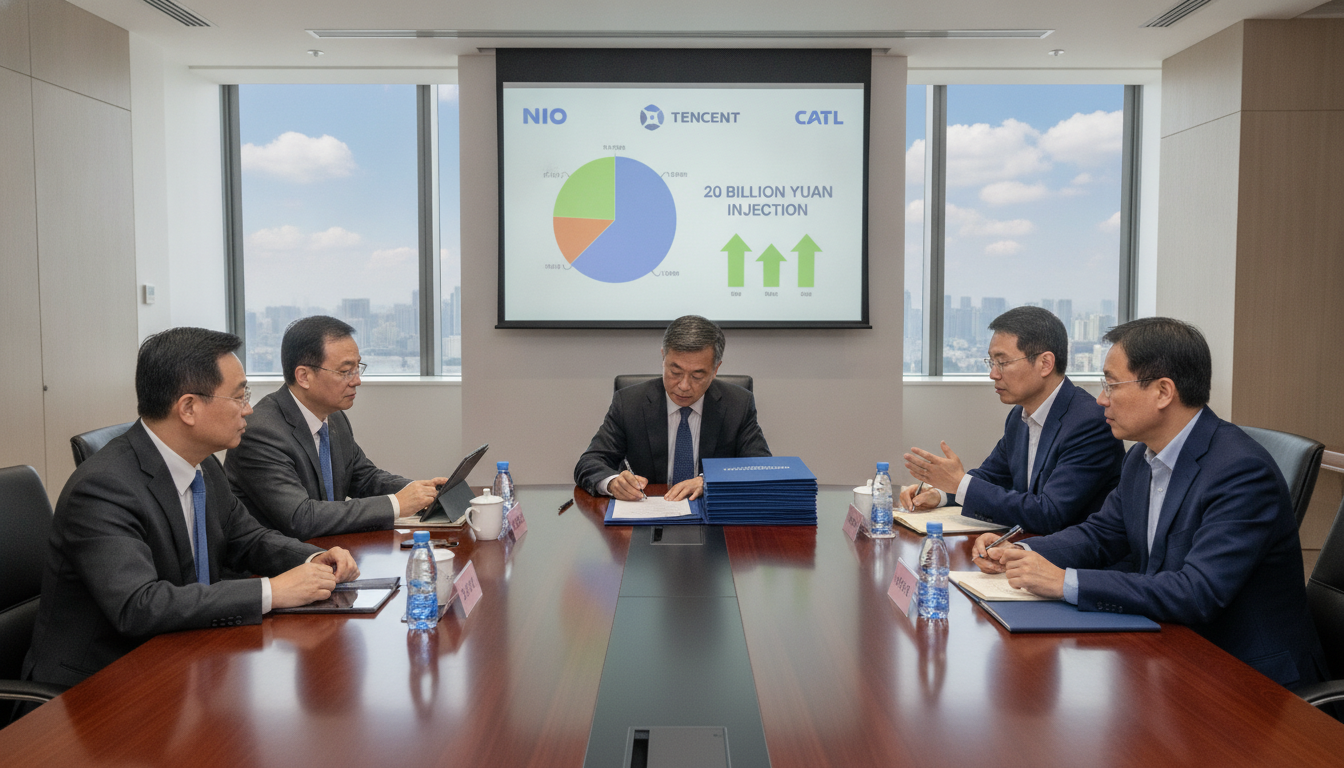
Founder Liang Pledges 20 Billion Yuan as Tencent and CATL Weigh Major Investments
Founder Liang pledges 20 billion yuan while Tencent and CATL consider 10bn and 5bn yuan stakes, potentially reshaping the company’s funding and governance.
Chinese founder Liang has committed 20 billion yuan (about €2.6 billion) of personal capital to his company, Reuters reported, as technology giant Tencent and battery producer CATL are weighing significant external investments. Tencent is said to be considering 10 billion yuan and CATL 5 billion yuan, which would make them the largest outside backers if they go ahead. The proposed injections come amid broader strategic shifts in the sector and would materially affect the firm’s balance sheet and investor base.
Founder Liang’s personal capital injection
Liang’s contribution of 20 billion yuan signals a major show of confidence and a desire to shore up resources from inside the company’s founding circle. A personal injection at this scale reduces near-term funding pressure and can help advance development plans without immediate dilution from outside equity. The move also positions Liang as the dominant internal financier, giving him leverage over strategic decisions as external parties enter the cap table. Market observers will watch closely to see whether this capital is structured as equity, convertible instruments, or a shareholder loan.
Tencent’s contemplated 10 billion yuan stake
Tencent’s consideration of a 10 billion yuan investment would align with its history of strategic minority stakes in promising technology companies. Such a stake, if executed, would likely bring not only capital but also ecosystem benefits, including distribution channels, content partnerships, and cloud or software integration. For the target firm, Tencent’s involvement could accelerate customer acquisition and product bundling across gaming, social and digital services. Negotiations with Tencent may hinge on valuation, board representation and commercial rights tied to technology or data sharing.
CATL’s potential 5 billion yuan participation
CATL’s prospective 5 billion yuan contribution highlights interest from a major battery and energy supplier in deepening ties with downstream technology companies. A strategic investment by CATL could secure closer collaboration on battery supply, joint development of electric vehicle platforms, or preferential procurement terms. For CATL, the rationale would include verticalizing partnerships to stabilize demand and integrate software-hardware roadmaps. The terms will likely address supply commitments, technology cooperation, and exclusivity or preferred-supplier clauses.
Implications for ownership and governance
Taken together, the three transactions would reshape the company’s ownership structure, blending founder control with heavyweight strategic shareholders. With Liang’s large personal stake and potential external investments from Tencent and CATL, governance negotiations will be central to any final deal. Board seats, veto rights on key decisions, dilution protections and anti-dilution mechanics are expected to be negotiated to balance control and investor protections. How those issues are resolved will determine strategic direction, capital access and the company’s ability to pursue partnerships or future fundraising.
Market and industry context
The timing of these investment talks follows broader consolidation and strategic partnering across tech, automotive, and energy sectors, where capital and supply chain relationships have become critical. Companies in this space increasingly seek combinations of software, hardware and supply partnerships to secure scale and defend margins. External investment from Tencent and CATL would send a signal to suppliers, customers and rival investors about the target firm’s strategic positioning. Market participants will interpret any confirmed investments as an endorsement that could influence secondary-market sentiment and competitive alliances.
Regulatory, commercial and integration considerations
Any transaction of this magnitude will face regulatory scrutiny, particularly around competition, data security and cross-sector cooperation between internet platforms and key industrial suppliers. Commercial integration for partners like Tencent and CATL will require careful sequencing to avoid disruptions to existing contracts and to align product roadmaps. Due diligence is likely to focus on intellectual property, supply chain resilience and potential national security or export restrictions that could affect technology transfer. The duration and complexity of approvals could extend deal timelines and add conditions that shape final economics.
This package of founder capital and potential strategic investments, if completed, would materially alter the company’s capital structure and strategic options. Stakeholder negotiations now center on valuation, governance rights, and commercial tie-ins that will determine whether the investments translate into accelerated growth or greater operational complexity. Observers will await formal confirmations and the detailed terms that will ultimately define the new investor relationships.
