
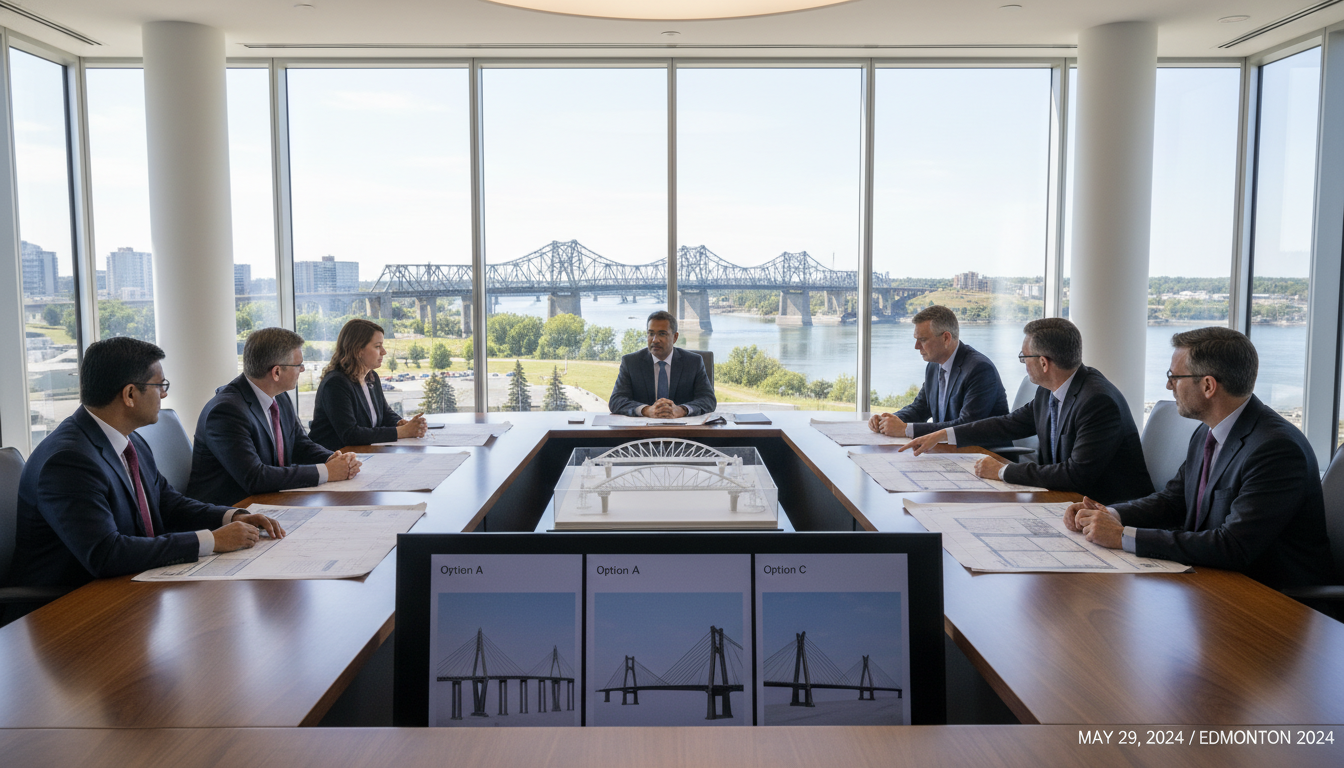
Edmonton to Replace High Level Bridge by 2042 as City Debates “Mega Bridge” Options
Edmonton set to replace the High Level Bridge by 2042 and the Low Level Bridge by 2034, weighing preservation, transit modes and provincial or federal funding.
The city of Edmonton is preparing for long-term replacements of two of its most notable river crossings after a recent infrastructure report found the 113-year-old High Level Bridge has reached the end of its usable life. The report calls for a full replacement of the High Level Bridge by 2042, while its Low Level counterpart will require replacement by 2034. City council and infrastructure planners met this week to parse the technical findings and to begin shaping a vision for what could be a generation-defining project.
Council reviews structural findings and replacement deadlines
City infrastructure committee members examined the report’s assessment of the High Level Bridge, which the city recognizes as a designated historic resource. The engineering review concluded that deterioration extends beyond the deck into the bridge’s foundations, limiting options for partial rehabilitation. Officials said the replacement timeline allows for staged planning but makes decisive policy and funding choices inevitable in the coming decade.
Scope debate: what a ‘mega bridge’ would mean
Elected officials and planners discussed broadening the replacement brief to include multiple transport modes, raising the spectre of a so-called “mega bridge.” Proposals floated at the meeting included vehicle lanes, bus rapid transit corridors, dedicated streetcar connections, multi-use pathways and even accommodation for a future high-speed rail link to Edmonton International Airport. Councillors cautioned that the ambitions for such a comprehensive structure would carry large cost implications and significant engineering complexity.
Funding pressures and intergovernmental partnership questions
Council members expressed concern that the city could not shoulder the full cost of an expanded crossing without help from provincial or federal governments. Several speakers said major infrastructure of this scale typically attracts senior government contributions, and participants urged early engagement with Alberta and Ottawa to explore funding models. City staff acknowledged the financial strain and recommended aligning bridge planning with broader transit and provincial rail strategies to strengthen funding cases.
Heritage advocates push for preservation or adaptive reuse
Heritage advocates urged the city to seek ways to retain or adapt elements of the historic High Level Bridge rather than proceeding to wholesale demolition. Supporters pointed to international examples where old spans were transformed into pedestrian promenades, parks or cultural corridors to preserve civic memory while creating new public spaces. Planners, however, said the degree of structural degradation — particularly under the bridge — constrains economically viable reuse options for the High Level structure itself.
Engineering constraints and the significance of low‑background steel
Technical staff explained that the project’s challenges extend beyond visible surface damage to include foundational and material considerations. The High Level Bridge was built using pre‑atomic or low‑background steel, a material prized for certain scientific and medical applications because it lacks modern radioactive contamination. While the material adds historical interest, engineers said the bridge’s own self-weight and aged foundations are the principal risks, making large-scale preservation an expensive and uncertain prospect.
Planning alignment with transit and rail strategies
City transportation planners urged that decisions about bridge scope be informed by concurrent transit planning and the province’s rail master plan, which remains outstanding. Officials said that integrating future bus rapid transit routes, streetcar lines and any potential airport rail connection into bridge design would require coordinated studies and phased design work. Staff recommended beginning planning and design in earnest from 2031 onward to meet the 2042 replacement target while allowing time for intergovernmental discussions.
The High Level and Low Level bridge replacements, spanning design, funding and heritage considerations, present Edmonton with a rare opportunity to reframe river crossing infrastructure for the city’s next century. With technical questions and financial pressures now on the table, city leaders and community groups will have years to negotiate what balance of mobility, preservation and cost will guide the final designs.
